Clusters of Athletes

 At some time, most athletes experience periods of underperformance. What are the potential causes and contributing factors?
classification

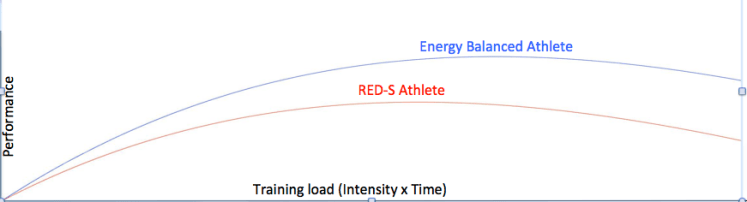
Effective training improves sports performance through a process of adaptation that occurs, at both the cellular and system levels, during the recovery phase. Training overload must be balanced with sufficient subsequent recovery. A long-term improvement in form is expected, following a temporary dip in performance, due to short-term fatigue.

However, when an athlete experiences a stagnation of performance, what are the potential underlying causes? How should these be addressed to prevent an acute situation developing into a more chronic spiral of decreasing performance?

Depending on clinical presentation, the first step is to exclude medical conditions. Potential infective causes include Epstein Barr virus (particularly in young athletes), Lyme disease and Weil’s disease. Systemic inflammatory conditions should be considered. Endocrine and metabolic causes include pituitary, gonadal, adrenal, thyroid  dysfunction, blood sugar control,  and malabsorption.

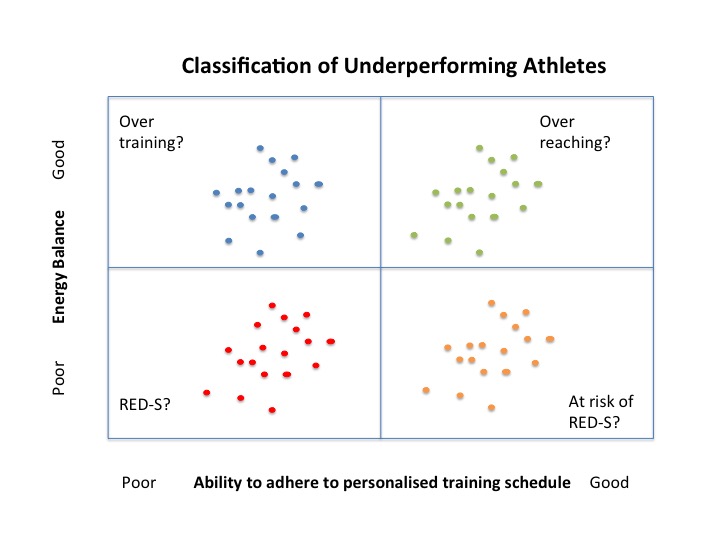
If medical conditions are excluded, attention should turn to the athlete’s energy balance in the context of adherence to the current training plan. Potential causes of underperformance, the inability to improve in training and competition, are illustrated in the diagram above.

Athletes in the upper right quadrant fail to live up to performance expectations, in spite of maintaining a good energy balance while adhering to the prescribed training plan. However, they may represent non-functional overreaching, where overload is not balanced with sufficient recovery. In other words, the periodisation of training and recovery is not optimised. The balance between chronic training load (fitness) and acute training load (fatigue) provides a useful metric for assessing form. Heart rate variability (HRV) can be another potentially useful measure in detecting aerobic, endurance fatigue. If the training plan is not producing the expected improvements, then this plan needs revising. Don’t forget that sleep is essential to facilitate endocrine driven adaptations to exercise training.

Athletes in the lower right quadrant are of more concern. Inadequate energy balance, especially during periods of increased training load or intentional weight loss, can be a cause of underperformance, despite the athlete being able to adhere to the training plan. This would correspond to being at risk of developing relative energy deficiency in sport (RED-S) on the amber warning in the risk stratification laid out by the International Olympic Committee.

Both of these groups are able to adhere to a training plan, but suboptimal training and recovery periodisation and/or insufficient energy intake can produce a situation of underperformance. Intervention is required to prevent them moving into the clusters on the left, representing a more chronic underperformance scenarios that are therefore more difficult to rectify.

Athletes in the upper left quadrant exhibit overtraining syndrome: a prolonged maladaptation process accompanied by a decrease in performance (not merely stagnation) and inability to adhere to training plan. The metric of decreased HRV and inability of heart rate to accelerate in response to exercise have been suggested as markers of overtraining.

Those athletes in the lower left quadrant fall into the RED-S category, where multiple interacting Endocrine networks are impacted by an energy deficient state. RED-S not only impairs sports performance, but impacts both current and future health. For example low endogenous levels of sex steroids and insulin-like growth factor 1 (IGF1) disrupt formation of bone microarchitecture and bone mineralisation, resulting in increased risk of recurrent stress fracture in addition to potentially irreversible bone loss in the longer term. In cases of recurrent injury and underperformance amongst athletes it is imperative to exclude Endocrine dysfunction and then consider whether RED-S is the fundamental cause.

There are many potential causes of underperformance in athletes. Once medical conditions have been excluded, the main aim should be to prevent acute situations becoming chronic and therefore more difficult to resolve.

For further discussion on Endocrine and Metabolic aspects of SEM come to the BASEM annual conference 22/3/18: Health, Hormones and Human Performance

References

Sport Endocrinology Dr N. Keay, British Journal of Sport Medicine 2017

Sport Performance and RED-S, insights from recent Annual Sport and Exercise Medicine and Innovations in Sport and Exercise Nutrition Conferences Dr N.Keay, British Journal of Sport Medicine 2017

Relative Energy Deficiency in Sport CPD module for British Association of Sport and Exercise Medicine

Optimal Health: For All Athletes! Part 4 – Mechanisms, Dr N. Keay, British Association of Sport and Exercise Medicine

Balance of recovery and adaptation for sports performance Dr N. Keay, British Association of Sport and Exercise Medicine

Sleep for health and sports performance Dr N. Keay, British Journal of Sport Medicine

Optimal health: including female athletes! Part 1 Bones Dr N.Keay, British Journal of Sport Medicine

Inflammation: why and how much? Dr N. Keay, British Association of Sport and Exercise Medicine

Fatigue, Sport Performance and Hormones… Dr N.Keay, British Journal of Sport Medicine

Part 3: Training Stress Balance—So What? Joe Friel

Heart Rate Variability (HRV) Science for Sport

Relative Energy Deficiency in sport (REDs) Lecture by Professor Jorum Sundgot-Borgen, IOC working group on female athlete triad and IOC working group on body composition, health and performance. BAEM Spring Conference 2015.

Prevention, Diagnosis, and Treatment of the Overtraining Syndrome: Joint Consensus Statement of the European College of Sport Science and the American College of
Sports Medicine. Joint Consensus Statement. Medicine & Science in Sports & Exercise 2012
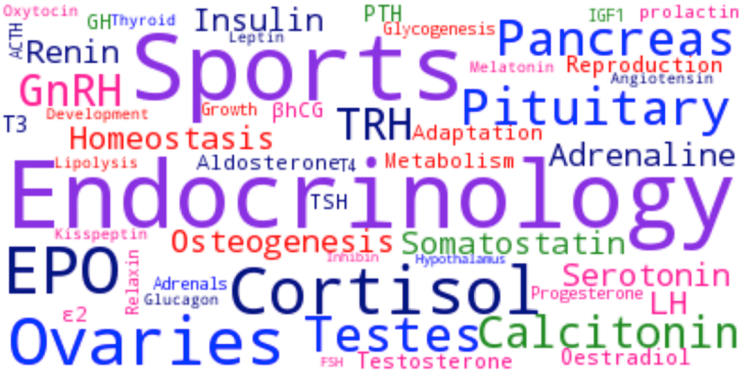
Sports Endocrinology

SportsEndocrinologyWordCloud

The Endocrine system comprises various glands distributed throughout the body that secrete hormones to circulate in the blood stream. These chemical messengers, have effects on a vast range of tissue types, organs and therefore regulate metabolic and physiological processes occurring in systems throughout the body.

The various hormones produced by the Endocrine system do not work in isolation; they have interactive network effects. The magnitude of influence of a hormone is largely determined by its circulating concentration. This in turn is regulated by feedback loops. For example, too much circulating hormone will have negative feedback effect causing the control-releasing system to down regulate, which will in turn bring the level of the circulating hormone back into range. Ovulation in the menstrual cycle is a rare example of a process induced by positive hormonal feedback.

In the control system of hormone release, there are interactions with other inputs in addition to the circulating concentration of the hormone. The hypothalamus (gland in the brain) is a key gateway in the neuro-endocrine system, coordinating inputs from many sources to regulate output of the pituitary gland, which produces the major stimulating hormones to act on the Endocrine glands throughout the body.

growthhormone

The Endocrine system displays complex dynamics. There are temporal variations in secretion of hormones both in the long term during an individual’s lifetime and on shorter timescales, as seen in the diurnal variation of some hormones such as cortisol, displaying a circadian rhythm of secretion. The most fascinating and complex control system is found in the hypothalamic-pituitary-ovarian axis. Variation in both frequency and amplitude of gonadotrophin releasing factor (GnRH) secretion from the hypothalamus dictates initiation of menarche and the subsequent distinct pattern of cyclical patterns of the sex steroids, oestrogen and progesterone.

So what have the Endocrine system and hormone production got to do with athletes and sport performance?

  1. Exercise training stimulates release of certain hormones that support favourable adaptive changes. For example, exercise is a major stimulus of growth hormone, whose action positively affects body composition in terms of lean mass, bone density and reduction of visceral fat.
  2. Disruption of hormones secreted from the Endocrine system can impair sport performance and have potential long term adverse health risks for athletes. This picture is seen in the female athlete triad (disordered eating, amenorrhoea and low bone mineral density) and relative energy deficiency in sport (RED-S) with multi-system effects. In this situation there is a mismatch between dietary energy intake (including diet quality) and energy expenditure through training. The net result is a shift to an energy saving mode in the Endocrine system, which impedes both improvement in sport performance and health. RED-S should certainly be considered among the potential causes of sport underperformance, suboptimal health and recurrent injury,  with appropriate medical support being provided.
  3. Caution! Athletic hypothalamic amenorrhoea, as seen in female athletes (in female athlete triad and RED-S) is a diagnosis of exclusion. Other causes of secondary amenorrhoea (cessation of periods >6 months) should be excluded such as pregnancy, polycystic ovary syndrome (PCOS), prolactinoma, ovarian failure and primary thyroid dysfunction.
  4. Unfortunately the beneficial effects of some hormones on sport performance are misused in the case of doping with growth hormone, erythropoeitin (EPO) and anabolic steroids. Excess administered exogenous hormones not only disrupt the normal control feedback loops, but have very serious health risks, which are seen in disease states of excess endogenous hormone secretion.

So the Endocrine system and the circulating hormones are key players not only in supporting health, but in determining sport performance in athletes.

For further discussion on Endocrine and Metabolic aspects of SEM come to the BASEM annual conference 22/3/18: Health, Hormones and Human Performance

References

Sport Performance and RED-S, insights from recent Annual Sport and Exercise Medicine and Innovations in Sport and Exercise Nutrition Conferences Dr N. Keay, British Journal of Sports Medicine 17/3/17

Teaching module on RED-S for British Association of Sport and Exercise Medicine as CPD for Sports Physicians

Optimal Health: Including Female Athletes! Part 1 – Bones Dr N. Keay, British Journal of Sport Medicine 26/3/17

Optimal Health: Including Male Athletes! Part 2 – REDs Dr N. Keay, British Journal of Sport Medicine 4/4/17

Optimal health: especially young athletes! Part 3 Consequences of Relative Energy Deficiency in sports Dr N. Keay, British Association of Sport and Exercise Medicine 13/4/17

Optimal health: for all athletes! Part 4 Mechanisms Dr N. Keay, British Association of Sport and Exercise Medicine 13/4/17

Enhancing sport performance: part 1 Dr N. Keay, British Association of Sport and Exercise Medicine

Enhancing sports performance: part 3

From population based norms to personalised medicine: Health, Fitness, Sports Performance Dr N. Keay, British Journal of Sport Medicine

Sleep for health and sports performance Dr N. Keay, British Journal of Sport Medicine

Balance of recovery and adaptation for sports performance Dr N. Keay, British Association of Sport and Exercise Medicine

Clusters of athletes Dr N. Keay, British Association of Sport and Exercise Medicine

Inflammation: why and how much? Dr N. Keay, British Association of Sport and Exercise Medicine

Fatigue, Sport Performance and Hormones…Dr N. Keay, British Journal of Sport Medicine

Keay N, Logobardi S, Ehrnborg C, Cittadini A, Rosen T, Healy ML, Dall R, Bassett E, Pentecost C, Powrie J, Boroujerdi M, Jorgensen JOL, Sacca L. Growth hormone (GH) effects on bone and collagen turnover in healthy adults and its potential as a marker of GH abuse in sport: a double blind, placebo controlled study. Journal of Endocrinology and Metabolism. 85 (4) 1505-1512. 2000.

Wallace J, Cuneo R, Keay N, Sonksen P. Responses of markers of bone and collagen turover to exercise, growth hormone (GH) administration and GH withdrawal in trained adult males. Journal of Endocrinology and Metabolism 2000. 85 (1): 124-33.

Keay N. The effects of growth hormone misuse/abuse. Use and abuse of hormonal agents: Sport 1999. Vol 7, no 3, 11-12.

Wallace J, Cuneo R, Baxter R, Orskov H, Keay N, Sonksen P. Responses of the growth hormone (GH) and insulin-like factor axis to exercise,GH administration and GH withdrawal in trained adult males: a potential test for GH abuse in sport. Journal of Endocrinology and Metabolism 1999. 84 (10): 3591-601.

Keay N, Logobardi S, Ehrnborg C, Cittadini A, Rosen T, Healy ML, Dall R, Bassett E, Pentecost C, Powrie J, Boroujerdi M, Jorgensen JOL, Sacca L. Growth hormone (GH) effects on bone and collagen turnover in healthy adults and its potential usefulness as in the detection of GH abuse in sport: a double blind, placebo controlled study. Endocrine Society Conference 1999.

Wallace J, Cuneo R, Keay N. Bone markers and growth hormone abuse in athletes. Growth hormone and IGF Research, vol 8: 4: 348.

Keay N, Fogelman I, Blake G. Effects of dance training on development,endocrine status and bone mineral density in young girls.Current Research in Osteoporosis and bone mineral measurement 103, June 1998.

Keay N, Effects of dance training on development, endocrine status and bone mineral density in young girls, Journal of Endocrinology, November 1997, vol 155, OC15.

Keay N, Fogelman I, Blake G. Bone mineral density in professional female dancers. British Journal of Sports Medicine, vol 31 no2, 143-7, June 1997.

Keay N. Bone mineral density in professional female dancers. IOC World Congress on Sports Sciences. October 1997.

Keay N, Bone Mineral Density in Professional Female Dancers, Journal of Endocrinology, November 1996, volume 151, supplement p5.

Sport Performance and Relative Energy Deficiency in Sport

performance-potentialThe Holy Grail of any training program is to improve performance and achieve goals.

Periodisation of training is essential in order to maximise beneficial adaptations for improved performance. Physiological adaptations occur after exercise during the rest period, with repeated exercise/rest cycles leading to “super adaptation”. Adaptations occur at the system level, for example cardiovascular system, and at the cellular level in mitochondria. An increase in mitochondria biogenesis in skeletal muscle occurs in response to exercise training, as described by Dr Andrew Philip at a recent conference at the Royal Society of Medicine (RSM). This cellular level adaptation translates to improved performance with a right shift of the lactate tolerance curve.

The degree of this response is probably genetically determined, though further research would be required to establish causal links, bearing in mind the ethical considerations laid out in the recent position statement from the Australian Institute of Sport (AIS) on genetic testing in sport. Dr David Hughes, Chief Medical Officer of the AIS, explored this ethical stance at a fascinating seminar in London. Genetic testing in sport may be a potentially useful tool for supporting athletes, for example to predict risk of tendon injury or response to exercise and therefore guide training. However, genetic testing should not be used to exclude or include athletes in talent programmes. Although there are polymorphisms associated with currently successful endurance and power athletes, these do not have predictive power. There are many other aspects associated with becoming a successful athlete such as psychology. There is no place for gene doping to improve performance as this is both unethical and unsafe.

To facilitate adaptation, exercise should be combined with periodised rest and nutrition appropriate for the type of sport, as described by Dr Kevin Currell at the conference on “Innovations in sport and exercise nutrition”. Marginal gains have a cumulative effect. However, as discussed by Professor Asker Jeukendrup, performance is more than physiology. Any recommendations to improve performance should be given in context of the situation and the individual. In my opinion women are often underrepresented in studies on athletes and therefore further research is needed in order to be in a position to recommend personalised plans that take into account both gender and individual variability. As suggested by Dr Courtney Kipps at the Sport and Exercise Conference (SEM) in London, generic recommendations to amateur athletes, whether male or female, taking part in marathons could contribute to women being at risk of developing exercise associated hyponatraemia.

For innovation in sport to occur, complex problems approached with an open mind are more likely to facilitate improvement as described by Dr Scott Drawer at the RSM. Nevertheless, there tends to be a diffusion from the innovators and early adapters through to the laggards.

Along the path to attaining the Holy Grail of improved performance there are potential stumbling blocks. For example, overreaching in the short term and overtraining in the longer term can result in underperformance. The underlying issue is a mismatch between periodisation of training and recovery resulting in maladapataion. This situation is magnified in the case of athletes with relative energy deficiency in sport (RED-S). Due to a mismatch of energy intake and expenditure, any attempt at increase in training load will not produce the expected adaptations and improvement in performance. Nutritional supplements will not fix the underlying problem. Nor will treatments for recurrent injuries. As described by Dr Roger Wolman at the London SEM conference, short term bisphosphonante treatment can improve healing in selected athletes with stress fractures or bone marrow lesions.  However if the underlying cause of drop in performance or recurrent injury is RED-S, then tackling the fundamental cause is the only long term solution for both health and sport performance.

Network effects of interactions lead to sport underperformance. Amongst underperforming athletes there will be clusters of athletes displaying certain behaviours and symptoms, which will be discussed in more detail in my next blog. In the case of RED-S as the underlying cause for underperformance, the most effective way to address this multi-system issue is to raise awareness to the potential risk factors in order to support athletes in attaining their full potential.

For further discussion on Endocrine and Metabolic aspects of SEM come to the BASEM annual conference 22/3/18: Health, Hormones and Human Performance

References

Teaching module RED-S British Association Sport and Exercise Medicine

From population based norms to personalised medicine: Health, Fitness, Sports Performance Dr N. Keay, British Journal of Sport Medicine 22/2/17

Balance of recovery and adaptation for sports performance Dr N. Keay, British Association Sport and Exercise Medicine 21/1/17

Sleep for health and sports performance Dr N. Keay, British Journal of Sport Medicine 7/7/17

Fatigue, Sport Performance and Hormones… Dr N. Keay, British Journal of Sport Medicine

Annual Sport and Exercise Medicine Conference, London 8/3/17

Bisphosphonates in the athlete. Dr Roger Wolman, Consultant in Rheumatology and Sport and Exercise Medicine, Royal National Orthopaedic Hospital

Collapse during endurance training. Dr Courtney Kipps, Consultant in Sport and Exercise Medicine. Consultant to Institute of Sport, medical director of London and Blenheim Triathlons

Innovations in Sport and Exercise Nutrition. Royal Society of Medicine 7/3/17

Identifying the challenges: managing research and innovations programme. Dr Scott Drawer, Head of Performance, Sky Hub

Exercise and nutritional approaches to maximise mitochondrial adaptation to endurance exercise. Dr Andrew Philip, Senior Lecturer, University of Birmingham

Making technical nutrition data consumer friendly. Professor Asker Jeukendrup, Professor of Exercise Metabolism, Loughborough University

Innovation and elite athletes: what’s important to the applied sport nutritionists? Dr Kevin Currell, Director of Science and Technical Development, The English Institute of Sport

Genetic Testing and Research in Sport. Dr David Hughes, Chief Medical Officer Australian Institute of Sport. Seminar 10/3/17

Effects of adaptive responses to heat exposure on exercise performance

Over Training Syndrome, Ian Craig, Webinar Human Kinetics 8/3/17

The Fatigued Athlete BASEM Spring Conference 2014

Relative Energy Deficiency in sport (REDs) Lecture by Professor Jorum Sundgot-Borgen, IOC working group on female athlete triad and IOC working group on body composition, health and performance. BAEM Spring Conference 2015.

Mountjoy M, Sundgot-Borgen J, Burke L, Carter S, Constantini N, Lebrun C, Meyer N, Sherman R, Steffen K, Budgett R, Ljungqvist A. The IOC consensus statement: beyond the Female Athlete Triad-Relative Energy Deficiency in Sport (RED-S).Br J Sports Med. 2014 Apr;48(7):491-7.

Inflammation: why and how much?

Inflammation: optimal or overreaction

Systemic autoimmune disease is a chronic overreaction of the inflammatory system. Exercise training is structured to provoke the optimal level of inflammation for adaptation to facilitate sport performance. This blog describes some of the recent significant advances in the understanding of the underlying mechanisms of inflammation and its interactions with the endocrine system, immunity and the microbiome, in relation to autoimmune disease. Applying this knowledge to the adaptive inflammatory effects of training in sport represents a potentially hugely beneficial area of future research.

The ubiquitous microbiomea-muciniphila-233x300

There has been much discussion on the key role of the microbiome, eloquently described by Professor Tim Spector, Professor of Genetic Epidemiology, King’s College, London at recent conferences at the Royal Society of Medicine and The Royal College of Physicians. The microbiome is the DNA of all the microbes in our body. The diversity of the microbiota community in the gut wall of the colon appears to have the most profound effects in terms of disease prediction and indeed a better indicator of developing autoimmune conditions (such as inflammatory bowel disease and rheumatoid arthritis) and metabolic conditions (such as obesity and diabetes mellitus) than our own DNA. So how does the diversity of the gut microbiome have such a profound impact?

It appears that in order to promote diversity of the gut micobiota, prebiotics such as inulin found in fibrous foods should be ingested and then “fertilised” with probiotics found in fermented foods. Enhancing the diversity of the gut microbiome supports the production of short-chain fatty acids which have far reaching influences on epigenetic and immune regulation, the brain, gut hormones and the liver. Furthermore, the diurnal rhythmic movement of the gut microbiota have been shown to regulate host circadian epigenetic, transcriptional and metabolite oscillations which impacts host physiology and disease susceptibility.

In inflammatory conditions such as autoimmune disease, a decrease in the diversity of “good” microbiota has been described. Furthermore, if a decrease in beneficial microbiota is the primary event, then this can lead to an increase in the likelihood of developing autoimmune disease. What is the mechanism of this dynamic interaction between the microbiome and immunity?

Immunity and inflammation

In recent research, the protein receptor marker of microbiota in the gut has been shown to modulate intestinal serotonin transporter activity. Serotonin (5-hydroxytryptamine 5-HT) has shown to be an essential intestinal physiological neuromodulator that is also involved in inflammatory bowel disease. In addition, an increase in inflammatory cytokines such as interleukin 6 and tumour necrosis factor alpha, is know to be associated with low levels of cerebral serotonin and dopamine. The causal link between disrupted immune function and increased inflammation, as in autoimmune disease, is an unfavourable microbiome. Development of autoimmune disease is often multifactorial, for example,  a change in the microbiome might trigger gene expression with adverse effects. Indeed gene expression (independent of sex steroids) has been shown to account for increased prevalence of autoimmune disease in women.

Depression of serotonin levels

Low levels of the neurotransmitter serotonin are know to be linked to depression. Hence prescription of selective serotonin uptake inhibitors to those suffering with depression. However recent research has now revealed a dynamic interaction between peripheral and cerebral effects of the microbiome on immunity and mood, mediated via the circadian release of key hormones such as serotonin. Serotonin is synthesised from precursor tryptophan in the gastrointestinal tract and central nervous system. Low mood in autoimmune disease could be due to psychological factors: knowing that this is a chronic condition with reduced life expectancy. Reduced serotonin, may be a further biochemical reason. Potentially lack of sleep due to pain in autoimmune disease would also suppress serotonin levels.

Applications for microbiome/immunity/inflammation interactions

How will these findings from recent research help in optimising inflammatory mediated adaptations to exercise training and support the understanding and treatment of autoimmune disease? It has been suggested that serotonin could be a treatment for rheumatoid arthritis, as 5HT appears to have a peripheral immuno-regulatoty role in the pathophysiology of this autoimmune disease. Optimising the microbiome, with prebiotics and probiotics, may improve disease activity and improve response to treatment with biologics.

Is the nature of an autoimmune disease such as rheumatoid arthritis (RA) changing? Deformed hands with swollen joints were a perennial favourite for medical examinations. However as described recently at a conference at Royal College of Physicians, although joint destruction is still a feature of RA, this seems to be accompanied by less joint swelling and involvement of greater range of joints. Are the triggers changing rather than a change in the nature of disease? How do nutrition and medication impact the microbiome?

For athletes, apart from periodising energy requirements and micronutrients to support training, encouraging a diverse microbiome will potentially support adaptive changes to training.

For further discussion on Endocrine and Metabolic aspects of SEM come to the BASEM annual conference 22/3/18: Health, Hormones and Human Performance

References

Balance of recovery and adaptation for sports performance. Dr N. Keay, British Association of Sports and Exercise Medicine

Sleep for health and sports performance. Dr N. Keay, British Journal of Sport and Exercise Medicine

Conference Royal Society of Medicine. “Food: the good, the bad and the ugly” 1/2/17

“Food, microbes and health” Professor Tim Spector, Professor of Genetic Epidemiology, King’s College, London

“Nutrition and the gut: food as trigger for disease; food as medicine” Dr Charlie Lees, Chair Scottish Society of Gastroenterology IBD Interest Group. European Crohn’s and Colitis Organisation Committe

“Nutrition and its effect on the immune system” Dr Liam O’Mahony, Head of Molecular Immunology, swiss Institute of Allergy and Asthma Research

Advanced Medicine Conference. Royal College of Physicians 13-16 February 2017

” The gut microbiome clinical and physiological tolerance” Professor Tim Spector, Professor of Genetic Epidemiology, King’s College, London

“Rheumatoid arthritis-ensuring everyone gets the best treatment” Dr Neil Snowden

Microbiota Diurnal Rhythmicity Programs Host Transcriptome Oscillations Cell Volume 167, Issue 6, p1495–1510.e12, 1 December 2016

Intestinal Serotonin Transporter Inhibition by Toll-Like Receptor 2 Activation. A Feedback Modulation. Eva Latorre , Elena Layunta, Laura Grasa, Marta Castro, Julián Pardo, Fernando Gomollón, Ana I. Alcalde †, José E. Mesonero. Published: December 29, 2016

A gene network regulated by the transcription factor VGLL3 as a promoter of sex-biased autoimmune diseases. Yun Liang, Lam C Tsoi, Xianying Xing, Maria A Beamer, William R Swindell, Mrinal K Sarkar, Celine C Berthier, Philip E Stuart, Paul W Harms, Rajan P Nair, James T Elder, John J Voorhees, J Michelle Kahlenberg & Johann E Gudjonsson
Nature Immunology 18, 152–160 (2017)

Serotonin Is Involved in Autoimmune Arthritis through Th17 Immunity and Bone Resorption. Yasmine Chabbi-Achengli, Tereza Coman, Corinne Collet, Jacques Callebert, Michelangelo Corcelli, Hilène Lin, Rachel Rignault, Michel Dy, Marie-Christine de Vernejoul, Francine Côté. The American Journal of Pathology. April 2016 Volume 186, Issue 4, Pages 927–937

Successful Ageing

As I am discovering, ageing is an inevitable process. However what can you do to keep as healthy as possible in order to get the most out of life?

crop Budapest0571

If you are a Masters athlete, you will know that moving into these age groups means it is advisable to change training emphasis in order to prevent injury and compete successfully. As discussed at the recent conference Royal Society of Medicine on Sports Injuries and Sports Orthopaedics, during the session on “The Ageing Athlete”, older athletes need a longer dynamic warm up with controlled mobilisation and muscle activation, together with strength and conditioning sessions to prevent injury. Moving into next age group every five years gives the opportunity to assess and modify training accordingly.

Childhood development has an impact on long term adult health. Essentially the most rapid changes and potential peaks attained during childhood and adolescence reflect optimal physical and cognitive functioning in later life. The evidence from population cohort studies was presented by Professor Diana Kuh, director of MRC Unit for Lifelong Health and Ageing, at the recent conference at the Royal Society of Medicine. Up to 66% of the decline in functional ability in ageing adults is related to childhood development. In the case of pubertal timing, Professor Kuh described that delay causes 20% reduction of volumetric trabecular bone accrual. In my 3 year longitudinal study of 87 pre and post pubertal girls, high levels of training delayed menarche and blunted attainment of peak bone mass (PBM). Conversely an optimal level of training did not delay menarche and improved bone mineral density compared to age marched sedentary controls. A similar long term effect is seen in older female athletes who have experienced amenorrhoea of more than 6 months duration. Even after retirement and resumption of menses pre-menopause, irreversible loss of bone mineral density (BMD) is seen. Professor Kuh argued for specific and personalised recommendations to individuals to support successful ageing.

From a personalised medical perspective, what about hormonal changes associated with ageing? Although in men testosterone levels decline with age, nevertheless the change is more dramatic in women at menopause where the ovaries stop producing oestrogen and progesterone. This results in increased risk after the menopause of osteoporosis, cardiovascular disease and stroke, together with other vasomotor symptoms and mood changes. With increased life expectancy comes an increasing number of women with menopausal symptoms and health issues which can negatively impact on quality of life. What about hormone replacement therapy (HRT)? HRT improves menopausal symptoms and reduces the risk of post menopausal long term health problems, provided HRT is started within ten years after the menopause. After this window of opportunity replacement oestrogen can actually accelerate cell damage. As with any medical treatment there will be those for whom HRT is contra-indicated. Otherwise the risk:benefit ratio for each individual has to be weighed up so that women can arrive at an informed decision. Regarding the risk of breast cancer, this is increased by 4 cases per 1,000 women aged 50-59 years on combined HRT. This compares to an additional 24 cases in women who have body mass index (BMI)>30 and are not on HRT. This underlines the important of lifestyle which is crucial in all areas of preventative medicine.

What type of HRT has the most favourable risk:benefit ratio? Oral preparations undergo first pass metabolism in the liver, so other routes of delivery such as transdermal may be preferred. There is also an argument that hormones with identical molecular structure are preferable to bio-similar hormones. What functional effect could a slight difference in sex steroid structure have? For example no methyl group and a side chain with hydroxyl group (C-OH) rather than a carbonyl group (C=O)? That is the difference between oestradiol and  testosterone.

img_0373
Testosterone
img_0375
Oestradiol

In the case of hormones with identical molecular structure to those produced endogenously, there are no potential unwanted side effects or immunogenic issues as the molecule is identical to that produced by the body. Although the oestradiol component in most HRT preparations in the UK has an identical molecular structure to endogenous oestradiol, there is only one licensed micronised progesterone preparation that has an identical molecular structure. Synthetic, bio-similar (not identical) progestins have additional glucocorticoid and androgenic effects compared to molecular identical progesterone which exerts a mild anti-mineralocorticoid (diuretic) effect.

img_0376
Progesterone
img_0378
Norethisterone (synthetic progestin)

With an increasing ageing population and increase in life expectancy, it is important to support successful ageing and quality of life with a personalised and specific approach.

For further discussion on Endocrine and Metabolic aspects of SEM come to the BASEM annual conference 22/3/18: Health, Hormones and Human Performance

References

Conference Royal Society of Medicine 17/1/17 “Sports Injuries and Sports Orthopaedics” Session on “The Ageing Athlete”

Optimal health: especially young athletes! Part 3 Consequences of Relative Energy Deficiency in sports Dr N. Keay, British Association Sport and Exercise Medicine

From population based norms to personalised medicine: Health, Fitness, Sports Performance Dr N. Keay, British Journal of Sport Medicine 22/2/17

Optimal health: including female athletes! Part 1 Bones Dr N. Keay, British Journal of Sports Medicine

The British Menopause Society

Royal College of Obstetricians and Gynaecologists 

Optimal health: for all athletes! Part 4 Mechanisms

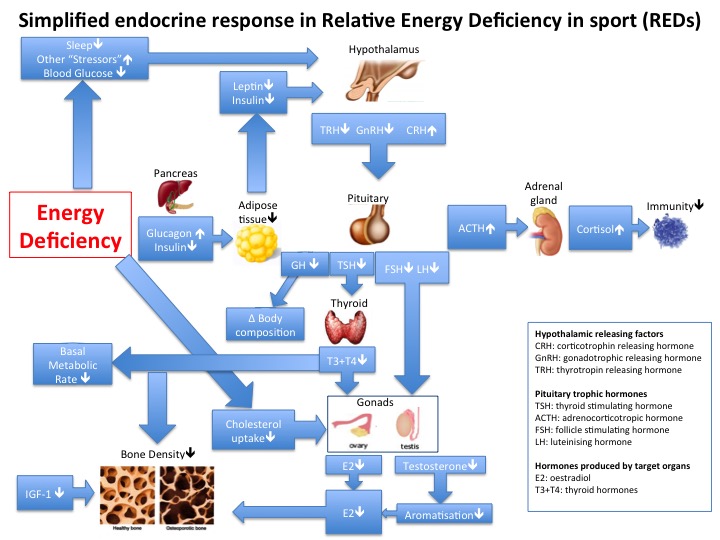
As described in previous blogs, the female athlete triad (disordered eating, amenorrhoea, low bone mineral density) is part of Relative Energy Deficiency in sports (RED-S). RED-S has multi-system effects and can affect both female and male athletes together with young athletes. The fundamental issue is a mismatch of energy availability and energy expenditure through exercise training. As described in previous blogs this situation leads to a range of adverse effects on both health and sports performance. I have tried to unravel the mechanisms involved. Please note the diagram below is simplified view: I have only included selected major neuroendocrine control systems.

REDs

Low energy availability is an example of a metabolic stressor. Other sources of stress in an athlete will be training load and possibly inadequate sleep. These physiological and psychological stressors input into the neuroendocrine system via the hypothalamus. Low plasma glucose concentrations stimulates release of glucagon and suppression of the antagonist hormone insulin from the pancreas. This causes mobilisation of glycogen stores and fat deposits. Feedback of this metabolic situation to the hypothalamus, in the short term is via low blood glucose and insulin levels and in longer term via low levels of leptin from reduced fat reserves.

A critical body weight and threshold body fat percentage was proposed as a requirement for menarche and subsequent regular menstruation by Rose Frisch in 1984. To explain the mechanism behind this observation, a peptide hormone leptin is secreted by adipose tissue which acts on the hypothalamus. Leptin is one of the hormones responsible for enabling the episodic, pulsatile release of gonadotrophin releasing hormone (GnRH) which is key in the onset of puberty, menarche in girls and subsequent menstrual cycles. In my 3 year longitudinal study of 87 pre and post-pubertal girls, those in the Ballet stream had lowest body fat and leptin levels associated with delayed menarche and low bone mineral density (BMD) compared to musical theatre and control girls. Other elements of body composition also play a part as athletes tend to have higher lean mass to fat mass ratio than non-active population and energy intake of 45 KCal/Kg lean mass is thought to be required for regular menstruation.

Suppression of GnRH pulsatility, results in low secretion rates of pituitary trophic factors LH and FSH which are responsible for regulation of sex steroid production by the gonads. In the case of females this manifests as menstrual disruption with associated anovulation resulting in low levels of oestradiol. In males this suppression of the hypothamlamic-pituitary-gonadal axis results in low testosterone production. In males testosterone is aromatised to oestradiol which acts on bone to stimulate bone mineralisation. Low energy availability is an independent factor of impaired bone health due to decreased insulin like growth factor 1 (IGF-1) concentrations. Low body weight was found to be an independent predictor of BMD in my study of 57 retired pre-menopausal professional dancers. Hence low BMD is seen in both male and female athletes with RED-S. Low age matched BMD in athletes is of concern as this increases risk of stress fracture.  In long term suboptimal BMD is irrecoverable even if normal function of hypothamlamic-pituitary-gonadal function is restored, as demonstrated in my study of retired professional dancers. In young athletes RED-S could result in suboptimal peak bone mass (PBM) and associated impaired bone microstructure. Not an ideal situation if RED-S continues into adulthood.

Another consequence of metabolic, physiological and psychological stressor input to the hypothalamus is suppression of the secretion of thyroid hormones, including the tissue conversion of T4 to the more active T3. Athletes may display a variation of “non-thyroidal illness/sick euthyroid” where both TSH and T4 and T3 are in low normal range. Thyroid hormone receptors are expressed in virtually all tissues which explains the extensive effects of suboptimal levels of T4 and T3 in RED-S including on physiology and metabolism.

In contrast, a neuroendocrine control axis that is activated in RED-S is the hypothalamic-pituitary-adrenal axis. In this axis, stressors increase the amplitude of the pulsatile secretion of CRH, which in turn increases the release of ACTH and consequently cortisol secretion from the adrenal cortex. Elevated cortisol suppresses immunity and increases risk of infection. Long term cortisol elevation also impairs the other hormone axes: growth hormone, thyroid and reproductive. In other words the stress response in RED-S amplifies the suppression of key hormones both directly and indirectly via endocrine network interactions.

The original female athlete triad is part of RED-S which can involve male and female athletes of all ages. There are a range of interacting endocrine systems responsible for the multi-system effects seen in RED-S. These effects can impact on current and future health and sports performance.

For further discussion on Endocrine and Metabolic aspects of SEM come to the BASEM annual conference 22/3/18: Health, Hormones and Human Performance

References

Teaching module on RED-S for BASEM as CPD for Sports Physicians

Optimal health: including female athletes! Part 1 Bones Dr N. Keay, British Journal of Sport Medicine

Optimal health: including male athletes! Part 2 Relative Energy Deficiency in sports Dr N.Keay, British Journal of Sport Medicine 4/4/17

Optimal health: especially young athletes! Part 3 Consequences of Relative Energy Deficiency in sports Dr N. Keay, British Association of Sport and Exercise Medicine

Keay N, Fogelman I, Blake G. Effects of dance training on development,endocrine status and bone mineral density in young girls. Current Research in Osteoporosis and bone mineral measurement 103, June 1998.

Jenkins P, Taylor L, Keay N. Decreased serum leptin levels in females dancers are affected by menstrual status. Annual Meeting of the Endocrine Society. June 1998.

Keay N, Dancing through adolescence. Editorial, British Journal of Sports Medicine, vol 32 no 3 196-7, September 1998.

Keay N, Effects of dance training on development, endocrine status and bone mineral density in young girls, Journal of Endocrinology, November 1997, vol 155, OC15.

Relative Energy Deficiency in sport (REDs) Lecture by Professor Jorum Sundgot-Borgen, IOC working group on female athlete triad and IOC working group on body composition, health and performance. BAEM Spring Conference 2015.

Mountjoy M, Sundgot-Borgen J, Burke L, Carter S, Constantini N, Lebrun C, Meyer N, Sherman R, Steffen K, Budgett R, Ljungqvist A. The IOC consensus statement: beyond the Female Athlete Triad-Relative Energy Deficiency in Sport (RED-S).Br J Sports Med. 2014 Apr;48(7):491-7.

“Subclinical hypothydroidism in athletes”. Lecture by Dr Kristeien Boelaert at BASEM Spring Conference 2014 on the Fatigued Athlete

From population based norms to personalised medicine: Health, Fitness, Sports Performance Dr N. Keay, British Journal of Sport Medicine

Optimal health: especially young athletes! Part 3 Consequences of Relative Energy Deficiency in sports

In my previous blogs I have described the adverse effects of Relative Energy Deficiency in sports (RED-S) in both female and male athletes both in terms of current health and sport performance and potential long term health problems. What about young aspiring athletes? There is concern that early sport specialisation, imbalances in training not covering the full range of the components of fitness, together with reduced sleep, all combine to increase injury risk. Young athletes are particularly vulnerable to developing RED-S during a period of growth and development accompanied by a high training load.

Sufficient energy availability and diet quality, including micronutrients, is especially important in young athletes. To investigate further I undertook a three year longitudinal study involving 87 pre- and post-pubertal girls, spread across control pupils at day school together with students in vocational training in both musical theatre and ballet streams. There was a gradation in hours of physical exercise training per week ranging from controls with least, followed by musical theatre, through to ballet stream with the most.

In all girls dietary, training and menstrual history were recorded and collected every six months. At the same visit anthropometric measurements were performed by an experienced Paediatric nurse and bloods were taken for Endocrine markers of bone metabolism and leptin. Annual DEXA scans measured body composition, total body bone mineral density (BMD) and BMD at lumbar spine (including volumetric) and BMD at femoral neck.

The key findings included a correlation between hours of training and the age of menarche and subsequent frequency of periods. In turn, any menstrual dysfunction was associated with low age-matched (Z score) BMD at the lumbar spine. There were significant differences between groups for age-matched (Z score) of BMD at lumbar spine, with musical theatre students having the highest and ballet students the lowest. There were no significant differences in dietary intake between the three groups of students, yet the energy expenditure from training would be very different. In other words, if there is balance between energy availability and energy expenditure from training, resulting in concurrent normal menstrual function, then such a level of exercise has a beneficial effect on BMD accrual in young athletes, as demonstrated in musical theatre students. Conversely if there is a mismatch between energy intake and output due to high training volume, this leads to menstrual dysfunction, which in turn adversely impacts BMD accrual, as shown in the ballet students.

I was fortunate to have two sets of identical twins in my study. One girl in each twin pair in the ballet stream at vocational school had a twin at a non-dance school. So in each twin set, there would be identical genetic programming for age of menarche and accumulation of peak bone mass (PBM). However the environmental influence of training had the dominant effect, as shown by a much later age of menarche and decreased final BMD at the lumbar spine in the ballet dancing girl in each identical twin pair.

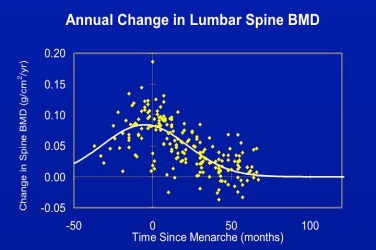
After stratification for months either side of menarche, the peak rate of change for BMD at the lumbar spine was found to be just before menarche, declining rapidly to no change by 60 months post menarche. These findings suggest that optimal PBM and hence optimal adult BMD would not be attained if menarche is delayed due to environmental factors such as low energy density diet. If young athletes such as these go on to enter professional companies, or become professional athletes then optimal, age-matched BMD may never be attained as continued low energy density diet and menstrual dysfunction associated with RED-S may persist. Associated low levels of vital hormones such as insulin like growth factor 1 (IGF-1) and sex steroids impair bone microarchitecture and mineralisation. Thus increasing risk of injury such as stress fracture and other long term health problems. The crucial importance of attaining peak potential during childhood and puberty was described at a recent conference at the Royal Society of Medicine based on life course studies. For example, delay in puberty results in 20% reduction of bone mass.

Graph from study of dancers (Keay et al) showing change in BMD according to time from menarche

slide10

It is concerning that RED-S continues to occur in young athletes, with potential current and long term adverse consequences for health. Young people should certainly be encouraged to exercise but with guidance to avoid any potential pitfalls where at all possible. In my next blog I will delve into the Endocrine mechanisms involved in RED-S: the aetiology and the outcomes.

For further discussion on Endocrine and Metabolic aspects of SEM come to the BASEM annual conference 22/3/18: Health, Hormones and Human Performance

References

Optimal Health: including female athletes! Part 1 Bones Dr N. Keay, British Journal of Sport Medicine

Optimal health: including male athletes! Part 2 Relative Energy Deficiency in sports Dr N. Keay, British Journal of Sport Medicine 4/4/17

Keay N. The modifiable factors affecting bone mineral accumulation in girls: the paradoxical effect of exercise on bone. Nutrition Bulletin 2000, vol 25, no 3. 219-222.

Keay N The effects of exercise training on bone mineral accumulation in adolescent girls. Journal of Bone and Mineral Research. Vol 15, suppl 1 2000.

Keay N, Frost M, Blake G, Patel R, Fogelman I. Study of the factors influencing the accumulation of bone mineral density in girls. Osteoporosis International. 2000 vol 11, suppl 1. S31.

New S, Samuel A, Lowe S, Keay N. Nutrient intake and bone health in ballet dancers and healthy age matched controls: preliminary findings from a longitudinal study on peak bone mass development in adolescent females, Proceedings of the Nutrition Society, 1998

Keay N, Dancing through adolescence. Editorial, British Journal of Sports Medicine, vol 32 no 3 196-7, September 1998.

Bone health and fractures in children. National Osteoporosis Society

Lifetime influences on musculoskeletal ageing and body composition. Lecture by Professor Diana Kuh, Director of MRC Unit for Lifelong Healthy Ageing, at Royal Society of Medicine, conference on Sports Injuries and sports orthopaedics. 17/1/17

Relative Energy Deficiency in sport (REDs) Lecture by Professor Jorum Sundgot-Borgen, IOC working group on female athlete triad and IOC working group on body composition, health and performance. BAEM Spring Conference 2015.

Health and fitness in young people

Optimal health: including male athletes! Part 2 Relative Energy Deficiency in sports

Screen Shot 2018-02-25 at 16.51.20

As discussed in my previous blog Optimal health: including female athletes! Part 1 Bones, the female athlete triad is well described since 1984. The triad comprises disordered eating, amenorrhoea and reduced bone mineral density (BMD). What was uncertain was whether this was a reversible training effect. My study of professional retired pre-menopausal female dancers demonstrated that such bone loss is irreversible, despite resumption of menses. Furthermore, low body weight, independent of amenorrhoea, causes BMD loss. A few female athletes in my subsequent longitudinal study of professional dancers in the English National Ballet company were “robust” and continued to menstruate, in spite of low body weight. However this could have involved anovulatory cycles and therefore low oestrogen. One parameter cannot be considered in isolation.

Furthermore, it has become apparent that the female athlete triad is just part of a much larger picture, known as Relative Energy Deficiency in sport (RED-S). The fundamental issue is that of energy deficiency caused by a mismatch of energy intake and energy expenditure from exercise training. Quality of diet, including micronutrients is also important.

If you are a male athlete, you may be thinking that this is all just a problem for female counterparts? No. Male athletes can also develop RED-S, especially in sports where low body weight confers a sport performance advantage, for example long-distance runners and road cyclists (especially climbers). In a fascinating lecture, Professor Jorum Sundgot-Borgen from the Department of Sport Medicine, at the Norwegian School of Sport and Exercise Science, described the occurrence in male ski jumpers.

This energy deficient state in RED-S in both female and male athletes produces a cascade, network effect on multiple systems: immune, cardiovascular, endocrine, metabolic and haematological effects. Clearly suboptimal functioning in these key areas has implications for current physical and psychological health of athletes and therefore their sport performance. The psychological element is of note as this may be both cause and effect of RED-S. After all in order to be a successful, especially in sport, a high level of motivation, bordering on obsession, is required. Although athletes with RED-S may not fall into a defined clinical disease state, they demonstrate a subclinical condition that impacts health. Performance implications include decreased training response with reduced endurance, muscle strength and glycogen storage, alongside an increased risk of injury, probably due to impaired adaptive response to training and a decrease in co-ordination and concentration. Psychological sequelae include depression and irritability.

Some features of RED-S may be lead to irreversible health issues in the future, as seen in the case of athletic hypothalamic amenorrhoea in female athletes with permanent loss of BMD. In both male and female athletes low energy density diet relative to energy expenditure with training results in low levels of insulin like growth factor 1 (IGF-1) and sex steroid hormones which impair not only sport performance but bone microarchitecture and mineralisation. Although hypothalamic suppression in females is manifest by lack of menstruation, there is no such obvious clinical sign in males, who may nevertheless also be experiencing suppression of the hypothalamic-pituitary-gonadal axis. It has been shown that oestradiol is the key sex steroid hormone in promoting bone mineralisation: for both male and female. In males testosterone is aromatised to oestradiol which in turn acts on bone. As the same mechanisms are involved in the aetiology and effects of RED-S, then the long term consequences will most likely be the same for both female and male athletes.

In my next blog I will explore the consequences of RED-S in young athletes and delve into the Endocrine mechanisms involved in the aetiology and multi-system outcomes for male and female athletes of all ages.

For further discussion on Endocrine and Metabolic aspects of SEM come to the BASEM annual conference 22/3/18: Health, Hormones and Human Performance

References

Optimal health: including female athletes! Part 1 Bones Dr N.Keay, British Journal of Sport Medicine

Keay N, Fogelman I, Blake G. Bone mineral density in professional female dancers. British Journal of Sports Medicine, vol 31 no2, 143-7, June 1997.

From population based norms to personalised medicine: Health, Fitness, Sports Performance Dr N. Keay, British Journal of Sport Medicine

Relative Energy Deficiency in sport (REDs) Lecture by Professor Jorum Sundgot-Borgen, IOC working group on female athlete triad and IOC working group on body composition, health and performance. BAEM Spring Conference 2015.

Mountjoy M, Sundgot-Borgen J, Burke L, Carter S, Constantini N, Lebrun C, Meyer N, Sherman R, Steffen K, Budgett R, Ljungqvist A. The IOC consensus statement: beyond the Female Athlete Triad-Relative Energy Deficiency in Sport (RED-S).Br J Sports Med. 2014 Apr;48(7):491-7.

Margo Mountjoy, IOC Medical Commission Games Group. Relative Energy Deficiency in Sport. Aspetar Sports Medicine Journal.

From population based norms to personalised medicine: Health, Fitness, Sports Performance

animation

“Health is a state of complete physical, mental and social well-being and not merely the absence of disease or infirmity”. World Health Organisation 1948

There has been criticism of this definition, arguing that the word “complete” has opened the door to today’s more medicalised society. However, this trend coincides with increased volume of “patients” seeking optimal health, together with doctors who have a more extensive repertoire of medical interventions at their disposal. In a time-pressed society there is less opportunity for either patient or doctor to explore longer term adaptive measures and prevention strategies, which facilitate taking responsibility for your health. Fortunately Sport and Exercise Medicine became a recognised medical specialty in the UK in 2006. This encompasses population-based strategies for disease prevention outlined in the global initiative founded in 2007 “Exercise is Medicine“.

What has this got to do with sports performance? There are subgroups within the population, such as athletes already taking plenty of exercise. Elite athletes differ from the general population, due to superior adaptation processes to exercise, probably with a genetic component. So are the same “normal” population-based ranges of quantified medical parameters applicable?

This is precisely the issue that arose when I was on the international medical research team investigating the development of a dope test for growth hormone (GH). Crucially, exercise is one of the major stimuli for growth hormone release from the anterior pituitary. So before we could even start investigating potential downstream markers of exogenous GH abuse, the “normal” range for elite athletes had to be established.

In a similar way, are the “normal” ranges for other hormones applicable to athletes? In a fascinating lecture delivered by Dr Kristien Boelaert, Consultant Endocrinologist, it was explained that the distribution for thyroid stimulating hormone (TSH) is affected by multiple factors, including illness, age and exercise status. So “normal” for the general population is not necessarily normal for specific subgroups.

The other issue, especially with the Endocrine system is that hormones act on a variety of tissues and so produce a variety of multi-system network effects with interactions and control feedback loops. Therefore symptoms of malfunction/maladaptation and subclinical conditions can be non specific. From a doctor’s perspective this makes Endocrinology fascinating detective work, but challenging when dealing with subgroups in the population who require a more intensive work-up and individualised approach.

larf5523

The vast majority of research studies involve exclusively male athletes, leaving female athletes under-represented (a recent study on heat adaptation in female athletes being a notable exception). Some areas of research, including my own, have been directed more towards female athletes in the case of female athlete triad, or Relative Energy Deficiency in sports (REDs). REDs is a more appropriate term as it really sums up the important points: male and female can both be affected and therefore should both be studied. There are subgroups within the general population who may not fit the “normal” range: REDs is not necessarily a clinically defined eating disorder from lecture by Professor J. Sundgot-Borgen (IOC working group on female athlete triad and IOC working group on body composition, health and performance).

No medical/physiological/metabolic parameter can be considered in isolation: in the case of REDs, it is not menstrual disturbance and bone health that are affected in isolation. For example, there is currently great debate about whether a low carbohydrate/high fat diet (ketogenic diet) can mobilise fat oxidation and potentially be a training strategy to enhance performance. Needless to say that a recent study contained no female athletes. Given that many female endurance athletes are already lean, potentially driving fat metabolism through diet manipulation may have an impact on Endocrine function, optimal health and hence sport performance. I understand that a forthcoming study will include female athletes.

So a continuum or distinct subgroups in the population? Clearly general medical principles apply to all, with a spectrum from optimal functioning, subclinical conditions through to recognised disease state. We now have evidence of distinct differences between subgroups in the population and even within these subgroups such as male and female athletes. We are moving into a world of personalised medicine, where recommendations for optimal health are tailored for individuals within specific subgroups.

For further discussion on Endocrine and Metabolic aspects of SEM come to the BASEM annual conference 22/3/18: Health, Hormones and Human Performance

References

How should we define health?

Nobody is average but what to do about it? The challenge of individualized disease prevention based on genomics

Exercise is Medicine

Enhancing Sport Performance: part 1

Keay N, Logobardi S, Ehrnborg C, Cittadini A, Rosen T, Healy ML, Dall R, Bassett E, Pentecost C, Powrie J, Boroujerdi M, Jorgensen JOL, Sacca L. Growth hormone (GH) effects on bone and collagen turnover in healthy adults and its potential as a marker of GH abuse in sport: a double blind, placebo controlled study. Journal of Endocrinology and Metabolism. 85 (4) 1505-1512. 2000.

Wallace J, Cuneo R, Keay N, Sonksen P. Responses of markers of bone and collagen turover to exercise, growth hormone (GH) administration and GH withdrawal in trained adult males. Journal of Endocrinology and Metabolism 2000. 85 (1): 124-33.

Wallace J, Cuneo R, Baxter R, Orskov H, Keay N, Sonksen P. Responses of the growth hormone (GH) and insulin-like factor axis to exercise,GH administration and GH withdrawal in trained adult males: a potential test for GH abuse in sport. Journal of Endocrinology and Metabolism 1999. 84 (10): 3591-601.

Keay N, Logobardi S, Ehrnborg C, Cittadini A, Rosen T, Healy ML, Dall R, Bassett E, Pentecost C, Powrie J, Boroujerdi M, Jorgensen JOL, Sacca L. Growth hormone (GH) effects on bone and collagen turnover in healthy adults and its potential usefulness as in the detection of GH abuse in sport: a double blind, placebo controlled study. Endocrine Society Conference 1999.

Wallace J, Cuneo R, Keay N. Bone markers and growth hormone abuse in athletes. Growth hormone and IGF Research, vol 8: 4: 348.

Cuneo R, Wallace J, Keay N. Use of bone markers to detect growth hormone abuse in sport. Proceedings of Annual Scientific Meeting, Endocrine Society of Australia. August 1998, vol 41, p55.

Subclinical hypothydroidism in athletes. Lecture by Dr Kristeien Boelaert at BASEM Spring Conference 2014 on the Fatigued Athlete

Optimal health: especially young athletes! Part 3 Consequences of Relative Energy Deficiency in sports Dr N.Keay, British Association Sport and exercise Medicine

Optimal health: including female athletes! Part 1 Bones Dr N. Keay, British Journal of Sport Medicine

Relative Energy Deficiency in sport (REDs) Lecture by Professor Jorum Sundgot-Borgen, BAEM Spring Conference 2015 on the Female Athlete

Effect of adaptive responses to heat exposure on exercise performance

Low Carbohydrate, High Fat diet impairs exercise economy and negates the performance benefit from intensified training in elite race walkers

Sleep for Health and Sports Performance

“Sleep.. chief nourisher in life’s feast,” Macbeth.

In my blog for British Association of Sport and Exercise Medicine, I described improving sport performance by balancing the adaptive changes induced by training together with the recovery strategies to facilitate this, both in the short and long term.  alec0120-12x17

A recovery strategy which is vital in supporting both health and sport performance, during all stages of the training cycle is sleep.

Sufficient sleep is especially important in young athletes for growth and development and in order to support adaptive changes stimulated by training and to prevent injury. Amongst teenage athletes, studies have shown that a lack of sleep is associated with higher incidence of injury. This may be partly due to impaired proprioception associated with reduced sleep. Sleep is vital for consolidating neurological function and protein synthesis, for example in skeletal muscle. Sleep and exercise are both stimuli for growth hormone release from the anterior pituitary, which mediates some of these adaptive effects.

Lack of sleep can also interfere with functioning of the immune system due to disruption of the circadian rhythm of secretion in key areas of the Endocrine system. Athletes in heavy training, with high “stress” loads and associated elevated cortisol can also experience functional immunosuppression. So a combination of high training load and insufficient sleep can compound to disrupt efficient functioning of the immune system and render athletes more susceptible to illness and so inability to train, adapt and recover effectively.  Lack of sleep disrupts carbohydrate metabolism and recently found to suppress expression of genes regulating cholesterol transport. In overreaching training, lack of sleep could be either a cause or a symptom of insufficient recovery. Certainly sleep deprivation impairs exercise performance capacity (especially aerobic exercise) although whether this is due to a psychological, physical or combination effect is not certain.

Sufficient sleep quality and quantity is required for cognitive function, motor learning, and memory consolidation. All skills that are important for sports performance, especially in young people where there is greater degree of neuroplasticity with potential to develop neuromuscular skills. In a fascinating recorded lecture delivered by Professor Jim Horne at the Royal Society of Medicine, the effects of prolonged wakefulness were described. Apart from slowing reaction time, the executive function of the prefrontal cortex involved in critical decision making is impaired. Important consequences not only for athletes, but for doctors, especially for those of us familiar with the on call system in hospitals back in the bad old days. Sleep pattern pre and post concussive events in teenage athletes is found to be related to degree and duration of concussive symptoms post injury. The explanation of how sleep deprivation can cause these functional effects on the brain has been suggested in a study where subtle changes in cerebral neuronal structural properties were recorded. It is not known whether these changes have long term effects.

So given that sleep is essential not only for health and fitness, but to support sports performance, what strategies to maximise this vital recovery process? Use of electronic devices shortly before bedtime suppresses secretion of melatonin (neurotransmitter and hormone), which is a situation not conducive for sleep. Tryptophan is an amino acid precursor in the synthesis of melatonin and serotonin (neurotransmitter) both of which promote sleep. Recent research demonstrates that protein intake before bed can support skeletal and muscle adaptation from exercise and also recovery from tendon injury. Conversely there is recent report that low levels of serotonin synthesis may contribute to the pathogenesis of autoimmune inflammatory disease such as rheumatoid arthritis. This highlights the subtle balance between degree of change required for positive adaptation and a negative over-response, as in inflammatory conditions. This balance is different for each individual, depending on the clinical setting. So maybe time to revisit the warm milky drink before bed? Like any recovery strategy, sleep can also be periodised to support exercise training, with well structured napping during the day as described by Dr Hannah Macleod, member of gold winning Olympic Hockey team.

In conclusion, when you are planning your training cycle, don’t forget that periodised recovery to compliment your schedule should be factored in, with sleep a priority recovery and adaptation strategy.

For further discussion on Endocrine and Metabolic aspects of SEM come to the BASEM annual conference 22/3/18: Health, Hormones and Human Performance

References

Balance of recovery and adaptation for sports performance Dr N. Keay, British Association of Sport and Exercise Medicine

Sleep, Injury and Performance

Keay N. The effects of growth hormone misuse/abuse. Use and abuse of hormonal agents: Sport 1999. Vol 7, no 3, 11-12.

Wallace J, Cuneo R, Keay N, Sonksen P. Responses of markers of bone and collagen turover to exercise, growth hormone (GH) administration and GH withdrawal in trained adult males. Journal of Endocrinology and Metabolism 2000. 85 (1): 124-33.

Sleep and sporting performance

Young people: neuromuscular skills for sports performance

Prolonged sleep restriction induces changes in pathways involved in cholesterol metabolism and inflammatory responses

“Sleepiness and critical decision making”. Recorded lecture Professor Jim Horne, Royal Society of Medicine 16/11/16

What Does Sleep Deprivation Actually Do To The Brain?

Pre-Sleep Protein Ingestion to Improve the Skeletal Muscle Adaptive Response to Exercise Training

Exercise and fitness in young people – what factors contribute to long term health? Dr N. Keay, British Journal of Sports Medicine

Serotonin Synthesis Enzyme Lack Linked With Rheumatoid Arthritis

“Science in Elite Sport” Dr Hannah Macleod, University of Roehampton, 6/12/16