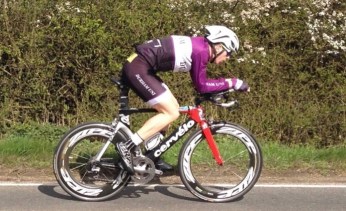
Sport Performance and Relative Energy Deficiency in Sport
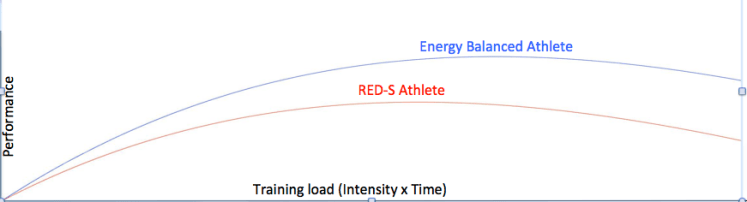
performance-potentialThe Holy Grail of any training program is to improve performance and achieve goals.

Periodisation of training is essential in order to maximise beneficial adaptations for improved performance. Physiological adaptations occur after exercise during the rest period, with repeated exercise/rest cycles leading to “super adaptation”. Adaptations occur at the system level, for example cardiovascular system, and at the cellular level in mitochondria. An increase in mitochondria biogenesis in skeletal muscle occurs in response to exercise training, as described by Dr Andrew Philip at a recent conference at the Royal Society of Medicine (RSM). This cellular level adaptation translates to improved performance with a right shift of the lactate tolerance curve.

The degree of this response is probably genetically determined, though further research would be required to establish causal links, bearing in mind the ethical considerations laid out in the recent position statement from the Australian Institute of Sport (AIS) on genetic testing in sport. Dr David Hughes, Chief Medical Officer of the AIS, explored this ethical stance at a fascinating seminar in London. Genetic testing in sport may be a potentially useful tool for supporting athletes, for example to predict risk of tendon injury or response to exercise and therefore guide training. However, genetic testing should not be used to exclude or include athletes in talent programmes. Although there are polymorphisms associated with currently successful endurance and power athletes, these do not have predictive power. There are many other aspects associated with becoming a successful athlete such as psychology. There is no place for gene doping to improve performance as this is both unethical and unsafe.

To facilitate adaptation, exercise should be combined with periodised rest and nutrition appropriate for the type of sport, as described by Dr Kevin Currell at the conference on “Innovations in sport and exercise nutrition”. Marginal gains have a cumulative effect. However, as discussed by Professor Asker Jeukendrup, performance is more than physiology. Any recommendations to improve performance should be given in context of the situation and the individual. In my opinion women are often underrepresented in studies on athletes and therefore further research is needed in order to be in a position to recommend personalised plans that take into account both gender and individual variability. As suggested by Dr Courtney Kipps at the Sport and Exercise Conference (SEM) in London, generic recommendations to amateur athletes, whether male or female, taking part in marathons could contribute to women being at risk of developing exercise associated hyponatraemia.

For innovation in sport to occur, complex problems approached with an open mind are more likely to facilitate improvement as described by Dr Scott Drawer at the RSM. Nevertheless, there tends to be a diffusion from the innovators and early adapters through to the laggards.

Along the path to attaining the Holy Grail of improved performance there are potential stumbling blocks. For example, overreaching in the short term and overtraining in the longer term can result in underperformance. The underlying issue is a mismatch between periodisation of training and recovery resulting in maladapataion. This situation is magnified in the case of athletes with relative energy deficiency in sport (RED-S). Due to a mismatch of energy intake and expenditure, any attempt at increase in training load will not produce the expected adaptations and improvement in performance. Nutritional supplements will not fix the underlying problem. Nor will treatments for recurrent injuries. As described by Dr Roger Wolman at the London SEM conference, short term bisphosphonante treatment can improve healing in selected athletes with stress fractures or bone marrow lesions.  However if the underlying cause of drop in performance or recurrent injury is RED-S, then tackling the fundamental cause is the only long term solution for both health and sport performance.

Network effects of interactions lead to sport underperformance. Amongst underperforming athletes there will be clusters of athletes displaying certain behaviours and symptoms, which will be discussed in more detail in my next blog. In the case of RED-S as the underlying cause for underperformance, the most effective way to address this multi-system issue is to raise awareness to the potential risk factors in order to support athletes in attaining their full potential.

For further discussion on Endocrine and Metabolic aspects of SEM come to the BASEM annual conference 22/3/18: Health, Hormones and Human Performance

References

Teaching module RED-S British Association Sport and Exercise Medicine

From population based norms to personalised medicine: Health, Fitness, Sports Performance Dr N. Keay, British Journal of Sport Medicine 22/2/17

Balance of recovery and adaptation for sports performance Dr N. Keay, British Association Sport and Exercise Medicine 21/1/17

Sleep for health and sports performance Dr N. Keay, British Journal of Sport Medicine 7/7/17

Fatigue, Sport Performance and Hormones… Dr N. Keay, British Journal of Sport Medicine

Annual Sport and Exercise Medicine Conference, London 8/3/17

Bisphosphonates in the athlete. Dr Roger Wolman, Consultant in Rheumatology and Sport and Exercise Medicine, Royal National Orthopaedic Hospital

Collapse during endurance training. Dr Courtney Kipps, Consultant in Sport and Exercise Medicine. Consultant to Institute of Sport, medical director of London and Blenheim Triathlons

Innovations in Sport and Exercise Nutrition. Royal Society of Medicine 7/3/17

Identifying the challenges: managing research and innovations programme. Dr Scott Drawer, Head of Performance, Sky Hub

Exercise and nutritional approaches to maximise mitochondrial adaptation to endurance exercise. Dr Andrew Philip, Senior Lecturer, University of Birmingham

Making technical nutrition data consumer friendly. Professor Asker Jeukendrup, Professor of Exercise Metabolism, Loughborough University

Innovation and elite athletes: what’s important to the applied sport nutritionists? Dr Kevin Currell, Director of Science and Technical Development, The English Institute of Sport

Genetic Testing and Research in Sport. Dr David Hughes, Chief Medical Officer Australian Institute of Sport. Seminar 10/3/17

Effects of adaptive responses to heat exposure on exercise performance

Over Training Syndrome, Ian Craig, Webinar Human Kinetics 8/3/17

The Fatigued Athlete BASEM Spring Conference 2014

Relative Energy Deficiency in sport (REDs) Lecture by Professor Jorum Sundgot-Borgen, IOC working group on female athlete triad and IOC working group on body composition, health and performance. BAEM Spring Conference 2015.

Mountjoy M, Sundgot-Borgen J, Burke L, Carter S, Constantini N, Lebrun C, Meyer N, Sherman R, Steffen K, Budgett R, Ljungqvist A. The IOC consensus statement: beyond the Female Athlete Triad-Relative Energy Deficiency in Sport (RED-S).Br J Sports Med. 2014 Apr;48(7):491-7.

Inflammation: why and how much?

Inflammation: optimal or overreaction

Systemic autoimmune disease is a chronic overreaction of the inflammatory system. Exercise training is structured to provoke the optimal level of inflammation for adaptation to facilitate sport performance. This blog describes some of the recent significant advances in the understanding of the underlying mechanisms of inflammation and its interactions with the endocrine system, immunity and the microbiome, in relation to autoimmune disease. Applying this knowledge to the adaptive inflammatory effects of training in sport represents a potentially hugely beneficial area of future research.

The ubiquitous microbiomea-muciniphila-233x300

There has been much discussion on the key role of the microbiome, eloquently described by Professor Tim Spector, Professor of Genetic Epidemiology, King’s College, London at recent conferences at the Royal Society of Medicine and The Royal College of Physicians. The microbiome is the DNA of all the microbes in our body. The diversity of the microbiota community in the gut wall of the colon appears to have the most profound effects in terms of disease prediction and indeed a better indicator of developing autoimmune conditions (such as inflammatory bowel disease and rheumatoid arthritis) and metabolic conditions (such as obesity and diabetes mellitus) than our own DNA. So how does the diversity of the gut microbiome have such a profound impact?

It appears that in order to promote diversity of the gut micobiota, prebiotics such as inulin found in fibrous foods should be ingested and then “fertilised” with probiotics found in fermented foods. Enhancing the diversity of the gut microbiome supports the production of short-chain fatty acids which have far reaching influences on epigenetic and immune regulation, the brain, gut hormones and the liver. Furthermore, the diurnal rhythmic movement of the gut microbiota have been shown to regulate host circadian epigenetic, transcriptional and metabolite oscillations which impacts host physiology and disease susceptibility.

In inflammatory conditions such as autoimmune disease, a decrease in the diversity of “good” microbiota has been described. Furthermore, if a decrease in beneficial microbiota is the primary event, then this can lead to an increase in the likelihood of developing autoimmune disease. What is the mechanism of this dynamic interaction between the microbiome and immunity?

Immunity and inflammation

In recent research, the protein receptor marker of microbiota in the gut has been shown to modulate intestinal serotonin transporter activity. Serotonin (5-hydroxytryptamine 5-HT) has shown to be an essential intestinal physiological neuromodulator that is also involved in inflammatory bowel disease. In addition, an increase in inflammatory cytokines such as interleukin 6 and tumour necrosis factor alpha, is know to be associated with low levels of cerebral serotonin and dopamine. The causal link between disrupted immune function and increased inflammation, as in autoimmune disease, is an unfavourable microbiome. Development of autoimmune disease is often multifactorial, for example,  a change in the microbiome might trigger gene expression with adverse effects. Indeed gene expression (independent of sex steroids) has been shown to account for increased prevalence of autoimmune disease in women.

Depression of serotonin levels

Low levels of the neurotransmitter serotonin are know to be linked to depression. Hence prescription of selective serotonin uptake inhibitors to those suffering with depression. However recent research has now revealed a dynamic interaction between peripheral and cerebral effects of the microbiome on immunity and mood, mediated via the circadian release of key hormones such as serotonin. Serotonin is synthesised from precursor tryptophan in the gastrointestinal tract and central nervous system. Low mood in autoimmune disease could be due to psychological factors: knowing that this is a chronic condition with reduced life expectancy. Reduced serotonin, may be a further biochemical reason. Potentially lack of sleep due to pain in autoimmune disease would also suppress serotonin levels.

Applications for microbiome/immunity/inflammation interactions

How will these findings from recent research help in optimising inflammatory mediated adaptations to exercise training and support the understanding and treatment of autoimmune disease? It has been suggested that serotonin could be a treatment for rheumatoid arthritis, as 5HT appears to have a peripheral immuno-regulatoty role in the pathophysiology of this autoimmune disease. Optimising the microbiome, with prebiotics and probiotics, may improve disease activity and improve response to treatment with biologics.

Is the nature of an autoimmune disease such as rheumatoid arthritis (RA) changing? Deformed hands with swollen joints were a perennial favourite for medical examinations. However as described recently at a conference at Royal College of Physicians, although joint destruction is still a feature of RA, this seems to be accompanied by less joint swelling and involvement of greater range of joints. Are the triggers changing rather than a change in the nature of disease? How do nutrition and medication impact the microbiome?

For athletes, apart from periodising energy requirements and micronutrients to support training, encouraging a diverse microbiome will potentially support adaptive changes to training.

For further discussion on Endocrine and Metabolic aspects of SEM come to the BASEM annual conference 22/3/18: Health, Hormones and Human Performance

References

Balance of recovery and adaptation for sports performance. Dr N. Keay, British Association of Sports and Exercise Medicine

Sleep for health and sports performance. Dr N. Keay, British Journal of Sport and Exercise Medicine

Conference Royal Society of Medicine. “Food: the good, the bad and the ugly” 1/2/17

“Food, microbes and health” Professor Tim Spector, Professor of Genetic Epidemiology, King’s College, London

“Nutrition and the gut: food as trigger for disease; food as medicine” Dr Charlie Lees, Chair Scottish Society of Gastroenterology IBD Interest Group. European Crohn’s and Colitis Organisation Committe

“Nutrition and its effect on the immune system” Dr Liam O’Mahony, Head of Molecular Immunology, swiss Institute of Allergy and Asthma Research

Advanced Medicine Conference. Royal College of Physicians 13-16 February 2017

” The gut microbiome clinical and physiological tolerance” Professor Tim Spector, Professor of Genetic Epidemiology, King’s College, London

“Rheumatoid arthritis-ensuring everyone gets the best treatment” Dr Neil Snowden

Microbiota Diurnal Rhythmicity Programs Host Transcriptome Oscillations Cell Volume 167, Issue 6, p1495–1510.e12, 1 December 2016

Intestinal Serotonin Transporter Inhibition by Toll-Like Receptor 2 Activation. A Feedback Modulation. Eva Latorre , Elena Layunta, Laura Grasa, Marta Castro, Julián Pardo, Fernando Gomollón, Ana I. Alcalde †, José E. Mesonero. Published: December 29, 2016

A gene network regulated by the transcription factor VGLL3 as a promoter of sex-biased autoimmune diseases. Yun Liang, Lam C Tsoi, Xianying Xing, Maria A Beamer, William R Swindell, Mrinal K Sarkar, Celine C Berthier, Philip E Stuart, Paul W Harms, Rajan P Nair, James T Elder, John J Voorhees, J Michelle Kahlenberg & Johann E Gudjonsson
Nature Immunology 18, 152–160 (2017)

Serotonin Is Involved in Autoimmune Arthritis through Th17 Immunity and Bone Resorption. Yasmine Chabbi-Achengli, Tereza Coman, Corinne Collet, Jacques Callebert, Michelangelo Corcelli, Hilène Lin, Rachel Rignault, Michel Dy, Marie-Christine de Vernejoul, Francine Côté. The American Journal of Pathology. April 2016 Volume 186, Issue 4, Pages 927–937

Optimal health: for all athletes! Part 4 Mechanisms

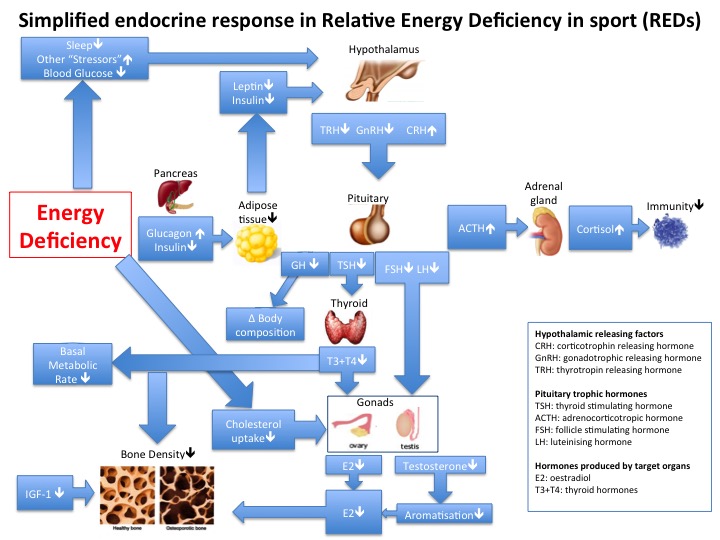
As described in previous blogs, the female athlete triad (disordered eating, amenorrhoea, low bone mineral density) is part of Relative Energy Deficiency in sports (RED-S). RED-S has multi-system effects and can affect both female and male athletes together with young athletes. The fundamental issue is a mismatch of energy availability and energy expenditure through exercise training. As described in previous blogs this situation leads to a range of adverse effects on both health and sports performance. I have tried to unravel the mechanisms involved. Please note the diagram below is simplified view: I have only included selected major neuroendocrine control systems.

REDs

Low energy availability is an example of a metabolic stressor. Other sources of stress in an athlete will be training load and possibly inadequate sleep. These physiological and psychological stressors input into the neuroendocrine system via the hypothalamus. Low plasma glucose concentrations stimulates release of glucagon and suppression of the antagonist hormone insulin from the pancreas. This causes mobilisation of glycogen stores and fat deposits. Feedback of this metabolic situation to the hypothalamus, in the short term is via low blood glucose and insulin levels and in longer term via low levels of leptin from reduced fat reserves.

A critical body weight and threshold body fat percentage was proposed as a requirement for menarche and subsequent regular menstruation by Rose Frisch in 1984. To explain the mechanism behind this observation, a peptide hormone leptin is secreted by adipose tissue which acts on the hypothalamus. Leptin is one of the hormones responsible for enabling the episodic, pulsatile release of gonadotrophin releasing hormone (GnRH) which is key in the onset of puberty, menarche in girls and subsequent menstrual cycles. In my 3 year longitudinal study of 87 pre and post-pubertal girls, those in the Ballet stream had lowest body fat and leptin levels associated with delayed menarche and low bone mineral density (BMD) compared to musical theatre and control girls. Other elements of body composition also play a part as athletes tend to have higher lean mass to fat mass ratio than non-active population and energy intake of 45 KCal/Kg lean mass is thought to be required for regular menstruation.

Suppression of GnRH pulsatility, results in low secretion rates of pituitary trophic factors LH and FSH which are responsible for regulation of sex steroid production by the gonads. In the case of females this manifests as menstrual disruption with associated anovulation resulting in low levels of oestradiol. In males this suppression of the hypothamlamic-pituitary-gonadal axis results in low testosterone production. In males testosterone is aromatised to oestradiol which acts on bone to stimulate bone mineralisation. Low energy availability is an independent factor of impaired bone health due to decreased insulin like growth factor 1 (IGF-1) concentrations. Low body weight was found to be an independent predictor of BMD in my study of 57 retired pre-menopausal professional dancers. Hence low BMD is seen in both male and female athletes with RED-S. Low age matched BMD in athletes is of concern as this increases risk of stress fracture.  In long term suboptimal BMD is irrecoverable even if normal function of hypothamlamic-pituitary-gonadal function is restored, as demonstrated in my study of retired professional dancers. In young athletes RED-S could result in suboptimal peak bone mass (PBM) and associated impaired bone microstructure. Not an ideal situation if RED-S continues into adulthood.

Another consequence of metabolic, physiological and psychological stressor input to the hypothalamus is suppression of the secretion of thyroid hormones, including the tissue conversion of T4 to the more active T3. Athletes may display a variation of “non-thyroidal illness/sick euthyroid” where both TSH and T4 and T3 are in low normal range. Thyroid hormone receptors are expressed in virtually all tissues which explains the extensive effects of suboptimal levels of T4 and T3 in RED-S including on physiology and metabolism.

In contrast, a neuroendocrine control axis that is activated in RED-S is the hypothalamic-pituitary-adrenal axis. In this axis, stressors increase the amplitude of the pulsatile secretion of CRH, which in turn increases the release of ACTH and consequently cortisol secretion from the adrenal cortex. Elevated cortisol suppresses immunity and increases risk of infection. Long term cortisol elevation also impairs the other hormone axes: growth hormone, thyroid and reproductive. In other words the stress response in RED-S amplifies the suppression of key hormones both directly and indirectly via endocrine network interactions.

The original female athlete triad is part of RED-S which can involve male and female athletes of all ages. There are a range of interacting endocrine systems responsible for the multi-system effects seen in RED-S. These effects can impact on current and future health and sports performance.

For further discussion on Endocrine and Metabolic aspects of SEM come to the BASEM annual conference 22/3/18: Health, Hormones and Human Performance

References

Teaching module on RED-S for BASEM as CPD for Sports Physicians

Optimal health: including female athletes! Part 1 Bones Dr N. Keay, British Journal of Sport Medicine

Optimal health: including male athletes! Part 2 Relative Energy Deficiency in sports Dr N.Keay, British Journal of Sport Medicine 4/4/17

Optimal health: especially young athletes! Part 3 Consequences of Relative Energy Deficiency in sports Dr N. Keay, British Association of Sport and Exercise Medicine

Keay N, Fogelman I, Blake G. Effects of dance training on development,endocrine status and bone mineral density in young girls. Current Research in Osteoporosis and bone mineral measurement 103, June 1998.

Jenkins P, Taylor L, Keay N. Decreased serum leptin levels in females dancers are affected by menstrual status. Annual Meeting of the Endocrine Society. June 1998.

Keay N, Dancing through adolescence. Editorial, British Journal of Sports Medicine, vol 32 no 3 196-7, September 1998.

Keay N, Effects of dance training on development, endocrine status and bone mineral density in young girls, Journal of Endocrinology, November 1997, vol 155, OC15.

Relative Energy Deficiency in sport (REDs) Lecture by Professor Jorum Sundgot-Borgen, IOC working group on female athlete triad and IOC working group on body composition, health and performance. BAEM Spring Conference 2015.

Mountjoy M, Sundgot-Borgen J, Burke L, Carter S, Constantini N, Lebrun C, Meyer N, Sherman R, Steffen K, Budgett R, Ljungqvist A. The IOC consensus statement: beyond the Female Athlete Triad-Relative Energy Deficiency in Sport (RED-S).Br J Sports Med. 2014 Apr;48(7):491-7.

“Subclinical hypothydroidism in athletes”. Lecture by Dr Kristeien Boelaert at BASEM Spring Conference 2014 on the Fatigued Athlete

From population based norms to personalised medicine: Health, Fitness, Sports Performance Dr N. Keay, British Journal of Sport Medicine

Sleep for Health and Sports Performance

“Sleep.. chief nourisher in life’s feast,” Macbeth.

In my blog for British Association of Sport and Exercise Medicine, I described improving sport performance by balancing the adaptive changes induced by training together with the recovery strategies to facilitate this, both in the short and long term.  alec0120-12x17

A recovery strategy which is vital in supporting both health and sport performance, during all stages of the training cycle is sleep.

Sufficient sleep is especially important in young athletes for growth and development and in order to support adaptive changes stimulated by training and to prevent injury. Amongst teenage athletes, studies have shown that a lack of sleep is associated with higher incidence of injury. This may be partly due to impaired proprioception associated with reduced sleep. Sleep is vital for consolidating neurological function and protein synthesis, for example in skeletal muscle. Sleep and exercise are both stimuli for growth hormone release from the anterior pituitary, which mediates some of these adaptive effects.

Lack of sleep can also interfere with functioning of the immune system due to disruption of the circadian rhythm of secretion in key areas of the Endocrine system. Athletes in heavy training, with high “stress” loads and associated elevated cortisol can also experience functional immunosuppression. So a combination of high training load and insufficient sleep can compound to disrupt efficient functioning of the immune system and render athletes more susceptible to illness and so inability to train, adapt and recover effectively.  Lack of sleep disrupts carbohydrate metabolism and recently found to suppress expression of genes regulating cholesterol transport. In overreaching training, lack of sleep could be either a cause or a symptom of insufficient recovery. Certainly sleep deprivation impairs exercise performance capacity (especially aerobic exercise) although whether this is due to a psychological, physical or combination effect is not certain.

Sufficient sleep quality and quantity is required for cognitive function, motor learning, and memory consolidation. All skills that are important for sports performance, especially in young people where there is greater degree of neuroplasticity with potential to develop neuromuscular skills. In a fascinating recorded lecture delivered by Professor Jim Horne at the Royal Society of Medicine, the effects of prolonged wakefulness were described. Apart from slowing reaction time, the executive function of the prefrontal cortex involved in critical decision making is impaired. Important consequences not only for athletes, but for doctors, especially for those of us familiar with the on call system in hospitals back in the bad old days. Sleep pattern pre and post concussive events in teenage athletes is found to be related to degree and duration of concussive symptoms post injury. The explanation of how sleep deprivation can cause these functional effects on the brain has been suggested in a study where subtle changes in cerebral neuronal structural properties were recorded. It is not known whether these changes have long term effects.

So given that sleep is essential not only for health and fitness, but to support sports performance, what strategies to maximise this vital recovery process? Use of electronic devices shortly before bedtime suppresses secretion of melatonin (neurotransmitter and hormone), which is a situation not conducive for sleep. Tryptophan is an amino acid precursor in the synthesis of melatonin and serotonin (neurotransmitter) both of which promote sleep. Recent research demonstrates that protein intake before bed can support skeletal and muscle adaptation from exercise and also recovery from tendon injury. Conversely there is recent report that low levels of serotonin synthesis may contribute to the pathogenesis of autoimmune inflammatory disease such as rheumatoid arthritis. This highlights the subtle balance between degree of change required for positive adaptation and a negative over-response, as in inflammatory conditions. This balance is different for each individual, depending on the clinical setting. So maybe time to revisit the warm milky drink before bed? Like any recovery strategy, sleep can also be periodised to support exercise training, with well structured napping during the day as described by Dr Hannah Macleod, member of gold winning Olympic Hockey team.

In conclusion, when you are planning your training cycle, don’t forget that periodised recovery to compliment your schedule should be factored in, with sleep a priority recovery and adaptation strategy.

For further discussion on Endocrine and Metabolic aspects of SEM come to the BASEM annual conference 22/3/18: Health, Hormones and Human Performance

References

Balance of recovery and adaptation for sports performance Dr N. Keay, British Association of Sport and Exercise Medicine

Sleep, Injury and Performance

Keay N. The effects of growth hormone misuse/abuse. Use and abuse of hormonal agents: Sport 1999. Vol 7, no 3, 11-12.

Wallace J, Cuneo R, Keay N, Sonksen P. Responses of markers of bone and collagen turover to exercise, growth hormone (GH) administration and GH withdrawal in trained adult males. Journal of Endocrinology and Metabolism 2000. 85 (1): 124-33.

Sleep and sporting performance

Young people: neuromuscular skills for sports performance

Prolonged sleep restriction induces changes in pathways involved in cholesterol metabolism and inflammatory responses

“Sleepiness and critical decision making”. Recorded lecture Professor Jim Horne, Royal Society of Medicine 16/11/16

What Does Sleep Deprivation Actually Do To The Brain?

Pre-Sleep Protein Ingestion to Improve the Skeletal Muscle Adaptive Response to Exercise Training

Exercise and fitness in young people – what factors contribute to long term health? Dr N. Keay, British Journal of Sports Medicine

Serotonin Synthesis Enzyme Lack Linked With Rheumatoid Arthritis

“Science in Elite Sport” Dr Hannah Macleod, University of Roehampton, 6/12/16

Balance of Recovery and Adaptation for Sport Performance

There has been much recent discussion about the optimal balance of recovery strategies to enable effective return to training, and adaptive processes which occur as the result of training to improve sporting performance.

img_1739

I have been reading the scientific reports to try and gain an understanding of this balance between recovery and adaptation. However, my investigations were put into context after attending two fascinating meetings last week where insightful talks were given by Dr Hannah Macleod Olympic gold medallist and presentations at the King’s Sport and Exercise Medicine Conference.

The scientific principle behind exercise training, of any sort, is that improvement in exercise performance follows from the cycle of overload exercise, followed by recovery phase during which adaptive changes occur in musculoskeletal, cardiovascular, metabolic and neurological systems to improve exercise performance capacity. If sufficient recovery is not taken before next training session, then rather than a progressive stepwise upward improvement in performance capacity, a downward progression occurs. In order to avoid this overreaching and overtraining scenario, rather to improve performance, training cycle as described by Dr Macleod often consists of 3 weeks “on”, followed by “rest” week together with well structured napping.

Theoretically, if the amount of recovery needed could be shortened, then more training could be done and thus potentially more adaptive advantages gained. However, by shortening recovery time with various strategies, this might actually curtail and reduce the very adaptive changes being sought. Considering recovery and adaptive responses of skeletal muscle to exercise, there are recent apparently contradictory reports on the benefits of ice baths. To ice bath or not to? Certainly for muscle injury RICE (rest, ice, compression, elevation) regime is well established. Does the same apply for skeletal muscle recovery and adaptation post exercise? The most recent study on 9 non-elite athletic males revealed that post resistance exercise there was no difference in the inflammatory markers or cellular stress markers in skeletal muscle whether recovery was either active or with cold water immersion. Nevertheless a previous study 2015 by the same group had reported attenuated gains in muscle mass and strength with cold water immersion recovery during 3 months of resistance training in 24 non-elite athletic males. The main issue seems to be that it all depends on the part of the long term training cycle and the type of sport in which the athlete is involved. For example, during pre-season training, where long term adaptations are being sought, then an ice bath might potentially attenuate adaptive responses gained from strength training. On the other hand, in the acute clinical setting, post match in a multi-day competition, an ice bath may be of benefit during the course of this competition period. Certainly Dr Macleod described having a compressive ice system on the team bus post match during the Olympics in Rio where 8 matches were played over 14 days. So recovery, especially from any impact injuries, was far more important than considerations of longer term performance in resistance training post Olympics. Not to mention the psychological beneficial effect to athletes with reduced perception of fatigue and muscle soreness and feeling in control of all factors possible.

Finally I would also suggest that just as there is variation between individuals in the positive adaptive responses to exercise, probably genetically determined, there may also be individual variation in the extent and benefits of recovery strategies. For example, in a clinical setting, an over-response of the inflammatory pathways can actually cause harm, such as in autoimmune disease. Another point is that I have restricted this blog to discuss cellular responses of skeletal muscle to resistance exercise and competition. Clearly there are other mechanisms involved in exercise training adaptations such as the neuroendocrine system, together with other types of exercise training and other recovery strategies.

In conclusion, just as training is periodised, it would appear that recovery strategies should also be periodised in conjunction with the phase of the training /competition cycle and type of sport. Apart from the scientific rational, the psychological aspects for athletes also has to be considered.

For further discussion on Endocrine and Metabolic aspects of SEM come to the BASEM annual conference 22/3/18: Health, Hormones and Human Performance

References

“Science in Elite Sport” talk by Dr Hannah Macleod at University of Roehampton 6/12/16

“Assessing the field of play” King’s Sport and Exercise Medicine Conference, Guy’s Hospital 5/12/16

Inflammation: why and how much? Dr N. Keay, British Association of Sport and exercise Medicine 2017

Endocrine system: balance and interplay in response to exercise training

Rapid recovery versus long term adaptation

Cold water therapy and bad journalism

Do post-work out ice bath help with recovery of sore muscles?

The Use of Cryotherapy in Sports Injuries

The effects of cold water immersion and active recovery on inflammation and cell stress responses in human skeletal muscle after resistance exercise

Post-exercise cold water immersion attenuates acute anabolic signalling and long-term adaptations in muscle to strength training

Health and Fitness in young people

Recent reports reveal that children in Britain are amongst the least active in the world. At the other end of the spectrum there have been a cluster of articles outlining the pitfalls of early specialisation in a single sport.

Regarding the reports of lack of physical activity amongst young people in Britain, this is of concern not only for their current physical and cognitive ability, but has repercussions for health in adult life. Research demonstrates that young people with low cardiovascular fitness have an increased risk of developing cardiovascular disease in adult life. Conversely, the beneficial effects of weight bearing exercise in prepubescent girls has been shown to enhance bone mineral density accumulation, which will have beneficial impact on peak bone mass. However, as I found in my longitudinal studies, the level of exercise has to be in conjunction with an appropriate, well-balanced diet to avoid relative energy deficiency deficiency in sport (RED-S), which can compromise bone mineral density accumulation.m-running

At the other end of the scale, early specialisation in a single sport does not necessarily guarantee long term success. Rather, this can increase the risk of overuse injury in developing bodies, which in turn has long term consequences. Ensuring that all elements of fitness are considered may be an injury prevention strategy. I agree that injury prevention can be viewed as part of optimising sports performance, especially in young athletes for both the present and in the long term.

Sleep is a vital element in optimising health and fitness, especially in young people who may be tempted to look at mobiles or screens of other mobile devices which delays falling asleep by decreasing melatonin production. Sleep promotes mental freshness and physical elements such as boosting immunity and endogenous release of growth hormone. As Macbeth put it, sleep is the “chief nourisher in life’s great feast”.

A balanced approach to health and fitness should be promoted, with young people encouraged to take part in a range of sporting activities.

For further discussion on Endocrine and Metabolic aspects of SEM come to the BASEM annual conference 22/3/18: Health, Hormones and Human Performance

References

Young athletes’ optimal health: Part 3 Consequences of Relative Energy Deficiency in sports Dr N. Keay, British Association Sport and Exercise Medicine, 13/4/17

Sleep for health and sports performance Dr N. Keay, British Journal Sport Medicine, 7/2/17

Optimising health, fitness and sports performance for young people Dr N. Keay, British Journal Sport Medicine

Telegraph article

Active Healthy Kids global alliance

Poor cardiovascular fitness in young people risk for developing cardiovascular disease 

Sports Specialization in Young Athletes

IOC consensus statement on youth athletic development British Journal Sport Medicine

Optimising Health, Fitness and Sports Performance for young people

Version 2Young people need information in order to make life decisions on their health, fitness and sport training with the support of their families, teachers and coaches.

As discussed in my previous blog anima sana in corpore sano, exercise has a positive effect on all aspects of health: physical, mental and social. The beneficial impact of exercise is particularly important during adolescence where bodies and minds are changing. This time period presents a window of opportunity for young people to optimise health and fitness, both in the short term and long term.

The physical benefits of exercise for young people include development of peak bone mass, body composition and enhanced cardio-metabolic health. Exercise in young people has also been shown to support cognitive ability and psychological wellbeing.

Optimising health and all aspects of fitness in young athletes is especially important in order to train and compete successfully. During this phase of growth and development, any imbalances in training, combined with changes in proportions and unfused growth plates can render young athletes more susceptible to overuse injuries. A training strategy for injury prevention in this age group includes development of neuromuscular skills when neuroplasticity is available. Pilates is an excellent form of exercise to support sport performance.

In athletes where low body weight is an advantage for aesthetic reasons or where this confers a competitive advantage, this can lead to relative energy deficiency in sport (RED-S). Previously known as the female athlete triad, this was renamed as male athletes can also be effected. The consequences of this relative energy deficiency state are negative effects on metabolic rate, menstrual function, bone health, protein synthesis and immunity. If this situation arises in young athletes, then this is of concern for current health and may have consequences for health moving into adulthood.

A well informed young person can make decisions to optimise health, fitness and sports performance.

Link to Workshops

For further discussion on Endocrine and Metabolic aspects of SEM come to the BASEM annual conference 22/3/18: Health, Hormones and Human Performance

References

Optimal Health: Especially Young Athletes! Part 3 – Consequences of Relative Energy Deficiency in Sports Dr N. Keay, British Association Sport and Exercise Medicine 13/4/17

Report from Chief Medical Officer

Cognitive benefits of exercise

Injuries in young athletes

Young people: neuromuscular skills for sports performance

IOC consensus statement\

Exercise and fitness in young people – what factors contribute to long term health? Dr N. Keay, British Journal of Sports Medicine