Optimal health: for all athletes! Part 4 Mechanisms

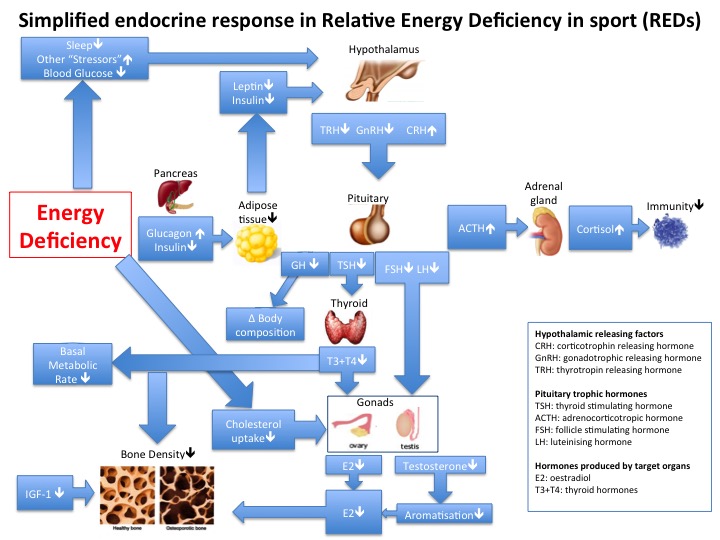
As described in previous blogs, the female athlete triad (disordered eating, amenorrhoea, low bone mineral density) is part of Relative Energy Deficiency in sports (RED-S). RED-S has multi-system effects and can affect both female and male athletes together with young athletes. The fundamental issue is a mismatch of energy availability and energy expenditure through exercise training. As described in previous blogs this situation leads to a range of adverse effects on both health and sports performance. I have tried to unravel the mechanisms involved. Please note the diagram below is simplified view: I have only included selected major neuroendocrine control systems.
REDs

Low energy availability is an example of a metabolic stressor. Other sources of stress in an athlete will be training load and possibly inadequate sleep. These physiological and psychological stressors input into the neuroendocrine system via the hypothalamus. Low plasma glucose concentrations stimulates release of glucagon and suppression of the antagonist hormone insulin from the pancreas. This causes mobilisation of glycogen stores and fat deposits. Feedback of this metabolic situation to the hypothalamus, in the short term is via low blood glucose and insulin levels and in longer term via low levels of leptin from reduced fat reserves.

A critical body weight and threshold body fat percentage was proposed as a requirement for menarche and subsequent regular menstruation by Rose Frisch in 1984. To explain the mechanism behind this observation, a peptide hormone leptin is secreted by adipose tissue which acts on the hypothalamus. Leptin is one of the hormones responsible for enabling the episodic, pulsatile release of gonadotrophin releasing hormone (GnRH) which is key in the onset of puberty, menarche in girls and subsequent menstrual cycles. In my 3 year longitudinal study of 87 pre and post-pubertal girls, those in the Ballet stream had lowest body fat and leptin levels associated with delayed menarche and low bone mineral density (BMD) compared to musical theatre and control girls. Other elements of body composition also play a part as athletes tend to have higher lean mass to fat mass ratio than non-active population and energy intake of 45 KCal/Kg lean mass is thought to be required for regular menstruation.

Suppression of GnRH pulsatility, results in low secretion rates of pituitary trophic factors LH and FSH which are responsible for regulation of sex steroid production by the gonads. In the case of females this manifests as menstrual disruption with associated anovulation resulting in low levels of oestradiol. In males this suppression of the hypothamlamic-pituitary-gonadal axis results in low testosterone production. In males testosterone is aromatised to oestradiol which acts on bone to stimulate bone mineralisation. Low energy availability is an independent factor of impaired bone health due to decreased insulin like growth factor 1 (IGF-1) concentrations. Low body weight was found to be an independent predictor of BMD in my study of 57 retired pre-menopausal professional dancers. Hence low BMD is seen in both male and female athletes with RED-S. Low age matched BMD in athletes is of concern as this increases risk of stress fracture.  In long term suboptimal BMD is irrecoverable even if normal function of hypothamlamic-pituitary-gonadal function is restored, as demonstrated in my study of retired professional dancers. In young athletes RED-S could result in suboptimal peak bone mass (PBM) and associated impaired bone microstructure. Not an ideal situation if RED-S continues into adulthood.

Another consequence of metabolic, physiological and psychological stressor input to the hypothalamus is suppression of the secretion of thyroid hormones, including the tissue conversion of T4 to the more active T3. Athletes may display a variation of “non-thyroidal illness/sick euthyroid” where both TSH and T4 and T3 are in low normal range. Thyroid hormone receptors are expressed in virtually all tissues which explains the extensive effects of suboptimal levels of T4 and T3 in RED-S including on physiology and metabolism.

In contrast, a neuroendocrine control axis that is activated in RED-S is the hypothalamic-pituitary-adrenal axis. In this axis, stressors increase the amplitude of the pulsatile secretion of CRH, which in turn increases the release of ACTH and consequently cortisol secretion from the adrenal cortex. Elevated cortisol suppresses immunity and increases risk of infection. Long term cortisol elevation also impairs the other hormone axes: growth hormone, thyroid and reproductive. In other words the stress response in RED-S amplifies the suppression of key hormones both directly and indirectly via endocrine network interactions.

The original female athlete triad is part of RED-S which can involve male and female athletes of all ages. There are a range of interacting endocrine systems responsible for the multi-system effects seen in RED-S. These effects can impact on current and future health and sports performance.

For further discussion on Endocrine and Metabolic aspects of SEM come to the BASEM annual conference 22/3/18: Health, Hormones and Human Performance

References

Teaching module on RED-S for BASEM as CPD for Sports Physicians

Optimal health: including female athletes! Part 1 Bones Dr N. Keay, British Journal of Sport Medicine

Optimal health: including male athletes! Part 2 Relative Energy Deficiency in sports Dr N.Keay, British Journal of Sport Medicine 4/4/17

Optimal health: especially young athletes! Part 3 Consequences of Relative Energy Deficiency in sports Dr N. Keay, British Association of Sport and Exercise Medicine

Keay N, Fogelman I, Blake G. Effects of dance training on development,endocrine status and bone mineral density in young girls. Current Research in Osteoporosis and bone mineral measurement 103, June 1998.

Jenkins P, Taylor L, Keay N. Decreased serum leptin levels in females dancers are affected by menstrual status. Annual Meeting of the Endocrine Society. June 1998.

Keay N, Dancing through adolescence. Editorial, British Journal of Sports Medicine, vol 32 no 3 196-7, September 1998.

Keay N, Effects of dance training on development, endocrine status and bone mineral density in young girls, Journal of Endocrinology, November 1997, vol 155, OC15.

Relative Energy Deficiency in sport (REDs) Lecture by Professor Jorum Sundgot-Borgen, IOC working group on female athlete triad and IOC working group on body composition, health and performance. BAEM Spring Conference 2015.

Mountjoy M, Sundgot-Borgen J, Burke L, Carter S, Constantini N, Lebrun C, Meyer N, Sherman R, Steffen K, Budgett R, Ljungqvist A. The IOC consensus statement: beyond the Female Athlete Triad-Relative Energy Deficiency in Sport (RED-S).Br J Sports Med. 2014 Apr;48(7):491-7.

“Subclinical hypothydroidism in athletes”. Lecture by Dr Kristeien Boelaert at BASEM Spring Conference 2014 on the Fatigued Athlete

From population based norms to personalised medicine: Health, Fitness, Sports Performance Dr N. Keay, British Journal of Sport Medicine
Optimal health: especially young athletes! Part 3 Consequences of Relative Energy Deficiency in sports

In my previous blogs I have described the adverse effects of Relative Energy Deficiency in sports (RED-S) in both female and male athletes both in terms of current health and sport performance and potential long term health problems. What about young aspiring athletes? There is concern that early sport specialisation, imbalances in training not covering the full range of the components of fitness, together with reduced sleep, all combine to increase injury risk. Young athletes are particularly vulnerable to developing RED-S during a period of growth and development accompanied by a high training load.

Sufficient energy availability and diet quality, including micronutrients, is especially important in young athletes. To investigate further I undertook a three year longitudinal study involving 87 pre- and post-pubertal girls, spread across control pupils at day school together with students in vocational training in both musical theatre and ballet streams. There was a gradation in hours of physical exercise training per week ranging from controls with least, followed by musical theatre, through to ballet stream with the most.

In all girls dietary, training and menstrual history were recorded and collected every six months. At the same visit anthropometric measurements were performed by an experienced Paediatric nurse and bloods were taken for Endocrine markers of bone metabolism and leptin. Annual DEXA scans measured body composition, total body bone mineral density (BMD) and BMD at lumbar spine (including volumetric) and BMD at femoral neck.

The key findings included a correlation between hours of training and the age of menarche and subsequent frequency of periods. In turn, any menstrual dysfunction was associated with low age-matched (Z score) BMD at the lumbar spine. There were significant differences between groups for age-matched (Z score) of BMD at lumbar spine, with musical theatre students having the highest and ballet students the lowest. There were no significant differences in dietary intake between the three groups of students, yet the energy expenditure from training would be very different. In other words, if there is balance between energy availability and energy expenditure from training, resulting in concurrent normal menstrual function, then such a level of exercise has a beneficial effect on BMD accrual in young athletes, as demonstrated in musical theatre students. Conversely if there is a mismatch between energy intake and output due to high training volume, this leads to menstrual dysfunction, which in turn adversely impacts BMD accrual, as shown in the ballet students.

I was fortunate to have two sets of identical twins in my study. One girl in each twin pair in the ballet stream at vocational school had a twin at a non-dance school. So in each twin set, there would be identical genetic programming for age of menarche and accumulation of peak bone mass (PBM). However the environmental influence of training had the dominant effect, as shown by a much later age of menarche and decreased final BMD at the lumbar spine in the ballet dancing girl in each identical twin pair.

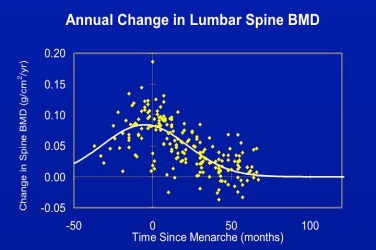
After stratification for months either side of menarche, the peak rate of change for BMD at the lumbar spine was found to be just before menarche, declining rapidly to no change by 60 months post menarche. These findings suggest that optimal PBM and hence optimal adult BMD would not be attained if menarche is delayed due to environmental factors such as low energy density diet. If young athletes such as these go on to enter professional companies, or become professional athletes then optimal, age-matched BMD may never be attained as continued low energy density diet and menstrual dysfunction associated with RED-S may persist. Associated low levels of vital hormones such as insulin like growth factor 1 (IGF-1) and sex steroids impair bone microarchitecture and mineralisation. Thus increasing risk of injury such as stress fracture and other long term health problems. The crucial importance of attaining peak potential during childhood and puberty was described at a recent conference at the Royal Society of Medicine based on life course studies. For example, delay in puberty results in 20% reduction of bone mass.

Graph from study of dancers (Keay et al) showing change in BMD according to time from menarche

slide10

It is concerning that RED-S continues to occur in young athletes, with potential current and long term adverse consequences for health. Young people should certainly be encouraged to exercise but with guidance to avoid any potential pitfalls where at all possible. In my next blog I will delve into the Endocrine mechanisms involved in RED-S: the aetiology and the outcomes.

For further discussion on Endocrine and Metabolic aspects of SEM come to the BASEM annual conference 22/3/18: Health, Hormones and Human Performance

References

Optimal Health: including female athletes! Part 1 Bones Dr N. Keay, British Journal of Sport Medicine

Optimal health: including male athletes! Part 2 Relative Energy Deficiency in sports Dr N. Keay, British Journal of Sport Medicine 4/4/17

Keay N. The modifiable factors affecting bone mineral accumulation in girls: the paradoxical effect of exercise on bone. Nutrition Bulletin 2000, vol 25, no 3. 219-222.

Keay N The effects of exercise training on bone mineral accumulation in adolescent girls. Journal of Bone and Mineral Research. Vol 15, suppl 1 2000.

Keay N, Frost M, Blake G, Patel R, Fogelman I. Study of the factors influencing the accumulation of bone mineral density in girls. Osteoporosis International. 2000 vol 11, suppl 1. S31.

New S, Samuel A, Lowe S, Keay N. Nutrient intake and bone health in ballet dancers and healthy age matched controls: preliminary findings from a longitudinal study on peak bone mass development in adolescent females, Proceedings of the Nutrition Society, 1998

Keay N, Dancing through adolescence. Editorial, British Journal of Sports Medicine, vol 32 no 3 196-7, September 1998.

Bone health and fractures in children. National Osteoporosis Society

Lifetime influences on musculoskeletal ageing and body composition. Lecture by Professor Diana Kuh, Director of MRC Unit for Lifelong Healthy Ageing, at Royal Society of Medicine, conference on Sports Injuries and sports orthopaedics. 17/1/17

Relative Energy Deficiency in sport (REDs) Lecture by Professor Jorum Sundgot-Borgen, IOC working group on female athlete triad and IOC working group on body composition, health and performance. BAEM Spring Conference 2015.

Health and fitness in young people

Optimal health: including male athletes! Part 2 Relative Energy Deficiency in sports

Screen Shot 2018-02-25 at 16.51.20

As discussed in my previous blog Optimal health: including female athletes! Part 1 Bones, the female athlete triad is well described since 1984. The triad comprises disordered eating, amenorrhoea and reduced bone mineral density (BMD). What was uncertain was whether this was a reversible training effect. My study of professional retired pre-menopausal female dancers demonstrated that such bone loss is irreversible, despite resumption of menses. Furthermore, low body weight, independent of amenorrhoea, causes BMD loss. A few female athletes in my subsequent longitudinal study of professional dancers in the English National Ballet company were “robust” and continued to menstruate, in spite of low body weight. However this could have involved anovulatory cycles and therefore low oestrogen. One parameter cannot be considered in isolation.

Furthermore, it has become apparent that the female athlete triad is just part of a much larger picture, known as Relative Energy Deficiency in sport (RED-S). The fundamental issue is that of energy deficiency caused by a mismatch of energy intake and energy expenditure from exercise training. Quality of diet, including micronutrients is also important.

If you are a male athlete, you may be thinking that this is all just a problem for female counterparts? No. Male athletes can also develop RED-S, especially in sports where low body weight confers a sport performance advantage, for example long-distance runners and road cyclists (especially climbers). In a fascinating lecture, Professor Jorum Sundgot-Borgen from the Department of Sport Medicine, at the Norwegian School of Sport and Exercise Science, described the occurrence in male ski jumpers.

This energy deficient state in RED-S in both female and male athletes produces a cascade, network effect on multiple systems: immune, cardiovascular, endocrine, metabolic and haematological effects. Clearly suboptimal functioning in these key areas has implications for current physical and psychological health of athletes and therefore their sport performance. The psychological element is of note as this may be both cause and effect of RED-S. After all in order to be a successful, especially in sport, a high level of motivation, bordering on obsession, is required. Although athletes with RED-S may not fall into a defined clinical disease state, they demonstrate a subclinical condition that impacts health. Performance implications include decreased training response with reduced endurance, muscle strength and glycogen storage, alongside an increased risk of injury, probably due to impaired adaptive response to training and a decrease in co-ordination and concentration. Psychological sequelae include depression and irritability.

Some features of RED-S may be lead to irreversible health issues in the future, as seen in the case of athletic hypothalamic amenorrhoea in female athletes with permanent loss of BMD. In both male and female athletes low energy density diet relative to energy expenditure with training results in low levels of insulin like growth factor 1 (IGF-1) and sex steroid hormones which impair not only sport performance but bone microarchitecture and mineralisation. Although hypothalamic suppression in females is manifest by lack of menstruation, there is no such obvious clinical sign in males, who may nevertheless also be experiencing suppression of the hypothalamic-pituitary-gonadal axis. It has been shown that oestradiol is the key sex steroid hormone in promoting bone mineralisation: for both male and female. In males testosterone is aromatised to oestradiol which in turn acts on bone. As the same mechanisms are involved in the aetiology and effects of RED-S, then the long term consequences will most likely be the same for both female and male athletes.

In my next blog I will explore the consequences of RED-S in young athletes and delve into the Endocrine mechanisms involved in the aetiology and multi-system outcomes for male and female athletes of all ages.

For further discussion on Endocrine and Metabolic aspects of SEM come to the BASEM annual conference 22/3/18: Health, Hormones and Human Performance

References

Optimal health: including female athletes! Part 1 Bones Dr N.Keay, British Journal of Sport Medicine

Keay N, Fogelman I, Blake G. Bone mineral density in professional female dancers. British Journal of Sports Medicine, vol 31 no2, 143-7, June 1997.

From population based norms to personalised medicine: Health, Fitness, Sports Performance Dr N. Keay, British Journal of Sport Medicine

Relative Energy Deficiency in sport (REDs) Lecture by Professor Jorum Sundgot-Borgen, IOC working group on female athlete triad and IOC working group on body composition, health and performance. BAEM Spring Conference 2015.

Mountjoy M, Sundgot-Borgen J, Burke L, Carter S, Constantini N, Lebrun C, Meyer N, Sherman R, Steffen K, Budgett R, Ljungqvist A. The IOC consensus statement: beyond the Female Athlete Triad-Relative Energy Deficiency in Sport (RED-S).Br J Sports Med. 2014 Apr;48(7):491-7.

Margo Mountjoy, IOC Medical Commission Games Group. Relative Energy Deficiency in Sport. Aspetar Sports Medicine Journal.

Optimal health: including female athletes! Part 1 Bones

webmd_rm_photo_of_porous_bonesIt is hard to dispute that women are underrepresented in medical research and certainly there are not many studies that include female athletes. Does this matter? After all whatever your gender the same physiological and metabolic processes occur. However the Endocrine system is where there are distinct differences in sex steroid production, which in turn have different responses in multiple target cells.

Although studies on changes in exercise performance in response to various dietary interventions and training regimes are often very interesting and well described, I am left feeling slightly uneasy when the subjects are all males. The cause for my concern is that the female hypothalamus-pituitary-ovarian axis is a particularly sensitive system with complex feedback loops and interacting networks.

Menstrual disturbance is not unusual amongst women in sport/dance where low body weight is an advantage. When a ballet dancer performs pointe work, putting full body weight through the big toe is hard enough, without extra load! Some women might consider it a convenience to be spared the hassle of menstruation. At age 24, I was perfectly fine never having had a period (primary amenorrhoea), or so I thought, being no more tired than other hospital medical colleagues working full time, studying for postgraduate medical exams and also involved in exercise training.

While working as a SHO at Northwick Park Hospital, I volunteered to be included in a study at the British Olympic Medical Association. The study was of female lightweight rowers and ballet dancers to look at VO2 max, percentage body fat and bone mineral density (BMD). I had been doing Ballet intensively (and obsessively) from a very young age, together with restricted fat and carbohydrate intake. Sounds a familiar scenario? Although I looked perfectly healthy (and I did not fit into a clinical condition requiring treatment), worked and danced well, my bone density was worryingly low. So if you are a female doing weight-bearing exercise or resistance training which loads the skeleton, these activities promoting osteogenesis will be negated if you are not ovulating and producing adequate oestrogens. The female athlete triad composed of disordered eating, amenorrhoea and low BMD was originally described by Drinkwater in 1984. However, once pathological states causing amenorrhoea have been excluded, in medical terms the female athlete triad did not necessarily constitute a disease state requiring intervention, rather subset of the “normal population”.

How significant is having low BMD compared to the age-matched population during your 20s? Could this even be viewed as a reversible adaptation to training, reflected in site specific differences in BMD according to sport? After all, when female athletes retire with decreased training “stress” and more “relaxed” diet, menses often resume and therefore does BMD also improve? This was the question I sought to answer in my study on 57 premenopausal retired professional dancers. Even with return of menses, if these athletes had experienced previous amenorrhoea of more than 6 month duration, then bone loss was irrecoverable. Current low BMD was also correlated to lowest body weight (independent of amenorrhoea) during dance career and later age of menarche. There did not appear to be any protective effect of being on the oral contraceptive pill. Constructing a model of BMD using multiple regression 33.6% of total variation in z (age matched) score for BMD at lumbar spine was accounted for by duration of amenorrhea, age at menarche and lowest body weight during dance career. So “athletic” hypothalamic amenorrhea rather than being a reversible, adaptive response has long term, irreversible effects on BMD.

Apart from bone metabolism, what other systems are impacted by mismatch of energy intake and expenditure in overtly healthy athletes? Are the endocrine and metabolic systems in male athletes also affected by subtle imbalances in training energy expenditure and dietary intake? What about young athletes? In my next blog I will explore the rationale behind the original female athlete triad now being described as part of Relative Energy Deficiency in sports (RED-S). The implications for current health and sports performance, as well as long term health in both adult men and women and young athletes.

For further discussion on Endocrine and Metabolic aspects of SEM come to the BASEM annual conference 22/3/18: Health, Hormones and Human Performance

References

Keay N, Fogelman I, Blake G. Bone mineral density in professional female dancers. British Journal of Sports Medicine, vol 31 no2, 143-7, June 1997.

Keay N. Bone mineral density in professional female dancers. IOC World Congress on Sports Sciences. October 1997.

Keay N, Bone Mineral Density in Professional Female Dancers, Journal of Endocrinology, November 1996, volume 151, supplement p5.

Keay N, Bone Mineral Density in Female Dancers, abstract Clinical Science, Volume 91, no1, July 1996, 20p.

Keay N, Dancers, Periods and Osteoporosis, Dancing Times, September 1995, 1187-1189

Keay N, A study of Dancers, Periods and Osteoporosis, Dance Gazette, Issue 3, 1996, 47

Fit to Dance? Report of National inquiry into dancers’ health

Fit but fragile. National Osteoporosis Society

Your body your risk. Dance UK

From population based norms to personalised medicine: Health, Fitness, Sports Performance British Journal of Sport Medicine 22/2/17

Optimal Health: Including Male Athletes! Part 2 – REDs Dr N. Keay, British Association Sport and Exercise Medicine

Optimal health: especially young athletes! Part 3 Consequences of Relative Energy Deficiency in sports Dr N. Keay, British Association Sport and Exercise Medicine

Optimal health: for all athletes! Part 4 Mechanisms Dr N. Keay, British Association Sport and Exercise Medicine

From population based norms to personalised medicine: Health, Fitness, Sports Performance

animation

“Health is a state of complete physical, mental and social well-being and not merely the absence of disease or infirmity”. World Health Organisation 1948

There has been criticism of this definition, arguing that the word “complete” has opened the door to today’s more medicalised society. However, this trend coincides with increased volume of “patients” seeking optimal health, together with doctors who have a more extensive repertoire of medical interventions at their disposal. In a time-pressed society there is less opportunity for either patient or doctor to explore longer term adaptive measures and prevention strategies, which facilitate taking responsibility for your health. Fortunately Sport and Exercise Medicine became a recognised medical specialty in the UK in 2006. This encompasses population-based strategies for disease prevention outlined in the global initiative founded in 2007 “Exercise is Medicine“.

What has this got to do with sports performance? There are subgroups within the population, such as athletes already taking plenty of exercise. Elite athletes differ from the general population, due to superior adaptation processes to exercise, probably with a genetic component. So are the same “normal” population-based ranges of quantified medical parameters applicable?

This is precisely the issue that arose when I was on the international medical research team investigating the development of a dope test for growth hormone (GH). Crucially, exercise is one of the major stimuli for growth hormone release from the anterior pituitary. So before we could even start investigating potential downstream markers of exogenous GH abuse, the “normal” range for elite athletes had to be established.

In a similar way, are the “normal” ranges for other hormones applicable to athletes? In a fascinating lecture delivered by Dr Kristien Boelaert, Consultant Endocrinologist, it was explained that the distribution for thyroid stimulating hormone (TSH) is affected by multiple factors, including illness, age and exercise status. So “normal” for the general population is not necessarily normal for specific subgroups.

The other issue, especially with the Endocrine system is that hormones act on a variety of tissues and so produce a variety of multi-system network effects with interactions and control feedback loops. Therefore symptoms of malfunction/maladaptation and subclinical conditions can be non specific. From a doctor’s perspective this makes Endocrinology fascinating detective work, but challenging when dealing with subgroups in the population who require a more intensive work-up and individualised approach.

larf5523

The vast majority of research studies involve exclusively male athletes, leaving female athletes under-represented (a recent study on heat adaptation in female athletes being a notable exception). Some areas of research, including my own, have been directed more towards female athletes in the case of female athlete triad, or Relative Energy Deficiency in sports (REDs). REDs is a more appropriate term as it really sums up the important points: male and female can both be affected and therefore should both be studied. There are subgroups within the general population who may not fit the “normal” range: REDs is not necessarily a clinically defined eating disorder from lecture by Professor J. Sundgot-Borgen (IOC working group on female athlete triad and IOC working group on body composition, health and performance).

No medical/physiological/metabolic parameter can be considered in isolation: in the case of REDs, it is not menstrual disturbance and bone health that are affected in isolation. For example, there is currently great debate about whether a low carbohydrate/high fat diet (ketogenic diet) can mobilise fat oxidation and potentially be a training strategy to enhance performance. Needless to say that a recent study contained no female athletes. Given that many female endurance athletes are already lean, potentially driving fat metabolism through diet manipulation may have an impact on Endocrine function, optimal health and hence sport performance. I understand that a forthcoming study will include female athletes.

So a continuum or distinct subgroups in the population? Clearly general medical principles apply to all, with a spectrum from optimal functioning, subclinical conditions through to recognised disease state. We now have evidence of distinct differences between subgroups in the population and even within these subgroups such as male and female athletes. We are moving into a world of personalised medicine, where recommendations for optimal health are tailored for individuals within specific subgroups.

For further discussion on Endocrine and Metabolic aspects of SEM come to the BASEM annual conference 22/3/18: Health, Hormones and Human Performance

References

How should we define health?

Nobody is average but what to do about it? The challenge of individualized disease prevention based on genomics

Exercise is Medicine

Enhancing Sport Performance: part 1

Keay N, Logobardi S, Ehrnborg C, Cittadini A, Rosen T, Healy ML, Dall R, Bassett E, Pentecost C, Powrie J, Boroujerdi M, Jorgensen JOL, Sacca L. Growth hormone (GH) effects on bone and collagen turnover in healthy adults and its potential as a marker of GH abuse in sport: a double blind, placebo controlled study. Journal of Endocrinology and Metabolism. 85 (4) 1505-1512. 2000.

Wallace J, Cuneo R, Keay N, Sonksen P. Responses of markers of bone and collagen turover to exercise, growth hormone (GH) administration and GH withdrawal in trained adult males. Journal of Endocrinology and Metabolism 2000. 85 (1): 124-33.

Wallace J, Cuneo R, Baxter R, Orskov H, Keay N, Sonksen P. Responses of the growth hormone (GH) and insulin-like factor axis to exercise,GH administration and GH withdrawal in trained adult males: a potential test for GH abuse in sport. Journal of Endocrinology and Metabolism 1999. 84 (10): 3591-601.

Keay N, Logobardi S, Ehrnborg C, Cittadini A, Rosen T, Healy ML, Dall R, Bassett E, Pentecost C, Powrie J, Boroujerdi M, Jorgensen JOL, Sacca L. Growth hormone (GH) effects on bone and collagen turnover in healthy adults and its potential usefulness as in the detection of GH abuse in sport: a double blind, placebo controlled study. Endocrine Society Conference 1999.

Wallace J, Cuneo R, Keay N. Bone markers and growth hormone abuse in athletes. Growth hormone and IGF Research, vol 8: 4: 348.

Cuneo R, Wallace J, Keay N. Use of bone markers to detect growth hormone abuse in sport. Proceedings of Annual Scientific Meeting, Endocrine Society of Australia. August 1998, vol 41, p55.

Subclinical hypothydroidism in athletes. Lecture by Dr Kristeien Boelaert at BASEM Spring Conference 2014 on the Fatigued Athlete

Optimal health: especially young athletes! Part 3 Consequences of Relative Energy Deficiency in sports Dr N.Keay, British Association Sport and exercise Medicine

Optimal health: including female athletes! Part 1 Bones Dr N. Keay, British Journal of Sport Medicine

Relative Energy Deficiency in sport (REDs) Lecture by Professor Jorum Sundgot-Borgen, BAEM Spring Conference 2015 on the Female Athlete

Effect of adaptive responses to heat exposure on exercise performance

Low Carbohydrate, High Fat diet impairs exercise economy and negates the performance benefit from intensified training in elite race walkers

Sleep for Health and Sports Performance

“Sleep.. chief nourisher in life’s feast,” Macbeth.

In my blog for British Association of Sport and Exercise Medicine, I described improving sport performance by balancing the adaptive changes induced by training together with the recovery strategies to facilitate this, both in the short and long term.  alec0120-12x17

A recovery strategy which is vital in supporting both health and sport performance, during all stages of the training cycle is sleep.

Sufficient sleep is especially important in young athletes for growth and development and in order to support adaptive changes stimulated by training and to prevent injury. Amongst teenage athletes, studies have shown that a lack of sleep is associated with higher incidence of injury. This may be partly due to impaired proprioception associated with reduced sleep. Sleep is vital for consolidating neurological function and protein synthesis, for example in skeletal muscle. Sleep and exercise are both stimuli for growth hormone release from the anterior pituitary, which mediates some of these adaptive effects.

Lack of sleep can also interfere with functioning of the immune system due to disruption of the circadian rhythm of secretion in key areas of the Endocrine system. Athletes in heavy training, with high “stress” loads and associated elevated cortisol can also experience functional immunosuppression. So a combination of high training load and insufficient sleep can compound to disrupt efficient functioning of the immune system and render athletes more susceptible to illness and so inability to train, adapt and recover effectively.  Lack of sleep disrupts carbohydrate metabolism and recently found to suppress expression of genes regulating cholesterol transport. In overreaching training, lack of sleep could be either a cause or a symptom of insufficient recovery. Certainly sleep deprivation impairs exercise performance capacity (especially aerobic exercise) although whether this is due to a psychological, physical or combination effect is not certain.

Sufficient sleep quality and quantity is required for cognitive function, motor learning, and memory consolidation. All skills that are important for sports performance, especially in young people where there is greater degree of neuroplasticity with potential to develop neuromuscular skills. In a fascinating recorded lecture delivered by Professor Jim Horne at the Royal Society of Medicine, the effects of prolonged wakefulness were described. Apart from slowing reaction time, the executive function of the prefrontal cortex involved in critical decision making is impaired. Important consequences not only for athletes, but for doctors, especially for those of us familiar with the on call system in hospitals back in the bad old days. Sleep pattern pre and post concussive events in teenage athletes is found to be related to degree and duration of concussive symptoms post injury. The explanation of how sleep deprivation can cause these functional effects on the brain has been suggested in a study where subtle changes in cerebral neuronal structural properties were recorded. It is not known whether these changes have long term effects.

So given that sleep is essential not only for health and fitness, but to support sports performance, what strategies to maximise this vital recovery process? Use of electronic devices shortly before bedtime suppresses secretion of melatonin (neurotransmitter and hormone), which is a situation not conducive for sleep. Tryptophan is an amino acid precursor in the synthesis of melatonin and serotonin (neurotransmitter) both of which promote sleep. Recent research demonstrates that protein intake before bed can support skeletal and muscle adaptation from exercise and also recovery from tendon injury. Conversely there is recent report that low levels of serotonin synthesis may contribute to the pathogenesis of autoimmune inflammatory disease such as rheumatoid arthritis. This highlights the subtle balance between degree of change required for positive adaptation and a negative over-response, as in inflammatory conditions. This balance is different for each individual, depending on the clinical setting. So maybe time to revisit the warm milky drink before bed? Like any recovery strategy, sleep can also be periodised to support exercise training, with well structured napping during the day as described by Dr Hannah Macleod, member of gold winning Olympic Hockey team.

In conclusion, when you are planning your training cycle, don’t forget that periodised recovery to compliment your schedule should be factored in, with sleep a priority recovery and adaptation strategy.

For further discussion on Endocrine and Metabolic aspects of SEM come to the BASEM annual conference 22/3/18: Health, Hormones and Human Performance

References

Balance of recovery and adaptation for sports performance Dr N. Keay, British Association of Sport and Exercise Medicine

Sleep, Injury and Performance

Keay N. The effects of growth hormone misuse/abuse. Use and abuse of hormonal agents: Sport 1999. Vol 7, no 3, 11-12.

Wallace J, Cuneo R, Keay N, Sonksen P. Responses of markers of bone and collagen turover to exercise, growth hormone (GH) administration and GH withdrawal in trained adult males. Journal of Endocrinology and Metabolism 2000. 85 (1): 124-33.

Sleep and sporting performance

Young people: neuromuscular skills for sports performance

Prolonged sleep restriction induces changes in pathways involved in cholesterol metabolism and inflammatory responses

“Sleepiness and critical decision making”. Recorded lecture Professor Jim Horne, Royal Society of Medicine 16/11/16

What Does Sleep Deprivation Actually Do To The Brain?

Pre-Sleep Protein Ingestion to Improve the Skeletal Muscle Adaptive Response to Exercise Training

Exercise and fitness in young people – what factors contribute to long term health? Dr N. Keay, British Journal of Sports Medicine

Serotonin Synthesis Enzyme Lack Linked With Rheumatoid Arthritis

“Science in Elite Sport” Dr Hannah Macleod, University of Roehampton, 6/12/16

Balance of Recovery and Adaptation for Sport Performance

There has been much recent discussion about the optimal balance of recovery strategies to enable effective return to training, and adaptive processes which occur as the result of training to improve sporting performance.

img_1739

I have been reading the scientific reports to try and gain an understanding of this balance between recovery and adaptation. However, my investigations were put into context after attending two fascinating meetings last week where insightful talks were given by Dr Hannah Macleod Olympic gold medallist and presentations at the King’s Sport and Exercise Medicine Conference.

The scientific principle behind exercise training, of any sort, is that improvement in exercise performance follows from the cycle of overload exercise, followed by recovery phase during which adaptive changes occur in musculoskeletal, cardiovascular, metabolic and neurological systems to improve exercise performance capacity. If sufficient recovery is not taken before next training session, then rather than a progressive stepwise upward improvement in performance capacity, a downward progression occurs. In order to avoid this overreaching and overtraining scenario, rather to improve performance, training cycle as described by Dr Macleod often consists of 3 weeks “on”, followed by “rest” week together with well structured napping.

Theoretically, if the amount of recovery needed could be shortened, then more training could be done and thus potentially more adaptive advantages gained. However, by shortening recovery time with various strategies, this might actually curtail and reduce the very adaptive changes being sought. Considering recovery and adaptive responses of skeletal muscle to exercise, there are recent apparently contradictory reports on the benefits of ice baths. To ice bath or not to? Certainly for muscle injury RICE (rest, ice, compression, elevation) regime is well established. Does the same apply for skeletal muscle recovery and adaptation post exercise? The most recent study on 9 non-elite athletic males revealed that post resistance exercise there was no difference in the inflammatory markers or cellular stress markers in skeletal muscle whether recovery was either active or with cold water immersion. Nevertheless a previous study 2015 by the same group had reported attenuated gains in muscle mass and strength with cold water immersion recovery during 3 months of resistance training in 24 non-elite athletic males. The main issue seems to be that it all depends on the part of the long term training cycle and the type of sport in which the athlete is involved. For example, during pre-season training, where long term adaptations are being sought, then an ice bath might potentially attenuate adaptive responses gained from strength training. On the other hand, in the acute clinical setting, post match in a multi-day competition, an ice bath may be of benefit during the course of this competition period. Certainly Dr Macleod described having a compressive ice system on the team bus post match during the Olympics in Rio where 8 matches were played over 14 days. So recovery, especially from any impact injuries, was far more important than considerations of longer term performance in resistance training post Olympics. Not to mention the psychological beneficial effect to athletes with reduced perception of fatigue and muscle soreness and feeling in control of all factors possible.

Finally I would also suggest that just as there is variation between individuals in the positive adaptive responses to exercise, probably genetically determined, there may also be individual variation in the extent and benefits of recovery strategies. For example, in a clinical setting, an over-response of the inflammatory pathways can actually cause harm, such as in autoimmune disease. Another point is that I have restricted this blog to discuss cellular responses of skeletal muscle to resistance exercise and competition. Clearly there are other mechanisms involved in exercise training adaptations such as the neuroendocrine system, together with other types of exercise training and other recovery strategies.

In conclusion, just as training is periodised, it would appear that recovery strategies should also be periodised in conjunction with the phase of the training /competition cycle and type of sport. Apart from the scientific rational, the psychological aspects for athletes also has to be considered.

For further discussion on Endocrine and Metabolic aspects of SEM come to the BASEM annual conference 22/3/18: Health, Hormones and Human Performance

References

“Science in Elite Sport” talk by Dr Hannah Macleod at University of Roehampton 6/12/16

“Assessing the field of play” King’s Sport and Exercise Medicine Conference, Guy’s Hospital 5/12/16

Inflammation: why and how much? Dr N. Keay, British Association of Sport and exercise Medicine 2017

Endocrine system: balance and interplay in response to exercise training

Rapid recovery versus long term adaptation

Cold water therapy and bad journalism

Do post-work out ice bath help with recovery of sore muscles?

The Use of Cryotherapy in Sports Injuries

The effects of cold water immersion and active recovery on inflammation and cell stress responses in human skeletal muscle after resistance exercise

Post-exercise cold water immersion attenuates acute anabolic signalling and long-term adaptations in muscle to strength training

Effects of adaptive responses to heat exposure on exercise performance

To date few studies have been conducted on the effect of heat exposure to exercise performance in female athletes. With the publication of recent research, hopefully this will now change with the 2018 Commonwealth Games to be held in Queensland, Australia where athletes will have to compete in hot conditions.womenarenota

A picture of the author Tze-Huan Lei and participant while taking part in the experiment. Credit: David Wiltshire, Massey University, New Zealand

During the luteal phase (post ovulation, when progesterone levels rise) of the menstrual cycle, body temperature rises. Hence the previous suggestion “that women should avoid competition or face a disadvantage when performing exercise with heat stress during their luteal phase”. However recent research demonstrates that in eumenorrheic athletes, autonomic regulation of body temperature (skin blood flow and sweating) either at rest or during exercise is not effected by the phase of the menstrual cycle. As yet there are no studies of females athletes taking the oral contraceptive pill with respect to body temperature regulation.

A recently published study, conducted on male athletes demonstrated that episodic heat exposure over 11 days had a positive effect on regulating body temperature in hot conditions, associated with rapid onset of sweating. This heat exposure also increased skeletal muscle contractility. These findings suggest that heat adaptation could maintain and improve sport performance. The mechanism of this improvement in skeletal muscle contractility with heat exposure could be an increase in transcription of oxidative phosphorylation-associated genes resulting in increases in synthesis of ATP, muscle mass and strength. This effect was recorded amongst men exposed to 10 weeks of periodic heat stress, without any training. In other words heat alone, even without exercise improved skeletal muscle function.

The interesting findings of these studies investigating the adaptive responses produced by exposure to heat will hopefully stimulate further research to include female athletes who compete in the same challenging environmental conditions as male athletes.

For further discussion on Endocrine and Metabolic aspects of SEM come to the BASEM annual conference 22/3/18: Health, Hormones and Human Performance

References

Physiological Society report

The Journal of Physiology

Amercian Journal of Physiology

European Journal of Applied Physiology

Factors Impacting Bone Development

Optimal body mass index (BMI) coupled with favourable body composition of lean mass and visceral fat is associated with accrual of bone mineral density (BMD) and peak bone mass (PBM) which is vital for setting up BMD within normal ranges for adult life.

New research demonstrates that high BMI exerts a negative effect on the accumulation of BMD and bone architecture in young people. This is something of a surprise. Elevated BMI in young people is known to have a deleterious effect on cardio-metabolic health. However, to date the thinking has been that raised BMI would at least mean that weight bearing exercise would be “weighted” and hence favour accumulation of BMD. Rather it is reported that elevated BMI with increased visceral fat results in impaired bone architecture and BMD. Coupled with decreased lean mass, this means less muscle to exert force on the skeleton to promote BMD accumulation. This distorted body composition impairs attainment of PBM.screen-shot-2016-12-01-at-08-29-56

In my research, deficiency of BMD was found to be irreversible later in adult life, despite normalising body weight, shown for those at the other end of the spectrum of BMI. Those with relative energy deficiency in sports (REDs), formally known as the female athlete triad, demonstrated suboptimal BMD correlated with previous duration of low weight, amenorrhea and delayed onset of menarche, many years on despite return to optimal body weight and normal menstrual status.

Adverse body composition with increased deposition of visceral fat is seen in patients with growth hormone (GH) deficiency, for example post pituitary surgery. Interestingly in these young people with high levels of visceral fat, low levels of GH were recorded. The proposed mechanism of suppression of GH secretion in overweight young people has been discussed. Interestingly high levels of leptin are found in overweight youngsters, compared to low levels found my studies of low weight young dancers with menstrual disturbance. In other words, there appears to be feedback between body weight, body composition and the endocrine system. The other disadvantage of high levels of adipose tissue is that fat soluble vitamin D is “fat locked” and unable to support bone mineral accumulation.

Optimal BMI and body composition are factors associated with accrual of BMD and PBM which is vital for setting up BMD within normal ranges for adult life. In those young people with high BMI and disrupted body composition, dietary measures are needed to reduce body weight. Combined with exercise, including resistance and cardiovascular weight bearing forms, to improve body composition and thus bone architecture and BMD accrual.

For further discussion on Endocrine and Metabolic aspects of SEM come to the BASEM annual conference 22/3/18: Health, Hormones and Human Performance

References

Optimal health: including female athletes! Part 1 Bones Dr N. Keay, British Journal Sport Medicine

Optimal Health: Especially Young Athletes! Part 3 – Consequences of Relative Energy Deficiency in Sports Dr N. Keay, British Association Sport and Exercise Medicine

Science Daily

EurekaAlert

Paediatric Reports

Health and Fitness in young people

Recent reports reveal that children in Britain are amongst the least active in the world. At the other end of the spectrum there have been a cluster of articles outlining the pitfalls of early specialisation in a single sport.

Regarding the reports of lack of physical activity amongst young people in Britain, this is of concern not only for their current physical and cognitive ability, but has repercussions for health in adult life. Research demonstrates that young people with low cardiovascular fitness have an increased risk of developing cardiovascular disease in adult life. Conversely, the beneficial effects of weight bearing exercise in prepubescent girls has been shown to enhance bone mineral density accumulation, which will have beneficial impact on peak bone mass. However, as I found in my longitudinal studies, the level of exercise has to be in conjunction with an appropriate, well-balanced diet to avoid relative energy deficiency deficiency in sport (RED-S), which can compromise bone mineral density accumulation.m-running

At the other end of the scale, early specialisation in a single sport does not necessarily guarantee long term success. Rather, this can increase the risk of overuse injury in developing bodies, which in turn has long term consequences. Ensuring that all elements of fitness are considered may be an injury prevention strategy. I agree that injury prevention can be viewed as part of optimising sports performance, especially in young athletes for both the present and in the long term.

Sleep is a vital element in optimising health and fitness, especially in young people who may be tempted to look at mobiles or screens of other mobile devices which delays falling asleep by decreasing melatonin production. Sleep promotes mental freshness and physical elements such as boosting immunity and endogenous release of growth hormone. As Macbeth put it, sleep is the “chief nourisher in life’s great feast”.

A balanced approach to health and fitness should be promoted, with young people encouraged to take part in a range of sporting activities.

For further discussion on Endocrine and Metabolic aspects of SEM come to the BASEM annual conference 22/3/18: Health, Hormones and Human Performance

References

Young athletes’ optimal health: Part 3 Consequences of Relative Energy Deficiency in sports Dr N. Keay, British Association Sport and Exercise Medicine, 13/4/17

Sleep for health and sports performance Dr N. Keay, British Journal Sport Medicine, 7/2/17

Optimising health, fitness and sports performance for young people Dr N. Keay, British Journal Sport Medicine

Telegraph article

Active Healthy Kids global alliance

Poor cardiovascular fitness in young people risk for developing cardiovascular disease 

Sports Specialization in Young Athletes

IOC consensus statement on youth athletic development British Journal Sport Medicine