The state of play on relative energy deficiency in sport (REDs): Psychological aspects

Abstract

This article explores the current state of play regarding relative energy deficiency in sport (REDs), highlighting the recent updates from the International Olympic Committee (IOC) consensus statement September 2023. Psychological factors and mental health are recognised as having a reciprocal relationship in both the aetiology and outcome of chronic low energy availability leading to REDs. This has important implications in terms of prevention and management of individuals experiencing REDs. Unintentional or intentional unbalanced behaviours around exercise and nutrition leads to a situation of low energy availability. Low energy availability is not synonymous with REDs. Rather cumulative, sustained low energy availability, particularly low carbohydrate availability, leads to the clinical syndrome of REDs comprising a constellation of adverse consequences on all aspects of health and performance. This situation can potentially arise in both biological sexes, all ages and level of exerciser. This is of particular concern for the young aspiring athlete or dancer, where behaviours are being established and in terms of long-term consequences on mental and physical health. The mechanism of sustained low energy availability leading to these negative health outcomes is through the adaptive down regulation of the endocrine networks. Therefore, raising awareness of the risk of REDs and implementing effective prevention and identification strategies is a high priority.

Introduction

Relative energy deficiency in sport (REDs) was first described in the International Olympic Committee (IOC) consensus statement published in the British Journal of Sports and Exercise Medicine (BJSM) 2014 (Mountjoy, 2014). Since then, there have been updates published in 2018 (Mountjoy, 2018) and most recently in September 2023 (Mountjoy, 2023).

Seminal studies of female collegiate runners in 1980s found that those athletes with higher weekly training load, but same food intake as those with lower training load, experienced menstrual disruption, including secondary amenorrhoea and poor bone health (Drinkwater, 1984). This led to the description of the female athlete triad, which comprises a clinical spectrum of eating patterns, menstrual function and bone health. This ranges from optimal fuelling, menstrual function and bone health; to eating disorders, amenorrhoea and osteoporosis.

However, with further evidence emerging it became apparent that the impact of under fuelling is not confined to menstrual and bone health. Rather that the consequences of under fuelling are multisystem and can include male athletes. This led to the initial description of REDs in 2014 as a syndrome comprised of the potential adverse effects on many systems in the body with both physical and mental health implications. Crucially, unlike the female athlete trad, REDs also included the potential negative sequalae on athletic performance. Ultimately the goal for all athletes is to perform to their best, so REDs is not something of interest just in academic or clinical circles. REDs is highly relevant to both biological sexes and all levels and ages of exerciser.

What is Energy Availability?

The underlying aetiology of REDs is low energy availability. The life history theory describes how biological processes compete for energy resources (Shirley, 2022). Energy requirement for movement is prioritised from an evolutionary point of view in order to take evasion action from predators. The residual energy from food intake is described as energy availability. This is roughly equivalent to resting metabolic rate for the individual. Simply lying in bed all day, staying alive, is high energy demand for humans as homeotherms. The numerical value of energy availability is expressed in Kcals/Kg of fat free mass. The energy availability requirement for health will vary between individuals depending on sex, age and body composition. Although energy availability is a very useful concept, in practice is it not actually measured outside of the research setting. Rather objective surrogates indicating energy availability can be measured such as triiodothyronine (T3) which is used as a primary indicator of low energy availability as outlined in the update REDs clinical assessment tool described in further detail below (Stellingwerff, 2023 ).

An important highlight from the updated consensus statement on REDs is that it is specifically low carbohydrate availability that is most detrimental, especially for reproductive hormone networks. Comparing isocaloric intake, where there is a low proportion of energy from carbohydrate, this has the most marked negative consequence on both hormone health and performance. The mechanism of sustained low carbohydrate availability appears to involve the hormone leptin, an adipokine, secreted by adipose tissue. Low levels of leptin cause suppression of the reproductive axis via the hypothalamus-pituitary axis (Keay, 2022).

Aetiology of Low Energy Availability

Low energy availability is a situation where, once energy demand from movement has been met, the residual energy available is insufficient to support the functioning of other biological life process.

Low energy availability could arise unintentionally or intentionally (Keay, 2019). Unintentional low energy availability is where an exerciser does not appreciate the energy demands of exercise and other activities with an energy demand. For example, many athletes will not consider the energy required to “commute” to a training session on foot or bike. Unintentional low energy availability could be due to practical issues: for example, a long cycle ride over several hours will require the cyclist to take nutritional sources in the pockets of clothing and/or plan ahead suitable stops where it is possible to obtain nutrition. Similarly, going on a training camp, especially at altitude, will greatly increase energy demand from exercise and needs to factored in. Finances could also be a limiting factor.

On the other hand, intentional low energy availability is where an exerciser intentionally restricts nutrition intake in the belief that this might confer a performance advantage in terms of body weight, composition or shape. This is particularly associated with any exercise against gravity such as running, road cycling, climbing; weight category sports like martial arts and aesthetic forms of sport (diving, gymnastics) and dance.

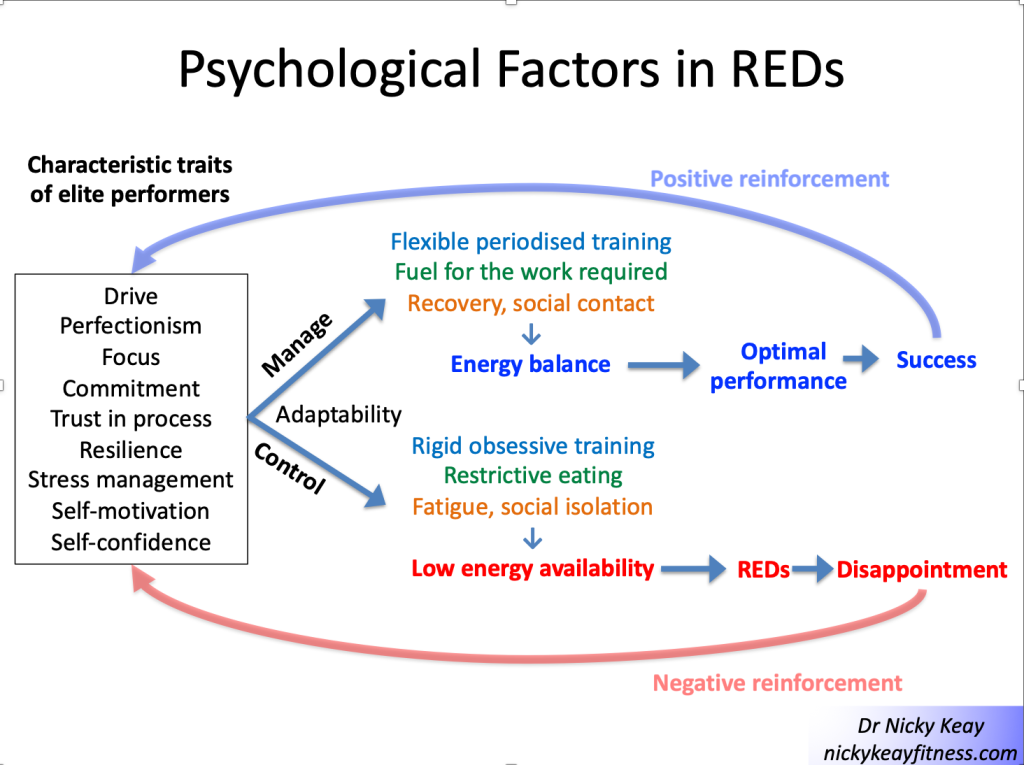
For individuals with intentional low energy availability, psychology and mental health can have a reciprocal interaction (Pensgaard, 2023). Those exercisers with personality characteristics such as self-motivation, perfectionism can be very laudable traits in terms of dedication to exercise training to achieve success. However, when these characterises impact and support rigid behaviours around training and nutrition, this can become problematic. This is shown in Figure 1 “Psychological factors in REDs”. Those who are able to adapt to external pressures and have a flexible approach to training and nutrition are more likely to experience positive outcomes. Whereas those who have a more rigid approach, which might include disordered eating and or an eating disorder and/or exercise dependence are more likely to experience negative outcomes. This reinforces self-doubt and culminates in a vicious circle of perpetuating rigid behaviours and negative outcomes in terms of both physical and mental health.

Evidence for this interaction between psychological factors and risk of REDs was found in our study of dancers, referenced in the updated IOC consensus statement. A significant relationship was found between psychological factors such as anxiety around body shape/weight and missing training. These psychological factors in turn had significant associations between physical manifestations of low energy availability (low body weight) and physiological outcomes (menstrual irregularity) (Keay, 2020). Similarly, in more of our published research papers referenced in the IOC consensus statement focusing on male athletes, an significant association was found between cognitive nutritional restraint and negative physiological and performance outcomes (Jorov, 2021).

This reciprocal interaction between internal and external factors is a systems biology approach, highlighted in the recent updated IOC consensus statement. From a physiological point of view the brain is a high energy demand organ, requiring a good supply of glucose. So low carbohydrate availability will restrict this cerebral supply, which can impair cognitive function and ultimately good decision making. It is interesting to reflect that the neuroendocrine gatekeeper, the hypothalamus keeps a watching brief on internal and external factors, not distinguishing between the source of stressors when putting in motion an adaptive response (Keay, 2022).  
Consequences of Low Energy Availabiity

Low energy availability is not synonymous with REDs. Indeed, short term low energy availability might initially bring some good performances. Low energy availability becomes problematic depending on the time scale, which in turn determines the degree of adaptive response, described in the clinical physiological model of REDs (Burke, 2023). The first system to adapt to low energy availability is bone: bone turnover moves in favour of resorption over formation. This is why bone stress responses, specifically bone stress fractures, can be an early warning sign of REDs and designated a primary indicator in the updated IOC consensus statement. There will follow sequential down regulation of metabolic rate mediated via the thyroid axis, followed by the reproductive axis. In women primary amenorrhoea or sustained functional hypothalamic amenorrhoea (FHA) of 6 months or more duration is a severe primary indicator of REDs. In men, low rage testosterone is a severe primary indicator.  Ultimately body composition will be adversely affected, with the only endocrine system to be up regulated being that of the hypothalamic-pituitary-adrenal axis (Keay, 2019).

Health

Cumulative low energy availability causes the syndrome of REDs, which produces progressive adverse effects on all aspects of health: physical, mental and social, described in the REDs conceptual model. Poor sleep will compound these negative health effects (Keay, 2022).

Performance

Although there may be some initial good performances, chronic low energy availability will result in adverse performance consequences of REDs, described in the REDs performance conceptual model. In our referenced papers in the consensus statement, we found that in male athletes, short term low energy availability impacted performance (Jurov, 2022). In another of our referenced studies we showed that male cyclists in sustained low energy availability over 6 months, not only experienced bone loss commensurate to astronauts in space, but these cyclists also underperformed compared to their energy replete fellow cyclists (Keay, 2019). On a positive note, explaining to athletes and dancers that improving energy availability will improve their performance, can help in overcoming problematic behaviours.

Identification of those at risk

In view of the potential adverse health and performance effects of REDs, it is a priority to raise awareness of this risk to affect prevention. To this end the British Association of Sports and Exercise Medicine (BASEM) has a website health4performance.co.uk dedicated to providing reliable information on REDs for athletes, parents, coaches and health care professionals together with BASEM endorsed online courses. Targeting and identifying those at increased risk is very important. Young athletes and dancers can be most severely affected as down regulation of hormone function due to low energy availability can cause delay in growth and development. In particular, delayed puberty and menarche dampens the accrual of peak bone mass, with implications for bone health (Keay, 2000). Furthermore, there is evidence that these adverse effects on bone health might not be fully reversible (Keay, 1997)

From a psychological point of view, the young aspiring athlete and dancer is also at heightened risk. Explored and viewed by many dancers in “The Dark Side of Ballet Schools” Panorama (season 33, episode 28). Selection for specialised training will inevitably favour those who are self-motivated and dedicated. In a group of individuals sharing similar psychological traits this could act as a “breeding ground” for reinforcing these characteristics in ways that could lead to behaviours which are not conducive to positive outcomes. Rather reinforcing the negative interpretation of external and internal factors, leading to a vicious circle of reinforcing attitudes and behaviours leading to REDs, as described in Figure 1

Risk stratification

Early identification of those at risk of developing REDs is an important preventative strategy. Especially for young aspiring athletes and dancers where behaviours around eating and exercise are being developed and established. A step-by-step approach is provided in the updated version 2 of the Relative Energy Deficiency in sport Clinical Assessment Tool (REDsCat v2) to identify and risk stratify individuals (Stellingwerff, 2023 ). Initial, low cost, screening questionnaires can be helpful, particularly if tailored to a specific sport/activity or dance. For example: sports specific energy availability questionnaire (SEAQ) (Keay, 2018) and dance energy availability energy questionnaire (DEAQ) (Keay, 2020). This can be helpful in identifying those individuals where further investigation is clinically indicated. As REDs is a diagnosis of exclusion, targeted blood testing excludes medical conditions per se and provide objective quantification in the stratification of risk. Severe primary indicators of REDs are issues in the reproductive axis: long duration of amenorrhoea in females and low range testosterone in males.

From a combination of all these results the individual can be placed in an appropriate risk category. The updated REDs CAT v2 includes a finer grained approach with four categories from green, yellow, amber to red.

This assessment also provides the background on which to base the appropriate level of support. For all, management will be directed at restoring energy availability and include modification of training and nutritional intake. However, the details will vary according to the severity of REDs. Individuals with intentional REDs, especially when formally diagnosed with an eating disorder, will need most intensive input than a person with transient unintentional low energy availability.

Management

A nuanced approach is required for individual athletes, depending on their risk stratification and biopsychosocial factors. In all cases some degree of psychological support will be helpful. Involvement of the extended multidisciplinary team is ideal: medical doctor, dietician, coach and parent (where appropriate) with the athlete/dancer at the centre.

In order to restore energy availability this will require careful discussion around nutrition in terms of consistency of eating patterns and composition of food groups consumed. This starts with regular meals containing good portions of complex carbohydrate and protein. Studies show that inconsistent intake of carbohydrate (eg “backloading” eating to the evening) produces an unfavourable hormone profile. Fuelling around training is also a high priority for hormone health and driving positive adaptations to exercise. Pre training consumption of carbohydrate together with post training refuelling with both complex carbohydrate and protein within 20 minutes of stopping are important behaviours for favourable hormone response to exercise (Keay, 2022).

In terms of pharmacological intervention, NICE guidelines have been updated 2022 in recommending body identical hormone replacement therapy (HRT) over the combined oral contraceptive pill (COCP) for bone protection in those with evidence of bone poor health due to functional hypothalamic amenorrhoea (FHA) as a consequence of REDs (BASEM, 2023). Poor bone health is defined as age matched Z score < -1 of the lumbar spine (trabecular bone particularly sensitive to low oestradiol) and/or 2 or more stress fractures at a site of concern (trabecular rich bone). For male athletes/dancers external testosterone is not appropriate as this supresses internal hormone production. Furthermore, testosterone is on the world anti-doping authority (WADA) banned list and it is not possible to obtain a therapeutic use exemption (TUE) as REDs is a functional condition, not a medical condition.

Prevention

Prevention is always the ultimate goal. In order to achieve this aim, a cultural shift in sport and dance is required. Emphasis on the fact that health is a prerequisite for performance. Pursuing a lighter body weight or leaner body composition will not automatically lead to improved performance. Each individual will have a personal tipping point. As we are all different, there is no such thing as a generic “ideal” weight/shape/body composition.

In practical terms, prevention can be considered as primary, secondary and tertiary (Torstveit, 2023). Primary prevention consists of providing and disseminating reliable educational resources. Secondary prevention includes early identification of those at risk of developing REDs, together with prompt and correct diagnosis. For example, regardless of whether an athlete or dancer, amenorrhoea in a woman of reproductive age (apart from physiological amenorrhoea of pregnancy) is never “normal”; whether blood tests are in range, or not. The tertiary level of prevention encompasses evidence-based treatments. As mentioned above, NICE guidelines are now in line with Endocrine Society and IOC in advising temporising HRT for bone protection in FHA. Not the COCP which masks underlying hormone dysfunction and is not bone protective. Similarly, thyroxine is not advised where there is downregulation of this axis as a consequence of REDs. This is not the same as the medical condition of a primary underactive thyroid indicated by raised thyroid stimulating hormone (TSH) (Keay, 2022).

Conclusion

Ultimately, we all have a role to play in supporting exercisers, athletes and dancers in avoiding “the REDs card” (Mountjoy, 2023). This involves the extended multidisciplinary team, starting with the individual exerciser, family, friends and coaches. Then bringing in health care professionals from medicine, dietetics and physiotherapy.

Imbalances in behaviours around exercise and nutrition can have potential negative consequences on all aspects of health and performance. On a positive note, exercise, supported with appropriate nutrition, is an excellent way to achieve and maintain optimal physical, mental and social health and support performance. This is applicable for all ages and levels of exercisers from the recreational to the amateur and elite athlete.

References

Burke LM, Ackerman KE, Heikura IAet al. Mapping the complexities of Relative Energy Deficiency in Sport (REDs): development of a physiological model by a subgroup of the International Olympic Committee (IOC) Consensus on REDs British Journal of Sports Medicine 2023;57:1098-1108.

Drinkwater B, Nilson K, Chesnut C. Bone Mineral Content of Amenorrheic and Eumenorrheic Athletes N Engl J Med 1984; 311:277-281 DOI: 10.1056/NEJM198408023110501

Jurov I, Keay N, Hadžić V et al. Relationship between energy availability, energy conservation and cognitive restraint with performance measures in male endurance athletes. J Int Soc Sports Nutr 2021;18:24. doi:10.1186/s12970-021-00419-3 

Jurov I, Keay N, Spudić D et al. Inducing low energy availability in trained endurance male athletes results in poorer explosive power. Eur J Appl Physiol 2022;122:503–13. doi:10.1007/s00421-021-04857-4 

Keay N Hormones, Health and Human Potential: A guide to understanding your hormones to optimise your health and performance 2022 Sequoia books

Keay N, Overseas A, Francis G. Indicators and correlates of low energy availability in male and female dancers BMJ Open Sport & Exercise Medicine 2020;6:e000906. doi: 10.1136/bmjsem-2020-000906

Keay N, Francis G. Infographic. Energy availability: concept, control and consequences in relative energy deficiency in sport (RED-S) British Journal of Sports Medicine 2019;53:1310-1311.

Keay N, Rankin A. Infographic. Relative energy deficiency in sport: an infographic guide

British Journal of Sports Medicine 2019;53:1307-1309.

Keay N, Francis G, Hind K. Low energy availability assessed by a sport-specific questionnaire and clinical interview indicative of bone health, endocrine profile and cycling performance in competitive male cyclists BMJ Open Sport & Exercise Medicine 2018;4:e000424. doi: 10.1136/bmjsem-2018-000424

Keay N, Francis G, Entwistleet al. Clinical evaluation of education relating to nutrition and skeletal loading in competitive male road cyclists at risk of relative energy deficiency in sports (RED-S): 6-month randomised controlled trial BMJ Open Sport & Exercise Medicine 2019;5:e000523. doi: 10.1136/bmjsem-2019-000523

Keay N. The modifiable factors affecting bone mineral accumulation in girls: the paradoxical effect of exercise on bone. Nutrition Bulletin 2000, 25: 219-222. https://doi.org/10.1046/j.1467-3010.2000.00051.x

Keay N, Fogelman I, Blake G. Bone mineral density in professional female dancers.

British Journal of Sports Medicine 1997;31:143-147.

Mountjoy M, Ackerman KE, Bailey Det al. 2023 International Olympic Committee’s (IOC) consensus statement on Relative Energy Deficiency in Sport (REDs) British Journal of Sports Medicine 2023;57:1073-1097.

Mountjoy M, Ackerman KE, Bailey Det al. Avoiding the ‘REDs Card’. We all have a role in the mitigation of REDs in athletes British Journal of Sports Medicine 2023;57:1063-1064.

Pensgaard AM, Sundgot-Borgen J, Edwards Cet al. Intersection of mental health issues and Relative Energy Deficiency in Sport (REDs): a narrative review by a subgroup of the IOC consensus on REDs British Journal of Sports Medicine 2023;57:1127-1135.

Stellingwerff T, Mountjoy M, McCluskey Wet al. Review of the scientific rationale, development and validation of the International Olympic Committee Relative Energy Deficiency in Sport Clinical Assessment Tool: V.2 (IOC REDs CAT2)—by a subgroup of the IOC consensus on REDs British Journal of Sports Medicine 2023;57:1109-1118.

International Olympic Committee relative energy deficiency in sport clinical assessment tool 2 (IOC REDs CAT2) British Journal of Sports Medicine 2023;57:1068-1072.

Shirley M, Longman D, Elliott-Sale K et al. A Life History Perspective on Athletes with Low Energy Availability. Sports Med 2022 52, 1223–1234. https://doi.org/10.1007/s40279-022-01643-w

Todd E, Elliot N, Keay N. Relative energy deficiency in sport (RED-S) British Journal of General Practice 2022; 72 (719): 295-297. DOI: https://doi.org/10.3399/bjgp22X719777

Torstveit M, Ackerman K, Constantini N et al. Primary, secondary and tertiary prevention of Relative Energy Deficiency in Sport (REDs): a narrative review by a subgroup of the IOC consensus on REDs Br J Sports Med 2023;57:1119–1126.

Endocrine system: balance and interplay in response to exercise training

The process of homeostasis maintains a steady internal milieu. So how is it possible for adaptations to occur? What are the internal mechanisms that determine a good outcome versus a negative one?

Changes in the external environment, such as exercise training, challenge homeostasis, producing spatial and temporal responses in the internal environment. These cause interactions between muscle, bone and gut, modulated by the Endocrine system. The degree and nature of these responses dictate whether a positive adaptation occurs. An excessive response, or a response not in tune with the networks of the Endocrine system, can hinder adaptation or produce a maladaptive response. The balance and interplay of internal responses are crucial in determining the outcome to exercise training in the individual.

F=MA

Local responses in exercising tissues

Exercising tissues release exerkines (metabolites, nucleic acids, peptides) which are packaged in exosomes and microvesicles. The content of these vesicle packages increases with intensity of endurance exercise in a dose-dependent manner. These exerkines have autocrine and paracrine effects, which modulate systemic adaptations to endurance exercise in the tissues themselves and those in the vicinity.

The range of these molecular responses from exercising tissues has been identified applying multi-omics (epigenomic, transcriptomic and proteomic analyses). Furthermore variance in trainability has been shown to be correlated with the integrated responses of tissue molecular signalling pathways to endurance exercise.

In a similar manner, the degree of inflammatory response and production of reactive oxygen and nitrogen species (RONS) to exercise mediate favourable adaptations. Inter-individual variations in redox status has been shown to determine the ability to adapt to exercise training. However, unlimited increase in response does not necessarily produce a better outcome. An over response to exercise in these signalling pathways, hinders adaptation.

Exercise promotes bone adaptation in terms of bone material, structure and muscle action. Paracrine crosstalk occurs between muscle and bone. Muscle myokines and insulin like growth factor 1 (IGF1) favour bone formation, whilst inflammatory molecules, such as interleukin 6 (Il-6) released during muscle contractions, favour bone reabsorption. The balance between these opposing processes determines whether bone remodelling is effective, or whether bone stress reactions occur over a pathological continuum. These responses and adaptations occur on the background of lifespan Endocrine environment, which impacts the outcome.

Gut microbiota

The gut microbiota support the regulation of inflammation at the local and systemic level. Furthermore the communication between the gut microbiota and mitochondria has been described as an important interaction in facilitating adaptive responses to exercise. Mitochondria are organelles crucial for production of ATP, as well as RONS. The gut microbiota are involved in mitochondrial biogenesis by regulating key mitochondrial transcriptional factors and enzymes . Furthermore, the metabolites of the gut microbiota such as short chain fatty acids, modulate the inflammatory effects of mitochondrial oxidative stress. Conversely genetic variants in the mitochondrial genome could impact mitochondrial function and thus the gut microbiota in terms of composition and activity.

The gut microbiota have a role in regulating intestinal permeability. Leaky gut is where epithelial integrity is lost at the tight junctions between cells in the gut lining. Leaky gut can occur in gut dysbiosis and also following endurance exercise where re-perfusion injury produces acute hyper-permeability. In these instances, increased gut permeability augments the antigen load and causes increased systemic inflammation and potentially can trigger autoimmune disease. This demonstrates that an excessive inflammatory response to exercise can hinder positive adaptation

Metabolic adaptations

Metabolic flexibility, the ability to respond and adapt to changes in metabolic demand, is enhanced with exercise training through these autocrine, paracrine and Endocrine mechanisms. Metabolic flexibility supports energy availability and fuel selection during exercise. Exercise mimetics, such as artificial metabolic modulators, have been reported to up-regulate gene expression to shift metabolism to fat oxidation in exercising muscle. This would potentially extend the limit of endurance exercise. However this “short cut” to adaptation favouring improved sport performance is illegal, with such molecular ligands on the World Anti-Doping Agency (WADA) banned list.

Hierarchy of control

There is a hierarchy of control in modulating multi-system adaptations to exercise. The Endocrine system is key. Exercise per se produces an Endocrine response, for example exercise is a key stimulus for growth hormone release via the hypothalamus, the neuroendocrine gatekeeper. Growth hormone supports the anabolic response to exercise. In addition, the Endocrine milieu during the lifespan has an impact on response and adaptations to exercise. Any disruption in the Endocrine system hinders adaptive changes. Endocrine dysfunction may occur as a result of non-integrated periodisation of exercise/nutrition and recovery as seen in relative energy deficiency in sports (RED-S). Dysfunction can also occur due to an Endocrine pathology.

Conclusion

Changes in external stimuli, such as exercise and nutrition, produce internal responses on autocrine, paracrine and Endocrine levels. These molecular signalling pathways drive adaptive changes through integrated, network effects. However any imbalances in these interactive responses can hinder desired adaptive changes and even result in negative maladaptive outcomes to exercise training.

For further discussion on Endocrine and Metabolic aspects of SEM come to the BASEM annual conference 22/3/18: Health, Hormones and Human Performance

References

Keay N, Logobardi S, Ehrnborg C, Cittadini A, Rosen T, Healy ML, Dall R, Bassett E, Pentecost C, Powrie J, Boroujerdi M, Jorgensen JOL, Sacca L. Growth hormone (GH) effects on bone and collagen turnover in healthy adults and its potential as a marker of GH abuse in sport: a double blind, placebo controlled study. Journal of Endocrinology and Metabolism. 85 (4) 1505-1512. 2000.

Sport Endocrinology presentations

Sports Endocrinology – what does it have to do with performance? Dr N.Keay, British Journal of Sport Medicine

Balance of recovery and adaptation for sports performance Dr N.Keay, British Association of Sport and Exercise Medicine

Inflammation: Why and How Much? Dr N.Keay, British Association of Sport and Exercise Medicine

Clusters of Athletes – A follow on from RED-S blog series to put forward impact of RED-S on athlete underperformance  Dr N.Keay, British Association of Sport and Exercise Medicine

Optimal Health: For All Athletes! Part 4 – Mechanisms Dr N.Keay, British Association of Sport and Exercise Medicine

The potential of endurance exercise-derived exosomes to treat metabolic diseases Nature Reviews Endocrinology

Exosomes as Mediators of the Systemic Adaptations to Endurance Exercise Cold Spring Harbor Perspectives in Medicine

Genomic and transcriptomic predictors of response levels to endurance exercise training
Journal of Physiology

Adaptations to endurance training depend on exercise-induced oxidative stress: exploiting redox inter-individual variability Acta Physiologica

Mechanical basis of bone strength: influence of bone material, bone structure and muscle action Journal of Musculoskeletal and Neuronal Interactions

The Crosstalk between the Gut Microbiota and Mitochondria during Exercise Frontiers in Physiology

Leaky Gut As a Danger Signal for Autoimmune Diseases Frontiers in Immunology

Metabolic Flexibility in Health and Disease Cell Metabolism

Hormones and Sports Performance

PPARδ Promotes Running Endurance by Preserving Glucose Cell Metabolism


Addiction to Exercise

ExerciseAddiction

Health is not just the absence of illness, but rather the optimisation of all components of health: physical, mental and social. Exercise has numerous benefits on all these aspects. However, a recent article in the British Medical Journal described how exercise addiction can have detrimental physical, mental and social effects.

Dedication and determination are valuable qualities required to be successful in life, including achieving sporting prowess. Yet, there is a fine line between dedication and addiction.

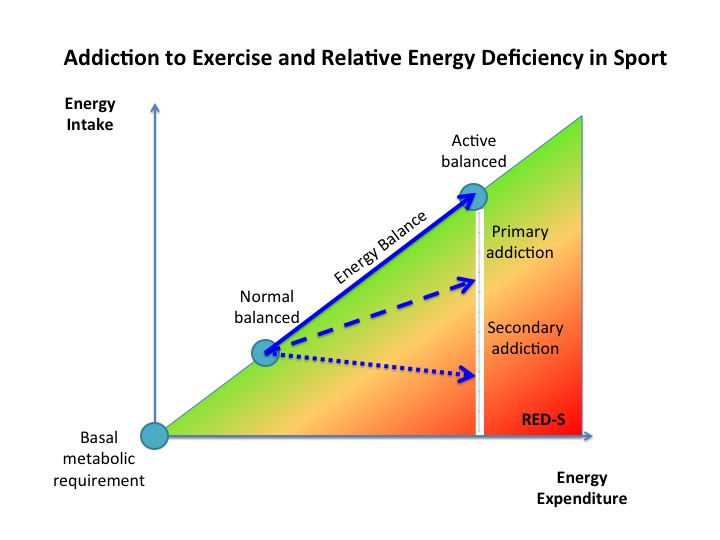
To improve sports performance, cumulative training load has to be increased in a quantified fashion, to produce an overload and hence the desired physiological and Endocrine adaptive responses. Integrated periodisation of training, recovery and nutrition is required to ensure effective adaptation. Sufficient energy availability and quality of nutrition are essential to support health and desired adaptations. On the graph above the solid blue line represents a situation of energy balance, where the demands of increased training load are matched by a corresponding rise in energy availability. This can be challenging in sports where low body weight confers a performance or aesthetic advantage, where the risk of developing relative energy deficiency in sport (RED-S) has implications for Endocrine dysfunction, impacting all aspects of health and sports performance.

Among those participating in high volumes of exercise, what distinguishes a healthy level of commitment from exercise addiction? Physical factors alone are insufficient: all those engaging in high levels of training can experience overuse injuries and disruption in Endocrine, metabolic and immune systems. Equally, in all these exercising individuals, overtraining can result in underperformance.

Psychological factors are the key distinguishing features between the motivated athlete and the exercise addict. In exercise addiction unhealthy motivators and emotional connection to exercise can be identified as risk factors. In exercise addiction the motivation to exercise is driven by the obsession to comply with an exercise schedule, above all else. This can result in negative effects and conflict in social interactions, as well as negative emotional manifestations, such as anxiety and irritability if unable to exercise, including the perceived necessity to exercise even if fatigued or injured.

Two categories of exercise addiction have been described. Primary exercise addiction is the compulsion to follow an excessive training schedule. Without balancing energy intake, the physical consequence may be a relative energy deficiency, as indicated on the graph by the dashed blue line. In secondary exercise addiction, the situation is compounded by a desire specifically to control body weight. These individuals consciously limit energy intake, almost inevitably developing the full clinical syndrome described in RED-S, dragging them down to the position indicated by the dotted blue line on the chart. These situations of exercise addiction can lead to varying risk categories of RED-S.

As described at the start of this blog, there is a blurred boundary between the dedicated athlete and the exercise addict. In practice there is most likely a cross over. For example, an athlete may start with healthy motivators and positive emotional connection to exercise, which can become a primary addiction to adhere rigidly to a training schedule, rather than putting the emphasis on the outcome of such training. In the case of an athlete where low body weight is an advantage, it is easy to appreciate how this could become a secondary exercise addiction, where the motivation for exercising becomes more driven by the desire to control weight, rather than performance.

In order to support those with exercise addiction, discussion needs to focus on adopting a more flexible approach to exercise, by recognising that exercise addiction has detrimental effects on all aspects of current and long term health. Furthermore, in the case of athletes, a multi-disciplinary approach is desirable to help the individual refocus on the primary objective of training: to improve performance. In all situations, discussion should explore modifications to exercise and nutrition, in order to prevent the negative effects of RED-S on health and performance.

Exercise has numerous health benefits and is usually viewed as positive behaviour. However, the outcome of exercise is related to the amount of training, appropriate nutrition and motivation for exercising.

For further discussion on Endocrine and Metabolic aspects of SEM come to the BASEM annual conference 22/3/18: Health, Hormones and Human Performance

References

Addiction to Exercise British Medical Journal 2017

Clusters of Athletes British Association of Sport and Exercise Medicine 2017

Sport performance and relative energy deficiency in sport British Journal of Sport Medicine 2017

Balance of recovery and adaptation for sports performance British Association of Sport and Exercise Medicine 2017

Optimal Health for all athletes Part 4 Mechanisms of RED-S British Journal of Sport Medicine 2017

Sports Endocrinology – what does it have to do with performance? British Journal of Sport Medicine 2017

Inflammation: Why and How Much? British Association of Sport and Exercise Medicine 2017

Clusters of Athletes

 At some time, most athletes experience periods of underperformance. What are the potential causes and contributing factors?

classification

Effective training improves sports performance through a process of adaptation that occurs, at both the cellular and system levels, during the recovery phase. Training overload must be balanced with sufficient subsequent recovery. A long-term improvement in form is expected, following a temporary dip in performance, due to short-term fatigue.

However, when an athlete experiences a stagnation of performance, what are the potential underlying causes? How should these be addressed to prevent an acute situation developing into a more chronic spiral of decreasing performance?

Depending on clinical presentation, the first step is to exclude medical conditions. Potential infective causes include Epstein Barr virus (particularly in young athletes), Lyme disease and Weil’s disease. Systemic inflammatory conditions should be considered. Endocrine and metabolic causes include pituitary, gonadal, adrenal, thyroid  dysfunction, blood sugar control,  and malabsorption.

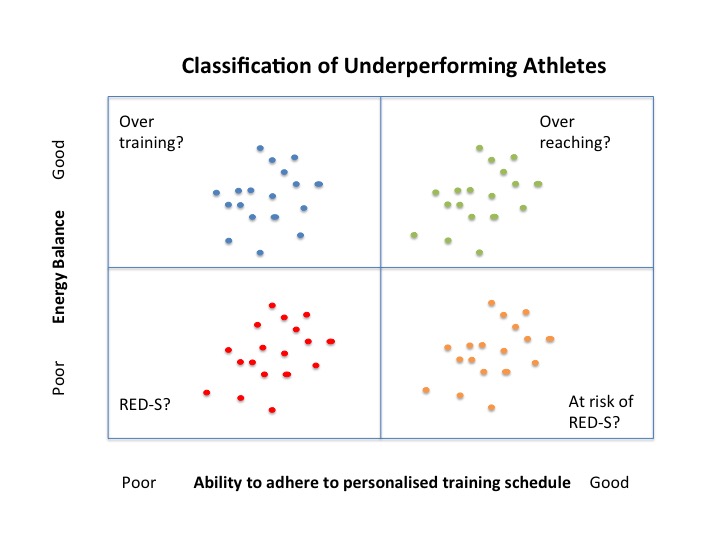
If medical conditions are excluded, attention should turn to the athlete’s energy balance in the context of adherence to the current training plan. Potential causes of underperformance, the inability to improve in training and competition, are illustrated in the diagram above.

Athletes in the upper right quadrant fail to live up to performance expectations, in spite of maintaining a good energy balance while adhering to the prescribed training plan. However, they may represent non-functional overreaching, where overload is not balanced with sufficient recovery. In other words, the periodisation of training and recovery is not optimised. The balance between chronic training load (fitness) and acute training load (fatigue) provides a useful metric for assessing form. Heart rate variability (HRV) can be another potentially useful measure in detecting aerobic, endurance fatigue. If the training plan is not producing the expected improvements, then this plan needs revising. Don’t forget that sleep is essential to facilitate endocrine driven adaptations to exercise training.

Athletes in the lower right quadrant are of more concern. Inadequate energy balance, especially during periods of increased training load or intentional weight loss, can be a cause of underperformance, despite the athlete being able to adhere to the training plan. This would correspond to being at risk of developing relative energy deficiency in sport (RED-S) on the amber warning in the risk stratification laid out by the International Olympic Committee.

Both of these groups are able to adhere to a training plan, but suboptimal training and recovery periodisation and/or insufficient energy intake can produce a situation of underperformance. Intervention is required to prevent them moving into the clusters on the left, representing a more chronic underperformance scenarios that are therefore more difficult to rectify.

Athletes in the upper left quadrant exhibit overtraining syndrome: a prolonged maladaptation process accompanied by a decrease in performance (not merely stagnation) and inability to adhere to training plan. The metric of decreased HRV and inability of heart rate to accelerate in response to exercise have been suggested as markers of overtraining.

Those athletes in the lower left quadrant fall into the RED-S category, where multiple interacting Endocrine networks are impacted by an energy deficient state. RED-S not only impairs sports performance, but impacts both current and future health. For example low endogenous levels of sex steroids and insulin-like growth factor 1 (IGF1) disrupt formation of bone microarchitecture and bone mineralisation, resulting in increased risk of recurrent stress fracture in addition to potentially irreversible bone loss in the longer term. In cases of recurrent injury and underperformance amongst athletes it is imperative to exclude Endocrine dysfunction and then consider whether RED-S is the fundamental cause.

There are many potential causes of underperformance in athletes. Once medical conditions have been excluded, the main aim should be to prevent acute situations becoming chronic and therefore more difficult to resolve.

For further discussion on Endocrine and Metabolic aspects of SEM come to the BASEM annual conference 22/3/18: Health, Hormones and Human Performance

References

Sport Endocrinology Dr N. Keay, British Journal of Sport Medicine 2017

Sport Performance and RED-S, insights from recent Annual Sport and Exercise Medicine and Innovations in Sport and Exercise Nutrition Conferences Dr N.Keay, British Journal of Sport Medicine 2017

Relative Energy Deficiency in Sport CPD module for British Association of Sport and Exercise Medicine

Optimal Health: For All Athletes! Part 4 – Mechanisms, Dr N. Keay, British Association of Sport and Exercise Medicine

Balance of recovery and adaptation for sports performance Dr N. Keay, British Association of Sport and Exercise Medicine

Sleep for health and sports performance Dr N. Keay, British Journal of Sport Medicine

Optimal health: including female athletes! Part 1 Bones Dr N.Keay, British Journal of Sport Medicine

Inflammation: why and how much? Dr N. Keay, British Association of Sport and Exercise Medicine

Fatigue, Sport Performance and Hormones… Dr N.Keay, British Journal of Sport Medicine

Part 3: Training Stress Balance—So What? Joe Friel

Heart Rate Variability (HRV) Science for Sport

Relative Energy Deficiency in sport (REDs) Lecture by Professor Jorum Sundgot-Borgen, IOC working group on female athlete triad and IOC working group on body composition, health and performance. BAEM Spring Conference 2015.

Prevention, Diagnosis, and Treatment of the Overtraining Syndrome: Joint Consensus Statement of the European College of Sport Science and the American College of
Sports Medicine. Joint Consensus Statement. Medicine & Science in Sports & Exercise 2012

Optimal health: for all athletes! Part 4 Mechanisms

As described in previous blogs, the female athlete triad (disordered eating, amenorrhoea, low bone mineral density) is part of Relative Energy Deficiency in sports (RED-S). RED-S has multi-system effects and can affect both female and male athletes together with young athletes. The fundamental issue is a mismatch of energy availability and energy expenditure through exercise training. As described in previous blogs this situation leads to a range of adverse effects on both health and sports performance. I have tried to unravel the mechanisms involved. Please note the diagram below is simplified view: I have only included selected major neuroendocrine control systems.

REDs

Low energy availability is an example of a metabolic stressor. Other sources of stress in an athlete will be training load and possibly inadequate sleep. These physiological and psychological stressors input into the neuroendocrine system via the hypothalamus. Low plasma glucose concentrations stimulates release of glucagon and suppression of the antagonist hormone insulin from the pancreas. This causes mobilisation of glycogen stores and fat deposits. Feedback of this metabolic situation to the hypothalamus, in the short term is via low blood glucose and insulin levels and in longer term via low levels of leptin from reduced fat reserves.

A critical body weight and threshold body fat percentage was proposed as a requirement for menarche and subsequent regular menstruation by Rose Frisch in 1984. To explain the mechanism behind this observation, a peptide hormone leptin is secreted by adipose tissue which acts on the hypothalamus. Leptin is one of the hormones responsible for enabling the episodic, pulsatile release of gonadotrophin releasing hormone (GnRH) which is key in the onset of puberty, menarche in girls and subsequent menstrual cycles. In my 3 year longitudinal study of 87 pre and post-pubertal girls, those in the Ballet stream had lowest body fat and leptin levels associated with delayed menarche and low bone mineral density (BMD) compared to musical theatre and control girls. Other elements of body composition also play a part as athletes tend to have higher lean mass to fat mass ratio than non-active population and energy intake of 45 KCal/Kg lean mass is thought to be required for regular menstruation.

Suppression of GnRH pulsatility, results in low secretion rates of pituitary trophic factors LH and FSH which are responsible for regulation of sex steroid production by the gonads. In the case of females this manifests as menstrual disruption with associated anovulation resulting in low levels of oestradiol. In males this suppression of the hypothamlamic-pituitary-gonadal axis results in low testosterone production. In males testosterone is aromatised to oestradiol which acts on bone to stimulate bone mineralisation. Low energy availability is an independent factor of impaired bone health due to decreased insulin like growth factor 1 (IGF-1) concentrations. Low body weight was found to be an independent predictor of BMD in my study of 57 retired pre-menopausal professional dancers. Hence low BMD is seen in both male and female athletes with RED-S. Low age matched BMD in athletes is of concern as this increases risk of stress fracture.  In long term suboptimal BMD is irrecoverable even if normal function of hypothamlamic-pituitary-gonadal function is restored, as demonstrated in my study of retired professional dancers. In young athletes RED-S could result in suboptimal peak bone mass (PBM) and associated impaired bone microstructure. Not an ideal situation if RED-S continues into adulthood.

Another consequence of metabolic, physiological and psychological stressor input to the hypothalamus is suppression of the secretion of thyroid hormones, including the tissue conversion of T4 to the more active T3. Athletes may display a variation of “non-thyroidal illness/sick euthyroid” where both TSH and T4 and T3 are in low normal range. Thyroid hormone receptors are expressed in virtually all tissues which explains the extensive effects of suboptimal levels of T4 and T3 in RED-S including on physiology and metabolism.

In contrast, a neuroendocrine control axis that is activated in RED-S is the hypothalamic-pituitary-adrenal axis. In this axis, stressors increase the amplitude of the pulsatile secretion of CRH, which in turn increases the release of ACTH and consequently cortisol secretion from the adrenal cortex. Elevated cortisol suppresses immunity and increases risk of infection. Long term cortisol elevation also impairs the other hormone axes: growth hormone, thyroid and reproductive. In other words the stress response in RED-S amplifies the suppression of key hormones both directly and indirectly via endocrine network interactions.

The original female athlete triad is part of RED-S which can involve male and female athletes of all ages. There are a range of interacting endocrine systems responsible for the multi-system effects seen in RED-S. These effects can impact on current and future health and sports performance.

For further discussion on Endocrine and Metabolic aspects of SEM come to the BASEM annual conference 22/3/18: Health, Hormones and Human Performance

References

Teaching module on RED-S for BASEM as CPD for Sports Physicians

Optimal health: including female athletes! Part 1 Bones Dr N. Keay, British Journal of Sport Medicine

Optimal health: including male athletes! Part 2 Relative Energy Deficiency in sports Dr N.Keay, British Journal of Sport Medicine 4/4/17

Optimal health: especially young athletes! Part 3 Consequences of Relative Energy Deficiency in sports Dr N. Keay, British Association of Sport and Exercise Medicine

Keay N, Fogelman I, Blake G. Effects of dance training on development,endocrine status and bone mineral density in young girls. Current Research in Osteoporosis and bone mineral measurement 103, June 1998.

Jenkins P, Taylor L, Keay N. Decreased serum leptin levels in females dancers are affected by menstrual status. Annual Meeting of the Endocrine Society. June 1998.

Keay N, Dancing through adolescence. Editorial, British Journal of Sports Medicine, vol 32 no 3 196-7, September 1998.

Keay N, Effects of dance training on development, endocrine status and bone mineral density in young girls, Journal of Endocrinology, November 1997, vol 155, OC15.

Relative Energy Deficiency in sport (REDs) Lecture by Professor Jorum Sundgot-Borgen, IOC working group on female athlete triad and IOC working group on body composition, health and performance. BAEM Spring Conference 2015.

Mountjoy M, Sundgot-Borgen J, Burke L, Carter S, Constantini N, Lebrun C, Meyer N, Sherman R, Steffen K, Budgett R, Ljungqvist A. The IOC consensus statement: beyond the Female Athlete Triad-Relative Energy Deficiency in Sport (RED-S).Br J Sports Med. 2014 Apr;48(7):491-7.

“Subclinical hypothydroidism in athletes”. Lecture by Dr Kristeien Boelaert at BASEM Spring Conference 2014 on the Fatigued Athlete

From population based norms to personalised medicine: Health, Fitness, Sports Performance Dr N. Keay, British Journal of Sport Medicine