There has been an explosion in the range and availability of peptides for self-subcutaneous injection, purported to improve wellness and longevity [1]. The problem is that these commercially available peptides are produced in laboratories in China where there is no strict regulation on content or purity, resulting in these peptides lacking in approval from medication regulating authorities, such as in UK Medicines and Healthcare products Regulatory Agency (MHRA) or Food and Drug Administration (FDA) in US. In fact, many of these peptides are marked as “not for human use” and “for research purposes only”.
So, it is surprising that some people may voluntarily inject themselves with an unregulated, unlicensed drug, labelled not for human use [2].
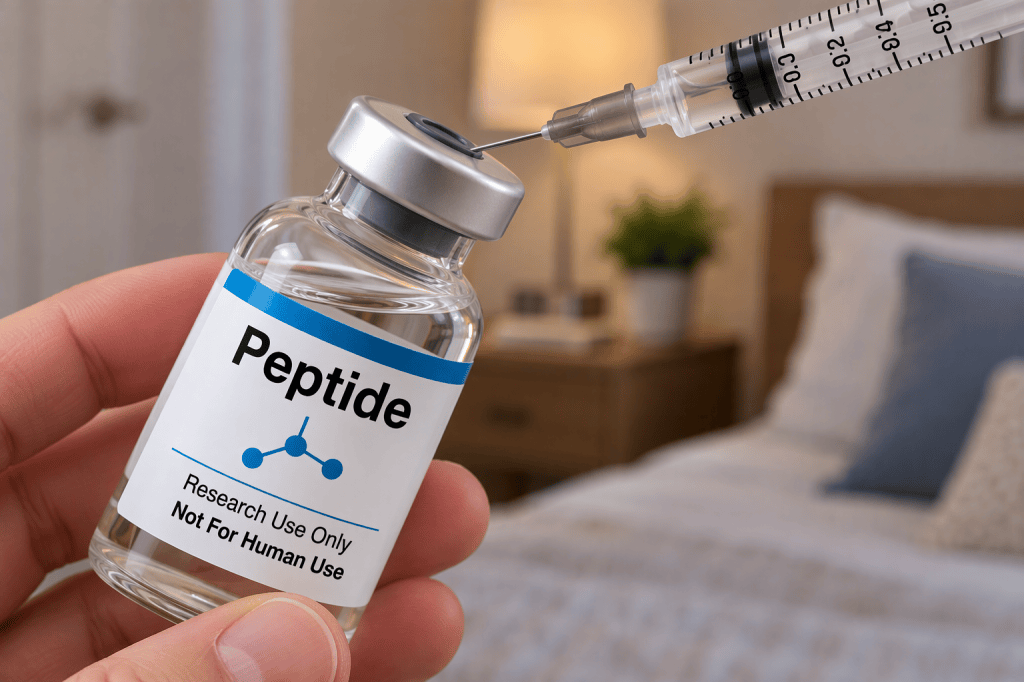
The explanation revolves around slick marketing and social media messaging. And in some cases, availability from some apparently reputable private health clinics. All of which gives the illusion of these peptides being safe and effective. After all, glucagon-like peptide-1 (GLP-1) receptor agonists, for example Wegovy and Ozempic are the toast of the town for weight loss. The big difference is that these are licensed, regulated medicines, so have undergone extensive clinical trails to identify effective dosage and are rigorously tested for purity. There is a challenge that sometimes these medications are taken without adequate supervision. Nevertheless, the “wellness” peptides in discussion are those that are untested and unregulated, so far more hazardous. Being effective in animals does not automatically translate to humans. A “trick or treat” weighted heavily towards “trick”.
A major area of concern is that, even if a peptide vial does contain an active peptide, there may be other components and impurities which have potential adverse effects. Furthermore, these impurities will vary between batches. So, it really is a game of roulette what you inject into yourself. A potential concern is that some of these “regenerative” peptides are purported to increase cell growth to prevent ageing. Although targeted cell repair and growth can be helpful, untargeted cell growth which becomes uncontrollable is a risk. The definition of malignancy (cancer) is uncontrolled cell growth.
The half-life of many peptides in the blood stream is very short. So often extra molecular components will be added to extend the lifespan in the blood stream. These added “long life” components can potentially cause health issues as described above. However, having a long-acting version of some peptide hormones sends the wrong message. For example, growth hormone releasing hormone (GHRH) is a peptide hormone produced by the hypothalamus in the brain which signals to the pituitary gland to produce growth hormone (GH). GH circulates in the blood stream where it is converted to insulin-like growth -1 (IGF-1).
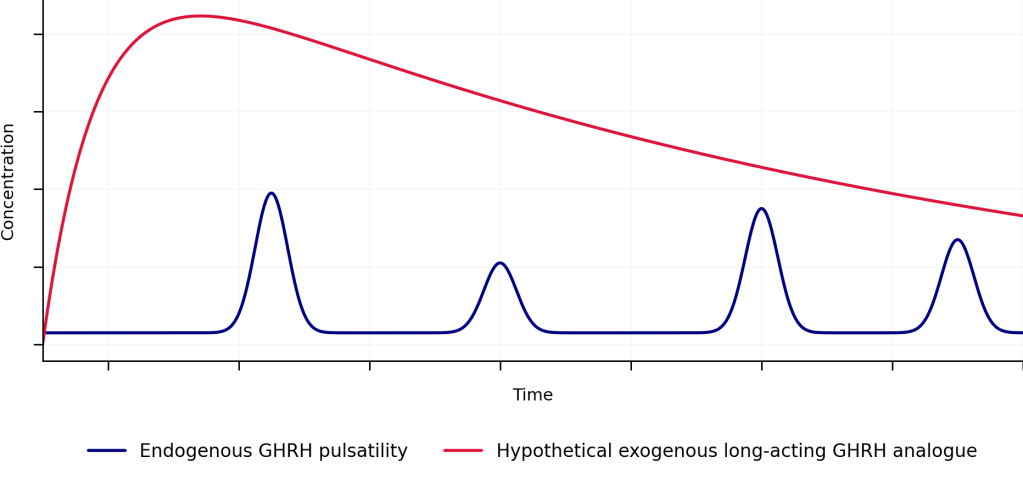
IGF-1 is a powerful anabolic hormone stimulating production of muscle and bone. So, the argument goes that if you inject GHRH you will produce more IGF-1 and build muscle over fat. Sounds great. But the problem is that GHRH is secreted by the hypothalamus in a pulsatile way. In other words, short bursts. Like Morse code, this conveys the message to the pituitary gland to release GH.
When you inject this peptide hormone it will produce a high, constant signal, which gradually declines over time. This “drowns out” the pulsatile release pattern. The pituitary gland does not recognise this type of signal as a release signal, more of a stop signal. The net result is that an injection of GHRH, which has been enhanced for a long acting effect, may actually cause a decrease in the very hormone you are seeking to increase.
Mixed Messages
Although it may sound “old fashioned”, paying attention to lifestyle factor to optimise health is certainly the safest and surest (and cheapest) way to health. To quote Hippocrates from 2,000 years ago “giving each individual just the right amount of exercise and nourishment, not too little and not too much is the surest way to health” [3]
1 Designer peptides for wellness: are they safe? BMJ 2026; 393: s924 doi: https://doi.org/10.1136/bmj.s924
2 BBC news 2026 Wellness peptide craze: Why people are injecting drugs ‘not for human consumption’ https://www.bbc.co.uk/news/articles/cdr268m5pxro
3 Keay N. “Hormones, Health and Human Potential. Sequoia books 2022

