If you are striving to reach your peak performance, then the PEAQ can help you reach your personal full potential. Click here to get started on the PEAQ
Matching your energy intake to your energy demands helps you reach your personal peak health and exercise performance. On the other hand, failing to meet your energy demands results in low energy availability. This increases your risk of developing relative energy deficiency (REDs) and its adverse health and performance consequences.
People of any age, whatever their level and type of exercise, can be at risk of developing REDs; from elite dancers and athletes to recreational exercisers.
The PEAQ is a mobile Application that will guide you through a series of questions about exercise, physical characteristics, nutrition, hormone function and well-being. It just takes a few minutes.
Your PEAQ report instantly generates a REDs Risk Score and provides valuable insights into your energy status and potential risks, along with guidance. The PEAQ is intended for those 16 years of age and over.
The PEAQ has been developed based on in several published research studies where the questionnaire responses and scores have been correlated with measurements of hormones and bone health in athletes in various sports [1-7] and dancers [8-12]. These questionnaires were cited in the updated International Olympic Committee (IOC) consensus statement on REDs 2013.
Assessment of Relative Energy Deficiency in Sport, Malnutrition Prevalence in Female Endurance Runners by Energy Availability Questionnaire, Bioelectrical Impedance Analysis and Relationship with Ovulation status. Clinical Nutrition Open Science 2025S.
Body composition, malnutrition, and ovulation status as RED-S risk assessors in female endurance athletes, Clinical Nutrition ESPEN 2023, 58 :720-721
Keay N, Craghill E, Francis G Female Football Specific Energy Availability Questionnaire and Menstrual Cycle Hormone Monitoring. Sports Injr Med 2022; 6: 177
Nicolas J, Grafenuer S. Investigating pre-professional dancer health status and preventative health knowledge Front. Nutr. Sec. Sport and Exercise Nutrition. 2023 (10)
Nicola Keay, Martin Lanfear, Gavin Francis. Clinical application of monitoring indicators of female dancer health, including application of artificial intelligence in female hormone networks. Internal Journal of Sports Medicine and Rehabilitation, 2022; 5:24.
Nicola Keay, Martin Lanfear, Gavin Francis. Clinical application of interactive monitoring of indicators of health in professional dancers J Forensic Biomech, 2022, 12 (5) No:1000380
Mountjoy M, Ackerman KE, Bailey DM et al 2023 International Olympic Committee’s (IOC) consensus statement on Relative Energy Deficiency in Sport (REDs) British Journal of Sports Medicine 2023;57:1073-1098
This article explores the current state of play regarding relative energy deficiency in sport (REDs), highlighting the recent updates from the International Olympic Committee (IOC) consensus statement September 2023. Psychological factors and mental health are recognised as having a reciprocal relationship in both the aetiology and outcome of chronic low energy availability leading to REDs. This has important implications in terms of prevention and management of individuals experiencing REDs. Unintentional or intentional unbalanced behaviours around exercise and nutrition leads to a situation of low energy availability. Low energy availability is not synonymous with REDs. Rather cumulative, sustained low energy availability, particularly low carbohydrate availability, leads to the clinical syndrome of REDs comprising a constellation of adverse consequences on all aspects of health and performance. This situation can potentially arise in both biological sexes, all ages and level of exerciser. This is of particular concern for the young aspiring athlete or dancer, where behaviours are being established and in terms of long-term consequences on mental and physical health. The mechanism of sustained low energy availability leading to these negative health outcomes is through the adaptive down regulation of the endocrine networks. Therefore, raising awareness of the risk of REDs and implementing effective prevention and identification strategies is a high priority.
Introduction
Relative energy deficiency in sport (REDs) was first described in the International Olympic Committee (IOC) consensus statement published in the British Journal of Sports and Exercise Medicine (BJSM) 2014(Mountjoy, 2014). Since then, there have been updates published in 2018 (Mountjoy, 2018) and most recently in September 2023 (Mountjoy, 2023).
Seminal studies of female collegiate runners in 1980s found that those athletes with higher weekly training load, but same food intake as those with lower training load, experienced menstrual disruption, including secondary amenorrhoea and poor bone health (Drinkwater, 1984). This led to the description of the female athlete triad, which comprises a clinical spectrum of eating patterns, menstrual function and bone health. This ranges from optimal fuelling, menstrual function and bone health; to eating disorders, amenorrhoea and osteoporosis.
However, with further evidence emerging it became apparent that the impact of under fuelling is not confined to menstrual and bone health. Rather that the consequences of under fuelling are multisystem and can include male athletes. This led to the initial description of REDs in 2014 as a syndrome comprised of the potential adverse effects on many systems in the body with both physical and mental health implications. Crucially, unlike the female athlete trad, REDs also included the potential negative sequalae on athletic performance. Ultimately the goal for all athletes is to perform to their best, so REDs is not something of interest just in academic or clinical circles. REDs is highly relevant to both biological sexes and all levels and ages of exerciser.
What is Energy Availability?
The underlying aetiology of REDs is low energy availability. The life history theory describes how biological processes compete for energy resources (Shirley, 2022). Energy requirement for movement is prioritised from an evolutionary point of view in order to take evasion action from predators. The residual energy from food intake is described as energy availability. This is roughly equivalent to resting metabolic rate for the individual. Simply lying in bed all day, staying alive, is high energy demand for humans as homeotherms. The numerical value of energy availability is expressed in Kcals/Kg of fat free mass. The energy availability requirement for health will vary between individuals depending on sex, age and body composition. Although energy availability is a very useful concept, in practice is it not actually measured outside of the research setting. Rather objective surrogates indicating energy availability can be measured such as triiodothyronine (T3) which is used as a primary indicator of low energy availability as outlined in the update REDs clinical assessment tool described in further detail below (Stellingwerff, 2023 ).
An important highlight from the updated consensus statement on REDs is that it is specifically low carbohydrate availability that is most detrimental, especially for reproductive hormone networks. Comparing isocaloric intake, where there is a low proportion of energy from carbohydrate, this has the most marked negative consequence on both hormone health and performance. The mechanism of sustained low carbohydrate availability appears to involve the hormone leptin, an adipokine, secreted by adipose tissue. Low levels of leptin cause suppression of the reproductive axis via the hypothalamus-pituitary axis (Keay, 2022).
Aetiology of Low Energy Availability
Low energy availability is a situation where, once energy demand from movement has been met, the residual energy available is insufficient to support the functioning of other biological life process.
Low energy availability could arise unintentionally or intentionally (Keay, 2019). Unintentional low energy availability is where an exerciser does not appreciate the energy demands of exercise and other activities with an energy demand. For example, many athletes will not consider the energy required to “commute” to a training session on foot or bike. Unintentional low energy availability could be due to practical issues: for example, a long cycle ride over several hours will require the cyclist to take nutritional sources in the pockets of clothing and/or plan ahead suitable stops where it is possible to obtain nutrition. Similarly, going on a training camp, especially at altitude, will greatly increase energy demand from exercise and needs to factored in. Finances could also be a limiting factor.
On the other hand, intentional low energy availability is where an exerciser intentionally restricts nutrition intake in the belief that this might confer a performance advantage in terms of body weight, composition or shape. This is particularly associated with any exercise against gravity such as running, road cycling, climbing; weight category sports like martial arts and aesthetic forms of sport (diving, gymnastics) and dance.
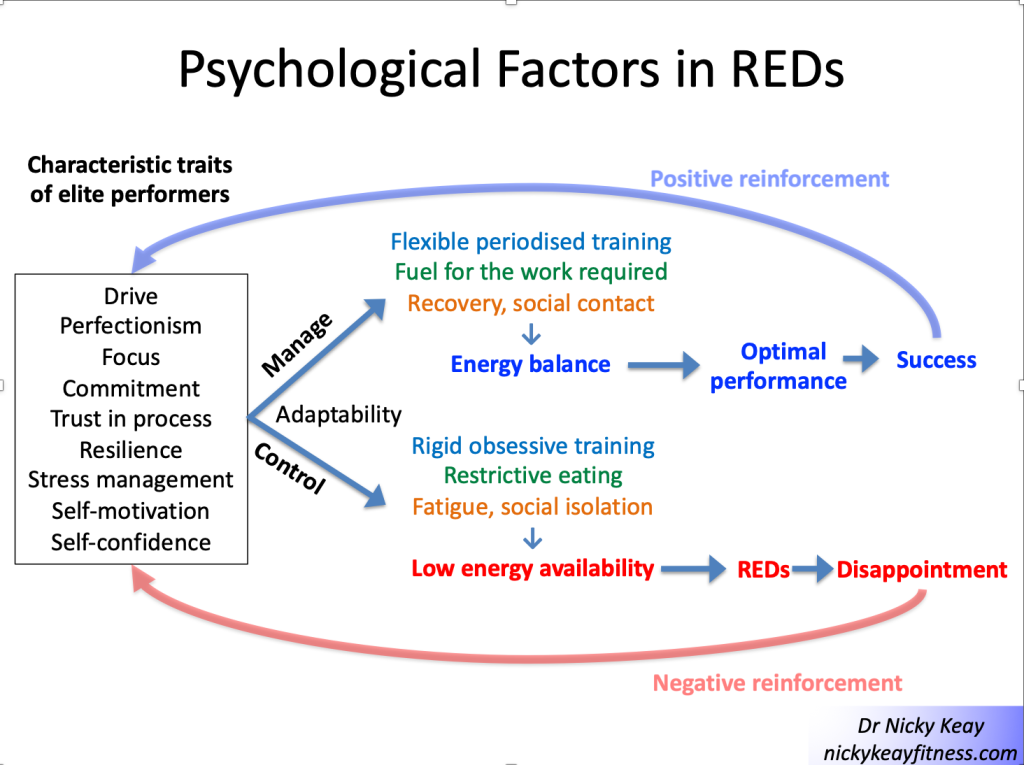
For individuals with intentional low energy availability, psychology and mental health can have a reciprocal interaction (Pensgaard, 2023). Those exercisers with personality characteristics such as self-motivation, perfectionism can be very laudable traits in terms of dedication to exercise training to achieve success. However, when these characterises impact and support rigid behaviours around training and nutrition, this can become problematic. This is shown in Figure 1 “Psychological factors in REDs”. Those who are able to adapt to external pressures and have a flexible approach to training and nutrition are more likely to experience positive outcomes. Whereas those who have a more rigid approach, which might include disordered eating and or an eating disorder and/or exercise dependence are more likely to experience negative outcomes. This reinforces self-doubt and culminates in a vicious circle of perpetuating rigid behaviours and negative outcomes in terms of both physical and mental health.
Evidence for this interaction between psychological factors and risk of REDs was found in our study of dancers, referenced in the updated IOC consensus statement. A significant relationship was found between psychological factors such as anxiety around body shape/weight and missing training. These psychological factors in turn had significant associations between physical manifestations of low energy availability (low body weight) and physiological outcomes (menstrual irregularity) (Keay, 2020). Similarly, in more of our published research papers referenced in the IOC consensus statement focusing on male athletes, an significant association was found between cognitive nutritional restraint and negative physiological and performance outcomes (Jorov, 2021).
This reciprocal interaction between internal and external factors is a systems biology approach, highlighted in the recent updated IOC consensus statement. From a physiological point of view the brain is a high energy demand organ, requiring a good supply of glucose. So low carbohydrate availability will restrict this cerebral supply, which can impair cognitive function and ultimately good decision making. It is interesting to reflect that the neuroendocrine gatekeeper, the hypothalamus keeps a watching brief on internal and external factors, not distinguishing between the source of stressors when putting in motion an adaptive response (Keay, 2022).
Consequences of Low Energy Availabiity
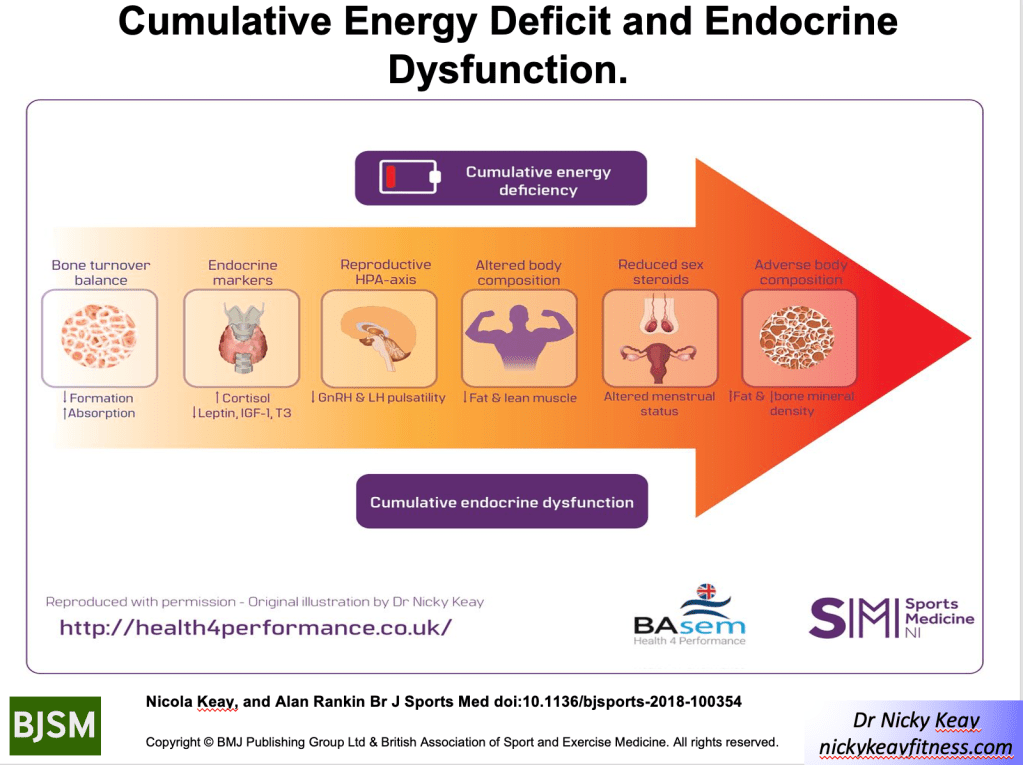
Low energy availability is not synonymous with REDs. Indeed, short term low energy availability might initially bring some good performances. Low energy availability becomes problematic depending on the time scale, which in turn determines the degree of adaptive response, described in the clinical physiological model of REDs (Burke, 2023). The first system to adapt to low energy availability is bone: bone turnover moves in favour of resorption over formation. This is why bone stress responses, specifically bone stress fractures, can be an early warning sign of REDs and designated a primary indicator in the updated IOC consensus statement. There will follow sequential down regulation of metabolic rate mediated via the thyroid axis, followed by the reproductive axis. In women primary amenorrhoea or sustained functional hypothalamic amenorrhoea (FHA) of 6 months or more duration is a severe primary indicator of REDs. In men, low rage testosterone is a severe primary indicator. Ultimately body composition will be adversely affected, with the only endocrine system to be up regulated being that of the hypothalamic-pituitary-adrenal axis (Keay, 2019).
Health
Cumulative low energy availability causes the syndrome of REDs, which produces progressive adverse effects on all aspects of health: physical, mental and social, described in the REDs conceptual model. Poor sleep will compound these negative health effects (Keay, 2022).
Performance
Although there may be some initial good performances, chronic low energy availability will result in adverse performance consequences of REDs, described in the REDs performance conceptual model. In our referenced papers in the consensus statement, we found that in male athletes, short term low energy availability impacted performance (Jurov, 2022). In another of our referenced studies we showed that male cyclists in sustained low energy availability over 6 months, not only experienced bone loss commensurate to astronauts in space, but these cyclists also underperformed compared to their energy replete fellow cyclists (Keay, 2019). On a positive note, explaining to athletes and dancers that improving energy availability will improve their performance, can help in overcoming problematic behaviours.
Identification of those at risk
In view of the potential adverse health and performance effects of REDs, it is a priority to raise awareness of this risk to affect prevention. To this end the British Association of Sports and Exercise Medicine (BASEM) has a website health4performance.co.uk dedicated to providing reliable information on REDs for athletes, parents, coaches and health care professionals together with BASEM endorsed online courses. Targeting and identifying those at increased risk is very important. Young athletes and dancers can be most severely affected as down regulation of hormone function due to low energy availability can cause delay in growth and development. In particular, delayed puberty and menarche dampens the accrual of peak bone mass, with implications for bone health (Keay, 2000). Furthermore, there is evidence that these adverse effects on bone health might not be fully reversible (Keay, 1997)
From a psychological point of view, the young aspiring athlete and dancer is also at heightened risk. Explored and viewed by many dancers in “The Dark Side of Ballet Schools” Panorama (season 33, episode 28). Selection for specialised training will inevitably favour those who are self-motivated and dedicated. In a group of individuals sharing similar psychological traits this could act as a “breeding ground” for reinforcing these characteristics in ways that could lead to behaviours which are not conducive to positive outcomes. Rather reinforcing the negative interpretation of external and internal factors, leading to a vicious circle of reinforcing attitudes and behaviours leading to REDs, as described in Figure 1
Risk stratification
Early identification of those at risk of developing REDs is an important preventative strategy. Especially for young aspiring athletes and dancers where behaviours around eating and exercise are being developed and established. A step-by-step approach is provided in the updated version 2 of the Relative Energy Deficiency in sport Clinical Assessment Tool (REDsCat v2) to identify and risk stratify individuals (Stellingwerff, 2023 ). Initial, low cost, screening questionnaires can be helpful, particularly if tailored to a specific sport/activity or dance. For example: sports specific energy availability questionnaire (SEAQ) (Keay, 2018) and dance energy availability energy questionnaire (DEAQ) (Keay, 2020). This can be helpful in identifying those individuals where further investigation is clinically indicated. As REDs is a diagnosis of exclusion, targeted blood testing excludes medical conditions per se and provide objective quantification in the stratification of risk. Severe primary indicators of REDs are issues in the reproductive axis: long duration of amenorrhoea in females and low range testosterone in males.
From a combination of all these results the individual can be placed in an appropriate risk category. The updated REDs CAT v2 includes a finer grained approach with four categories from green, yellow, amber to red.
This assessment also provides the background on which to base the appropriate level of support. For all, management will be directed at restoring energy availability and include modification of training and nutritional intake. However, the details will vary according to the severity of REDs. Individuals with intentional REDs, especially when formally diagnosed with an eating disorder, will need most intensive input than a person with transient unintentional low energy availability.
Management
A nuanced approach is required for individual athletes, depending on their risk stratification and biopsychosocial factors. In all cases some degree of psychological support will be helpful. Involvement of the extended multidisciplinary team is ideal: medical doctor, dietician, coach and parent (where appropriate) with the athlete/dancer at the centre.
In order to restore energy availability this will require careful discussion around nutrition in terms of consistency of eating patterns and composition of food groups consumed. This starts with regular meals containing good portions of complex carbohydrate and protein. Studies show that inconsistent intake of carbohydrate (eg “backloading” eating to the evening) produces an unfavourable hormone profile. Fuelling around training is also a high priority for hormone health and driving positive adaptations to exercise. Pre training consumption of carbohydrate together with post training refuelling with both complex carbohydrate and protein within 20 minutes of stopping are important behaviours for favourable hormone response to exercise (Keay, 2022).
In terms of pharmacological intervention, NICE guidelines have been updated 2022 in recommending body identical hormone replacement therapy (HRT) over the combined oral contraceptive pill (COCP) for bone protection in those with evidence of bone poor health due to functional hypothalamic amenorrhoea (FHA) as a consequence of REDs (BASEM, 2023). Poor bone health is defined as age matched Z score < -1 of the lumbar spine (trabecular bone particularly sensitive to low oestradiol) and/or 2 or more stress fractures at a site of concern (trabecular rich bone). For male athletes/dancers external testosterone is not appropriate as this supresses internal hormone production. Furthermore, testosterone is on the world anti-doping authority (WADA) banned list and it is not possible to obtain a therapeutic use exemption (TUE) as REDs is a functional condition, not a medical condition.
Prevention
Prevention is always the ultimate goal. In order to achieve this aim, a cultural shift in sport and dance is required. Emphasis on the fact that health is a prerequisite for performance. Pursuing a lighter body weight or leaner body composition will not automatically lead to improved performance. Each individual will have a personal tipping point. As we are all different, there is no such thing as a generic “ideal” weight/shape/body composition.
In practical terms, prevention can be considered as primary, secondary and tertiary (Torstveit, 2023). Primary prevention consists of providing and disseminating reliable educational resources. Secondary prevention includes early identification of those at risk of developing REDs, together with prompt and correct diagnosis. For example, regardless of whether an athlete or dancer, amenorrhoea in a woman of reproductive age (apart from physiological amenorrhoea of pregnancy) is never “normal”; whether blood tests are in range, or not. The tertiary level of prevention encompasses evidence-based treatments. As mentioned above, NICE guidelines are now in line with Endocrine Society and IOC in advising temporising HRT for bone protection in FHA. Not the COCP which masks underlying hormone dysfunction and is not bone protective. Similarly, thyroxine is not advised where there is downregulation of this axis as a consequence of REDs. This is not the same as the medical condition of a primary underactive thyroid indicated by raised thyroid stimulating hormone (TSH) (Keay, 2022).
Conclusion
Ultimately, we all have a role to play in supporting exercisers, athletes and dancers in avoiding “the REDs card” (Mountjoy, 2023). This involves the extended multidisciplinary team, starting with the individual exerciser, family, friends and coaches. Then bringing in health care professionals from medicine, dietetics and physiotherapy.
Imbalances in behaviours around exercise and nutrition can have potential negative consequences on all aspects of health and performance. On a positive note, exercise, supported with appropriate nutrition, is an excellent way to achieve and maintain optimal physical, mental and social health and support performance. This is applicable for all ages and levels of exercisers from the recreational to the amateur and elite athlete.
References
Burke LM, Ackerman KE, Heikura IAet al. Mapping the complexities of Relative Energy Deficiency in Sport (REDs): development of a physiological model by a subgroup of the International Olympic Committee (IOC) Consensus on REDs British Journal of Sports Medicine 2023;57:1098-1108.
Drinkwater B, Nilson K, Chesnut C. Bone Mineral Content of Amenorrheic and Eumenorrheic Athletes N Engl J Med 1984; 311:277-281 DOI: 10.1056/NEJM198408023110501
Jurov I, Keay N, Hadžić V et al. Relationship between energy availability, energy conservation and cognitive restraint with performance measures in male endurance athletes. J Int Soc Sports Nutr 2021;18:24. doi:10.1186/s12970-021-00419-3
Jurov I, Keay N, Spudić D et al. Inducing low energy availability in trained endurance male athletes results in poorer explosive power. Eur J Appl Physiol 2022;122:503–13. doi:10.1007/s00421-021-04857-4
Keay N, Overseas A, Francis G. Indicators and correlates of low energy availability in male and female dancers BMJ Open Sport & Exercise Medicine 2020;6:e000906. doi: 10.1136/bmjsem-2020-000906
Keay N, Francis G. Infographic. Energy availability: concept, control and consequences in relative energy deficiency in sport (RED-S) British Journal of Sports Medicine 2019;53:1310-1311.
Keay N, Rankin A. Infographic. Relative energy deficiency in sport: an infographic guide
British Journal of Sports Medicine 2019;53:1307-1309.
Keay N, Francis G, Hind K. Low energy availability assessed by a sport-specific questionnaire and clinical interview indicative of bone health, endocrine profile and cycling performance in competitive male cyclists BMJ Open Sport & Exercise Medicine 2018;4:e000424. doi: 10.1136/bmjsem-2018-000424
Keay N, Francis G, Entwistleet al. Clinical evaluation of education relating to nutrition and skeletal loading in competitive male road cyclists at risk of relative energy deficiency in sports (RED-S): 6-month randomised controlled trial BMJ Open Sport & Exercise Medicine 2019;5:e000523. doi: 10.1136/bmjsem-2019-000523
Keay N. The modifiable factors affecting bone mineral accumulation in girls: the paradoxical effect of exercise on bone. Nutrition Bulletin 2000, 25: 219-222. https://doi.org/10.1046/j.1467-3010.2000.00051.x
Keay N, Fogelman I, Blake G. Bone mineral density in professional female dancers.
British Journal of Sports Medicine 1997;31:143-147.
Mountjoy M, Ackerman KE, Bailey Det al. 2023 International Olympic Committee’s (IOC) consensus statement on Relative Energy Deficiency in Sport (REDs) British Journal of Sports Medicine 2023;57:1073-1097.
Mountjoy M, Ackerman KE, Bailey Det al. Avoiding the ‘REDs Card’. We all have a role in the mitigation of REDs in athletes British Journal of Sports Medicine 2023;57:1063-1064.
Pensgaard AM, Sundgot-Borgen J, Edwards Cet al. Intersection of mental health issues and Relative Energy Deficiency in Sport (REDs): a narrative review by a subgroup of the IOC consensus on REDs British Journal of Sports Medicine 2023;57:1127-1135.
Stellingwerff T, Mountjoy M, McCluskey Wet al. Review of the scientific rationale, development and validation of the International Olympic Committee Relative Energy Deficiency in Sport Clinical Assessment Tool: V.2 (IOC REDs CAT2)—by a subgroup of the IOC consensus on REDs British Journal of Sports Medicine 2023;57:1109-1118.
International Olympic Committee relative energy deficiency in sport clinical assessment tool 2 (IOC REDs CAT2) British Journal of Sports Medicine 2023;57:1068-1072.
Shirley M, Longman D, Elliott-Sale K et al. A Life History Perspective on Athletes with Low Energy Availability. Sports Med 2022 52, 1223–1234. https://doi.org/10.1007/s40279-022-01643-w
Todd E, Elliot N, Keay N. Relative energy deficiency in sport (RED-S) British Journal of General Practice 2022; 72 (719): 295-297. DOI: https://doi.org/10.3399/bjgp22X719777
Torstveit M, Ackerman K, Constantini N et al. Primary, secondary and tertiary prevention of Relative Energy Deficiency in Sport (REDs): a narrative review by a subgroup of the IOC consensus on REDs Br J Sports Med 2023;57:1119–1126.
Long-term low energy availability leads to adaptive changes throughout the body resulting in the clinical outcomes of REDs
Earlier this week the updated consensus statement from the International Olympic Committee (IOC) on relative energy deficiency in sport (REDs) 2023 was published in the British Journal of Sport Medicine (BJSM)[1]. What are the key points from the range of papers presented in this issue dedicated to REDs?
What’s in a name change?
Making “s” lower case is helpful as relative energy deficiency is not limited to those involved in sport. You can still be at risk of REDs even if you would not consider yourself an athlete; rather “just” someone that does regular exercise. Furthermore, most genres of dance are not sport, yet dancers are another group who can be at risk.
Time scale of low energy availability
The type of adaptive responses to low energy availability is dependent on the temporal component of this energy deficient. Energy availability is the amount of energy “available” once demand from exercise has been accounted for. If this available energy is not sufficient to maintain all the “housekeeping” physiological processes, then the body will respond by going into “eco” mode and down regulating body systems[2]. A small, short-term energy deficit may not be problematic. We have all been in situations where eating patterns don’t go according to plan. For example, a particularly busy time at work, disruption to travel plans, or lack of food availability.
However, sustained, cumulative energy deficit can lead to progressive adaptation shown in the figure.
These adaptive changes across many body systems have adverse outcomes on both health and performance. This is REDs. The clinical syndrome of health and performance consequences of long-term low energy availability. This is what happened in our study of male cyclists referenced in the BJSM publication. We quantified the negative effects of low energy availability on hormone networks, bone health and performance in male cyclists[3]. Those cyclists in low energy availability lost bone mass commensurate with an astronaut in space for 6 months and underperformed in races[4]. This negative impact of low energy availability on performance was underlined in our other studies of male athletes, referenced in the IOC papers [5,6]. Ultimately these are particularly important findings for athletes and their coaches, where performance is the priority.
Menstrual cycles
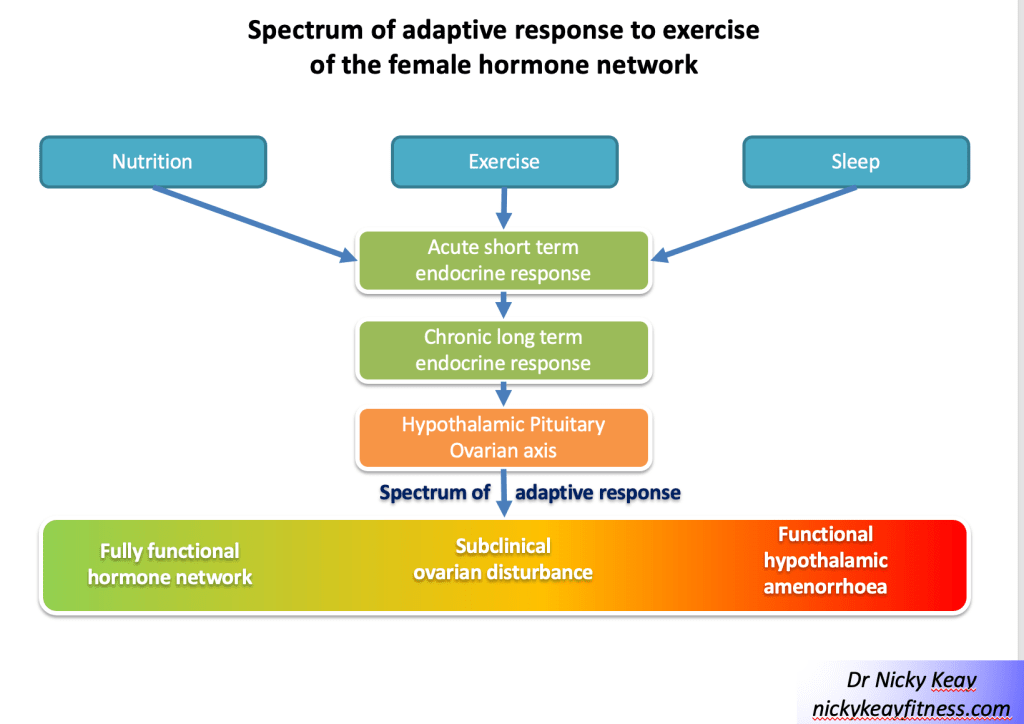
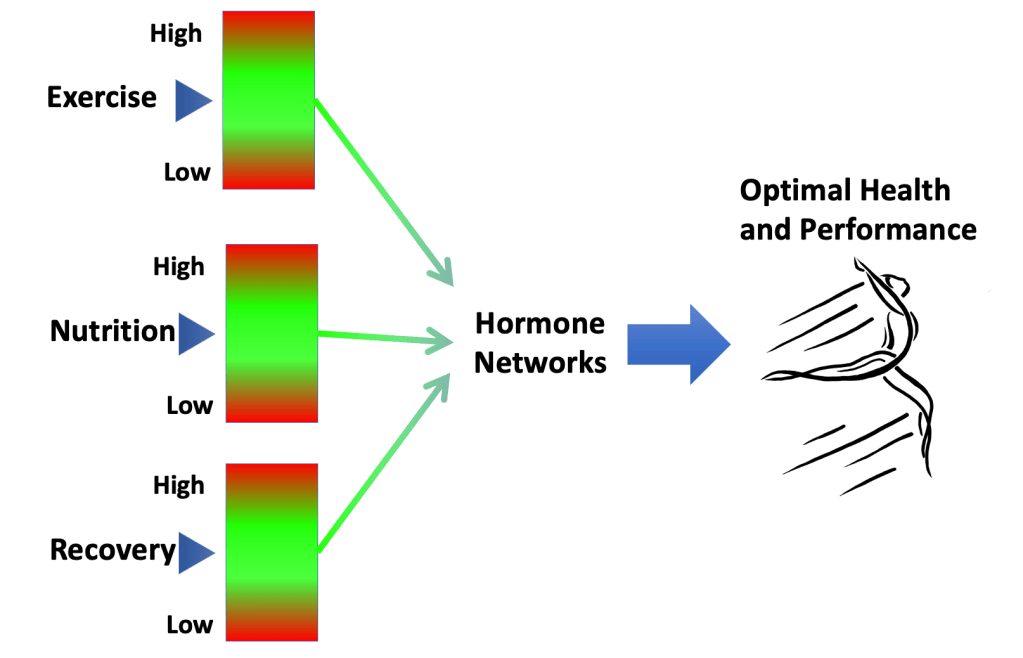
This concept of a gradated adaptive response to the combined effects of training load, nutrition and recovery can be applied when considering the spectrum of reproductive axis responses in female athletes and dancers, ranging from eumenorrhoea, subclinical ovulatory disturbances to functional hypothalamic amenorrhoea[7] shown in figure of Subclinical Ovulatory Disturbance. Functional hypothalamic amenorrhoea (FHA) is potentially just the tip of the iceberg when it comes to adaptive change to low energy availability. Report of menstruation and even signs of ovulation, may belie suboptimal production of progesterone. As progesterone increases metabolic rate, low production could be considered an early response to low energy availability. This hypothesis is currently being tested in a study of dancers, funded by the British Association of Sport and exercise Medicine.
Carbohydrate availability
Although we talk about low energy availability, the updated IOC consensus statement highlights that carbohydrate availability is the key. This is based on evidence that carbohydrate is the main substrate for exercise above a certain intensity. Furthermore, the hormones of the reproductive axis are particularly sensitive to carbohydrate availability. The IOC statement highlights studies, where despite isocaloric diets, those low in carbohydrate resulted in hormone disruption and poorer athletic performance outlined in the statement.
Health is essential for performance
Another important theme is that optimal health is a prerequisite for performance. This includes both physical and mental aspects of health. Many of the psychological characteristics of athletes and dancers can predispose individuals to developing REDs. For example, although dedication, perfectionism and motivation are laudable qualities, these can spill over into behaviours around training and nutrition. This can be associated with exercise dependence and disordered eating patterns.
If an individual is anxious about body shape, weight and food, this can have a negative health outcome. For example, in our study of dancers[8], quoted as a reference in the updated IOC statement, we found that there were significant relationships between anxiety about controlling weight and eating and missing training, and physical outcomes of low BMI and physiological health in terms of lack of regular menstrual cycles. Regular menstrual cycles in women are a barometer of internal healthy hormones. Similarly in another referenced study, we found that cognitive restraint in male athletes had an adverse effect on hormone profiles[9]. How you think impacts hormone health. This interaction is shown by the reversible arrow between psychological factors as both a driver and result of REDs shown in the updated REDs health conceptual model.
Weighty matter
Weight is a measurement of gravity, not athletic potential. Being a certain weight or body composition does not guarantee athletic success. This fact was emphasised by the lead author of the special edition on REDs on the BJSM podcast. Realistically most types of exercise will involve overcoming gravity, nevertheless, there comes a tipping point where being too light weight and/or having too low body fat means being unhealthy and compromising both physical and mental performance. Furthermore, we are all individuals so our personal optimal weight and body composition will be personal to each of us. Not the generic “lighter is faster”.
Identification
Ultimately low energy availability is a concept and not measured outside of research settings. Rather, making a diagnosis of REDs is a diagnosis of exclusion. In other words, other potential medical conditions must be excluded. This can be achieved through a process of identifying those at risk with energy availability questionnaires, followed by assessing clinical symptoms and signs: such as growth trajectories in young athletes and menstrual status in female athletes and dancers. Readily available and reliable investigations such as blood tests and DXA scans are outlined. These clinical findings have been presented as primary, severe indicators (hypothalamic reproductive disruption in men and women), primary indicators, secondary indicators and other supportive factors.
When considering hormone tests is really important to emphasise that even if a result is not out of range, where the result lies in the range is crucial. Together with considering hormones as networks providing a pattern that is informative. For example, in correctly identifying subclinical down regulation of the thyroid or reproductive axis[2].
Risk stratification
Each of indicators described in the consensus statement carries a score, so that an individual can be risk stratified. The REDsCAT2 has a finer grained zone compromising of green, yellow, orange and red, replacing the 3 zoned traffic light system.
Clinical management
Ultimately as the underlying aetiology of REDs is low energy availability, then the aim of supporting an individual experiencing REDs is to restore sufficient energy availability through a combination of nutrition and possibility reducing demand from intense training. As this will involve behaviour change, this can be challenging and a multidisciplinary team approach is advised. Highlighted for female athletes experiencing functional hypothalamic amenorrhoea (FHA) and associated poor bone health, that the combined oral contraceptive pill is not advised. Rather for bone protection in the short-term HRT (transdermal oestradiol and cyclic micronised progesterone) is recommended in line with updated NICE guidelines in UK[10].
The risk of low energy availability and REDs in dancers will be dicsuused at the forthcoming British Association of Sports and Exercise Medicine annual conference 6/10/23. https://health4performance.basem.co.uk/
3 Keay N, Francis G, Hind K Low energy availability assessed by a sport-specific questionnaire and clinical interview indicative of bone health, endocrine profile and cycling performance in competitive male cyclists. BMJ Open Sport Exerc Med 2018;4:e000424. doi:10.1136/bmjsem-2018-000424
4 Keay N, Francis G, Entwistle I et al Clinical evaluation of education relating to nutrition and skeletal loading in competitive male road cyclists at risk of relative energy deficiency in sports (RED-S): 6-month randomised controlled trial BMJ Open Sport & Exercise Medicine 2019;5:e000523. doi: 10.1136/bmjsem-2019-000523
5 Jurov I, Keay N, Spudić D et al Inducing low energy availability in trained endurance male athletes results in poorer explosive power. Eur J Appl Physiol 2022;122:503–13. doi:10.1007/s00421-021-04857-4
6 Jurov I, Keay N, Rauter S Reducing energy availability in male endurance athletes: a randomized trial with a three-step energy reduction. Journal of the International Society of Sports Nutrition 2022;19:179–95. doi:10.1080/15502783.2022.2065111
7 Keay N. Interactions of the female hormone network, exercise training and nature of adaptation. ResearchGate. June 2023 DOI: 10.13140/RG.2.2.28787.71204
8 Keay N, Overseas A, Francis G Indicators and correlates of low energy availability in male and female dancers. BMJ Open Sport ExercMed 2020;6:e000906. doi:10.1136/bmjsem-2020-000906
9 Jurov I, Keay N, Hadžić V et al Relationship between energy availability, energy conservation and cognitive restraint with performance measures in male endurance athletes. J Int Soc Sports Nutr 2021;18:24. doi:10.1186/s12970-021-00419-3
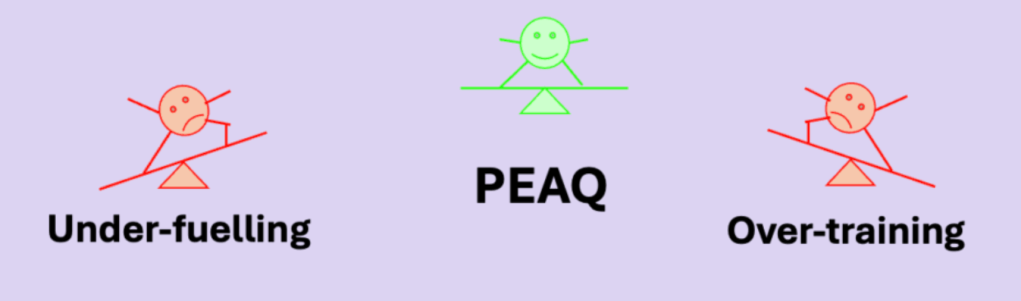
Although relative energy deficiency in sport (RED-S) and overtraining syndrome (OTS) are often described as distinct entities, these can be considered as different facets of the same unbalanced behaviours. For an exerciser these behaviours consist of exercise training load, nutritional intake and recovery.
What is RED-S?
RED-S is a clinical syndrome describing adverse consequences in terms of health and performance due to sustained low energy availability (LEA). LEA is where there is a mismatch between energy intake and the combined energy demand from exercise and resting metabolic rate.
What is OTS?
OTS is a clinical syndrome describing adverse consequences in terms of health and performance when there is sustained non-functional overreaching (NFOR). NFOR is where there is an imbalance between training load relative to recovery.
It’s all about time scales
Thinking about RED-S and OTS in more detail, neither suddenly occur overnight. Rather it is the cumulative effect of energy deficit, or lack of recovery, that causes these syndromes over longer time scales of months.
Short time scales
Facets of LEA and NFOR
For example, the occasional day of suboptimal fuelling/high energy demand, with accompanying relative low energy availability, although not ideal, is nevertheless recoverable. This is shown by the warning masque of LEA of the rotating cube. On the opposite side is the warning masque of NFOR, where there have been some occasions of insufficient recovery over a short time scale of days. As with LEA, this is potentially a recoverable situation.
Longer time scales
Facets of RED-S and OTS
In practical terms, imagine you have been on a training camp or a dance intensive over a week or two. You may have unintentionally incurred a degree of LEA and NFOR, but if you take some time to rest and refuel afterwards, then you will be able to resume usual training fitter and stronger. On the other hand, if you continue to try and train at high intensity, in relative energy deficit you will progress after more weeks and months into the alert red masques of OTS and RED-S. In each case these outcomes are different facets of the same underlying imbalances in athlete/dancer behaviours around training load, nutrition and recovery.
Practical implications
When an athlete or dancer presents with symptoms that could include fatigue, poor sleep, menstrual disruption, recurrent injury (soft tissue or bone), digestive issues and other issues; it is very important to exclude medical conditions. Once this has been done and a diagnosis of exclusion made to confirm a functional issue, then deciding whether to use the terminology RED-S or OTS has a subtle nuance because in practice these syndromes are facets of the same underlying imbalance in athlete behaviours. In all cases the most important aspect is to outline a course of action for the athlete that includes training load, nutrition and recovery, in combination.
Athlete and dancer support
For example, athletes experiencing RED-S often ask if they can restore healthy hormone network function by simply eating more while maintaining a high training load. The simple answer is that this makes recovery less certain as a high training load, specifically high intensity, will most likely mean there is also a degree of NFOR. Therefore, adjustment in all athlete behaviours in synchrony is more effective for health and performance restoration. Similarly in an athlete experiencing OTS, in addition to reduction in training load, optimising nutritional intake will help.
Prevention is always better than cure
The prevention of adverse outcomes for the athlete or dancer is the other important practical implication of considering these clinical syndromes as facets of the same underlying issue. From the rotating cube of unbalanced athlete behaviours, LEA is the precursor to RED-S. Similarly, NFOR is the precursor to OTS. The progression in each case being determined by a longer time scale. Early identification of those at risk is essential to prevent this negative progression. Reversing the situation is a far easier task physiologically and psychological at an early stage of LEA and NFOR, rather than once in a “deeper hole” of RED-S or OTS.
Conclusions
RED-S and OTS being different facets of the same underlying issues of unbalanced athlete behaviours is a concept with practical implications.
References
Keay N. Hormones, Health and Human Potential. 2022 Sequoia books Act 1 Scene 9 “A Balancing Act” and Act 1 Scene 10 “In the Red”.
At the start of every year there is always a lot of talk about refraining from certain activities like drinking alcohol, advice about eating a particular way, or recommendations to do certain types/amount of exercise. Trends in these lifestyle choices may come and go, but there is one behaviour that remains constant to achieve optimal health. Sleep.
Illustration from “Hormones, Health and Human Potential”
Sleep for hormone health
Why is sleep such an essential component for health? Although being asleep is a physical state of inactivity, it is when many hormone networks are at their most active. For example, one of the main stimuli for growth hormone (GH) release is sleep. Despite its name, GH is not just about growth in children. All adults continue to produce GH and this is an important anabolic (tissue building) hormone. GH maintains a healthy body composition: favouring muscle over fat deposition. GH also plays a role in bone health.
Sleep for fitness
Another stimulus for GH release is exercise. However, you don’t get fitter in real time while you exercise. You get fitter when you are asleep. After stopping exercise and during sleep these two combined stimuli for GH release drive the positive adaptations to exercise. Sleep enables you to become citius, altius, fortius.
Sleep for sex steroid hormone networks
Sleep is also essential for other hormone networks, such as those of the reproductive axis, in both men and women. Studies show that men who have reduced sleep tend to have lower levels of testosterone and poorer bone health. Essentially if you do not have sufficient quality and quantity of sleep this has a negative effect on many aspects of both physical and mental health.
Sleep for metabolic health
Hormones that control appetite and satiety are linked with the sleep/wake cycle. People who have disrupted sleep patterns are more likely to struggle with blood glucose and weight control.
Timing of sleep
The timing of sleep is also important. Hormone networks run on a variety of internal biological clocks, known as biochronometers. The trick is to try and synchronise the timing of your behaviours with these internal biochronometers. If you have an “scheduling conflict” between external and internal clocks, this leads to a situation of circadian misalignment. Circadian misalignment can lead to many adverse consequences on mental and physical health, including metabolic and cardiovascular health. This negative combination can lead to metabolic syndrome which increases the risk of type 2 diabetes mellitus, cardiovascular disease and high blood pressure.
Consequences of disrupted sleep patterns
Shift workers, for example junior doctors, are at risk of developing circadian misalignment. Disrupted sleep patterns, clashing with internal hormone timing becomes a vicious circle. Poor sleep interferes with the diurnal variation of cortisol, which peaks as an awakening response. Disruption of this cortisol awakening response can disrupt subsequent night sleeping.
A degree of circadian entrainment is possible. In other words, our hormone clocks can adapt to slight changes in sleeping patterns. For example, getting up early for exercise training. It is also possible to reset internal biological clocks, as we do after a long-haul flight. This is because in our brain we have a biological light sensor which has direct communication with the manager of the hormone orchestra, conveniently situated in very close proximity in the brain. The timing of daily hormone release can be reset to correspond with local night and day timing. This contrasts to the situation of doing shift work, where you are continuously in conflict with night/day timing and internal hormone clocks.
Top tips for sleep to optimise hormone health
So, if there is one behaviour that you are going to improve this year, it should be sleep.
Sleep hygiene is the term used to cover strategies to ensure a good night’s sleep. One of the tops tips is to try and go to bed at a regular time, before midnight. A recent study shows that is these hours before midnight that are particularly valuable for hormone health. In fact, it is useful to set an alarm for going to bed.
Another strategy to help sleep is finding a bedtime “wind down” routine that suits you. For example, reading or listening to music. Looking at mobile electronic devices is not one of these. The reason being that the light emitted from these devices prevents the production of the sleep hormone melatonin.
When it comes to hormone health, sleep is indeed the chief nourisher. Sleep and other lifestyle choices to harness hormones for optimal health, through life, are explored in detail in “Hormones, Health and Human Potential: A guide to understanding your hormones to optimise your health and performance”.
Oscar Wilde quipped that “Moderation is a fatal thing. Nothing succeeds like excess.” However, when it comes to enjoying a healthy lifespan, nothing succeeds like moderation.
Harnessing Hormones through Lifestyle Choices for Health
Personalising Health through Lifestyle
Hippocrates advocated that giving each individual just the right amount of exercise and nourishment, not too little and not too much, is the safest way the health. Although Hippocrates is often known as the father of medicine, more accurately he could be described as the father of health. Health being not just the absence of disease, rather the positive combination of physical, mental and social health.
In ancient Greek times it was not known why moderation, of nutrition and exercise surely lead to health. As I describe in “Hormones, Health and Human Potential” it is the interactions of these behaviours with our hormone networks that maintain internal harmony known as homeostasis. Homeostasis is equilibrium of the internal environment to support all physiological processes for health. Hormone networks can adapt and withstand a certain degree of external excess in the form of too much or too little nutrition or exercise. However there comes a critical point, personal for each individual, where continued excess of unbalanced behaviours will tip over into adverse effects on health. Incidentally in this situation it is not hormones that become unbalanced, rather unbalanced behaviours have forced hormone networks into extensive adaptive changes.
Rebalancing Lifestyle Choices
There are certainly ever emerging challenges for attaining just the right amount and timing of each lifestyle choice around nutrition and exercise. Everyone likes a “quick fix”: apart from your hormones and your health. This is why New Year’s resolutions around extreme dieting or exercise at either end of the spectrum don’t lead to long term benefits. Another problem is that it is difficult to override in-build “safety” mechanisms, so it is challenging psychologically to stick to original intentions. Your body and millions of years of evolution knows best. This can leave you deflated and demotivated. You can’t stick to your plan and this plan does not bring the success you expected. What are the ways to set you on the surest path for optimal heath?
Lifestyle choices for 2023
Exercise
There are two very important factors in your choice of exercise. Firstly, that this is something you personally enjoy. Studies show that those who chose exercise that they enjoy are more likely to keep exercising and make healthy food choices. My personal favourite is taking a ballet class with my excellent teacher and friends of many years. Dance also covers the second important point about exercise choice in that it should involve different types of fitness. I see many people just focusing on a cardiovascular type of exercise, neglecting strength, flexibility and neuromuscular skills. However, if ballet is not your thing, then choose your exercise types wisely for enjoyment and to cover all bases of fitness.
Nutrition
Nutrition is very similar to exercise in that food choices should cover all the nutritional requirements for the individual and not neglect the enjoyment element of eating. Trying to adhere rigidly to any type of diet that does not encompass these elements will not end well for health in the long run. I see a lot of exercisers who end up in unintentional or intentional low energy availability with associated adaptative down regulation of hormones, which can be challenging to rectify. At the other end of the spectrum, for those who maybe have favoured energy intake over energy expenditure, the type of weight reduction diets that purport to give rapid weight loss, can often be counterproductive in the long term. If it sounds too good to be true, it probably is.
Sleep
“Sleep is the chief nourisher in life’s great feast”. Although Shakespeare did not realise at the time of writing “Macbeth”, sleep certainly is the chief nourisher when it comes to hormones. Many hormone biological clocks, biochronometers, are set according to our sleep patterns with recent research showing that lack of sleep adversely impacts hormone health for men and women. So aiming for good sleep patterns is something relatively straight forward and actionable to support health.
Stress management
We often have our own personal responses to “stress”. This could be responding through an excess of behaviour at either end of spectrum: eating and/or exercising too little or too much. Especially when combined with disrupted sleep patterns, this creates the perfect storm for challenging hormone health. This vicious circle can become a repeating pattern of response to “stress”. I put “stress” in inverted commas intentionally, because “stress” is our personal interpretation of external stressors. We each have our own interpretation of events and our personal response.
For this reason, “stress” management strategies are a personal choice. Identifying your personal triggers for deviating away from balanced behaviours is an important starting point. Then noting what tends to be your typical response is to these triggers. Can you explore more helpful ways to deal with your personal triggers? Is this listening to music, reading, mediation, meeting with friends or as Hippocrates advised going for a walk? I often see people (including myself) who have tendency to over exercise when confronted with stress provoking situations. So, in this case, going for more walks wouldn’t be the best option. Make sure your strategies are personal to you.
Moderation for Optimal Health 2023
The top tip for optimal health in 2023 and beyond is to aim for moderation and balance across the key lifestyle choices of exercise, nutrition and sleep. Combined with your personal stress management strategies to avoid too much or too little of any of these behaviours, this is the surest way to health as Hippocrates advised. If you do need to modify or fine tune your choices, making small changes that you can sustain over the whole year and beyond will bring success in health.
In my book “Hormones, Health and Human Potential”, I really enjoyed writing the chapter 5XX “Of Mice and men….and Women!” Celebrating Horme the goddess of effort, energy and action. However, there are some instances where even this formidable goddess is challenged and adaptations are required[1].
Challenges to menstrual cycle hormones
Menstrual cycle hormone choreography is as beautiful as it is complex. Generally, this repeating motif follows the score faithfully during a woman’s reproductive years. However, when external stressors become too great, then menstrual hormone fluctuations respond and adapt.
A single stressor, for example financial concerns or a life event can impact hormones and disrupt menstrual cycles on a short time scale of a handful of cycles. However, a combination of stressors can have a synergistic effect on disrupting female hormone networks. Additive stressors over a long-time scale are known as an allostatic load. A high allostatic load causes a more extensive adaptation of female hormones[2]. For example, a high level of stress from intense exercise training together with metabolic stress from insufficient food intake can result in total suppression of menstrual cycle hormone fluctuation and cessation of periods (amenorrhoea) found in relative energy deficiency in sport (RED-S).
Unbalanced behaviours
Although “hormone imbalance” is a popular phrase, this has no medical meaning. This misleading phrase does a massive disservice to Horme and to millions of years of evolution in fine-tuning the most intricate hormone network. It is not the hormone network that has become “unbalanced”, rather it is our unbalanced behaviours and/or management of external stressors that have caused hormones to adapt and change appropriately. On a positive note, understanding hormones empowers us to nurture and harness our hormones through our lifestyle choices.
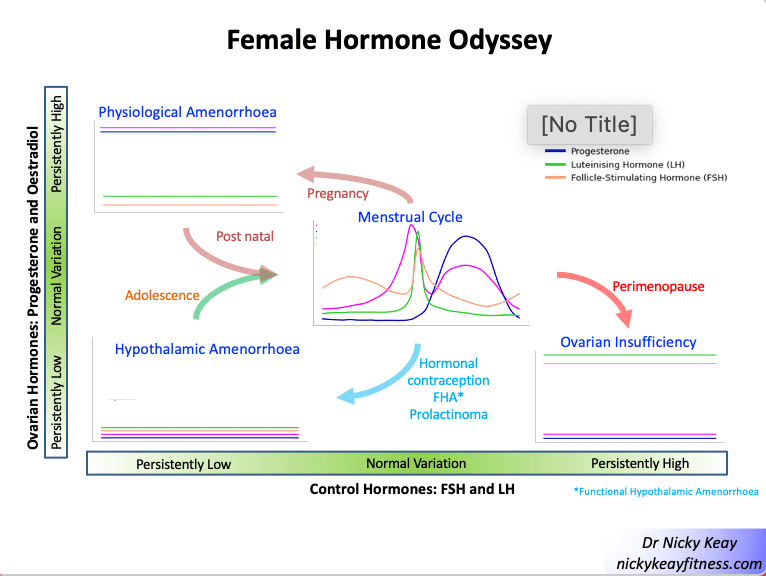
Spectrum of female hormone adaptation
There is a graded response of female hormones to external stressors, depending on the number and the time scale of these. A cumulative combination of stressors results in a high allostatic load which causes amenorrhoea. Physiological causes of amenorrhoea must be excluded: pregnancy and menopause; as should medical causes such as prolactinoma and polycystic ovary syndrome (PCOS).
The type of amenorrhoea occurring as an adaptive response to a high allostatic load is functional hypothalamic amenorrhoea (FHA). This means that the neuroendocrine gatekeeper in the brain, the hypothalamus, has taken the executive decision to suspend female hormone fluctuations, in order to conserve resources to deal with the stressful situation. From an evolutionary point of view this is not the time for the high demand state of pregnancy. The good news is that being an adaptive functional response, FHA is reversible if the underlying cause is addressed.
Tip of the iceberg
Amenorrhoea is a very obvious clinical sign. Similarly, oligomenorrhoea (less than 9 periods per calendar year). However, these menstrual disruptions are just the tip of the iceberg. Less obvious are the subclinical ovulatory disturbances (rather unflatteringly referred to as SODs). This is where a women may experience a menstrual period, but the full repertoire of female hormone fluctuation has not occurred. Specifically, progesterone has not increased to levels that would be expected in the luteal phase of the cycle (second half of the cycle). If ovulation has occurred, then the remnant of the egg follicle in the ovary forms the corpus luteum which secretes progesterone. Progesterone increases resting metabolic rate and energy demand. So, keeping progesterone low is a good adaptive response to high allostatic load by keeping energy demand low.
If subclinical ovulatory disturbances are an adaptive physiological response, does this matter for a woman’s health? The answer is yes. Oestradiol (the most active form of oestrogen) often takes the limelight when it comes to positive effects on bone, soft tissue, cardiovascular, and neurological health. However, evidence is emerging that progesterone plays an equally important supporting role in these areas of health. For this reason, it is important to identify these elusive disturbances in menstrual hormone choreography.
How to detect subclinical ovulatory disturbances
As I discuss in my book in the chapter “Hormone Supermodels”, applying artificial intelligence (AI) techniques to modelling menstrual cycle hormones can help in identifying subtleties in hormone disruption. This is a fast-moving field and even since publishing on this topic, further advances are being made as more data is emerging and employment of different mathematical techniques, with reduction in the number of samples required. Monitoring temperature change as surrogate for indicating adequate progesterone levels during the luteal phase is a non invasive way of monitoring menstrual cycle hormone function. Personalisation of female hormone health is on the move. Nevertheless, the cornerstone of any medical AI focused on hormones is the medical doctor with expertise in hormones, putting the results in clinical context for the individual. Explaining and advising with practicality and empathy is vital.
This personalised medical approach is crucial when, by definition, subclinical ovulatory disturbances will require guidance on changing behaviours to reverse adaptive hormone changes. When I work with athletes and dancers experiencing hormone disruption due to imbalances in exercise and nutrition, I find it helpful in referring to recovery from a hormone injury as comparable to recovering from a physical injury. Furthermore, there can be a psychological dimension to subclinical ovulatory disturbances. How we interpret external events and think impact our hormones. For example, cognitive dietary restraint (just thinking you should eat less/be thinner) can cause subclinical ovulatory disturbances.
Nurturing Horme
Menstrual cycle hormone choreography is the most intricate and beautiful of all the hormone networks. There is a spectrum of hormone adaptation according to the degree of “stress” put on the system. The visible tip of the iceburg is menstrual disruption such as amenorrhoea and oligomenorrhoea. Less obvious, beneath the surface are subclinical ovulatory disturbances. Subclinical ovulatory disturbances are adaptive hormone responses to unbalanced behaviours and/or interpretation of external events. These subtleties of subclinical ovulatory disturbances can be challenging to identify. However, it is important to do so and provide appropriate medical support to restore these hormones for long term health.
[1] Keay N. Hormones, Health and Human Potential 2022 Sequoia books
[2] Prior J. Adaptive, reversible, hypothalamic reproductive suppression: More than functional hypothalamic amenorrhea Front. Endocrinol 2022 Sec. Reproduction https://doi.org/10.3389/fendo.2022.893889
I was one of the panel discussing hormone power at Bloomfest last week. I started by suggesting that if you are ever labelled as being “hormonal”, take this as a compliment. After all, Horme is the goddess of action and energy. We discussed how to navigate the lifetime female hormone odyssey
Female Hormone Choreography
Hormone networks are complex. Out of all the networks, those of the female hormones is the most intricate. A beautiful interactive dance of hormones occurs every menstrual cycle, following characteristic choreography. However, this hormone dance will be personal to each woman, with subtleties in timing, hormone levels and crucially individual biological response. This is why knowledge is power when it comes to female hormones. Tuning into your personal variation of hormones in terms of how you feel, takes away the mystery. This empowers you to be proactive and work with your hormones, not against them. Periods are the barometer of internal hormone health and a free monthly medical check. I mentioned the potential flash points of the menstrual cycle in terms of menstruation and the luteal phase (occurring after ovulation, in the 2 weeks or so before menstruation) and practical strategies to put in place. This area is discussed in detail in Act 1, Scene 5XX “Of Mice and Men….and Women”.
Hormonal Contraception
Hormonal contraception is often an area of confusion. It is every woman’s choice regarding her personal choice of contraception. However, in order to make an informed choice about the most suitable form, it is really important to clarify the different types available. Non hormonal options, barrier methods include condoms and the copper coil. Hormonal contraception can be divided into combined (synthetic oestradiol and progesterone) and synthetic progesterone-only options. Incidentally a hormonal contraception was trialled men, but they didn’t not like the side effects. As I explain in my book, it is really important that women (and their doctors) know that combined hormonal contraception (eg combined oral contraceptive pill) and certain types of synthetic progesterone-only options, suppress the internal production of female hormones across the board. This is why these medications are very effective contraception. This suppression of internal female hormones can be very useful for women with endometriosis and polycystic ovary syndrome (PCOS) which are conditions effectively fuelled by female hormones. However, this suppression of female hormones is absolutely not suitable for women whose periods have stopped. After writing to NICE, I am pleased to report the guidelines are now updated to advise against giving hormonal contraception to women who are not experiencing periods.
Hormone Injury
Unbalanced external lifestyle choices, rather than harnessing hormones, can cause female “hormone injury”. In my book Act 1, Scene 10 “In the Red” goes into the detail of how an imbalance in behaviours around exercise and nutrition can derail female hormone choreography. I outline practical advice of how to recover from this type of “hormone injury” and what to do to restore and reboot hormone networks and return to full health.
Graduation to Menopause and beyond
Variation in female hormone choreography occurs over the longer time scale of a woman’s lifespan. Menopause is a hot topic. Although it is great to see this being discussed, I suggest we need a more positive narrative. I prefer to talk about the graduation to menopause, rather than a decline. This stage in a woman’s life is something I cover in depth in my book in Act 2 looking through the “The Seven Ages of Man and Woman”. In some cultures, being older and wiser is revered. Menopause is something that all women will experience during their life. A point in time when the ovaries retire in their production of hormones and release of eggs.
The graduation to menopause can be the most challenging. During the perimenopause the ovaries work on an unpredictable, part time basis. The female hormone choreography works smoothly in some cycles. Other cycles there will be a mistiming and confused choreography, causing some of the typical indicators of menopause. These include changes in cycle length and nature, temperature regulation issues, labile mood and brain fog being some of the most frequent. We discussed that probably the most helpful approach for women in the workplace is to facilitate discussions, sharing experiences and putting in place practical things that are helpful for the individual: for example, having a desk fan nearby, sitting near a window. From the medical support point of view, providing the facts and practical aspects of taking HRT is something that I am very pleased to be able to provide.
The quote from the Vice President of the Royal College of Obstetrics and Gynaecologists: “Treat women as individuals, not statistics” is something that resonates when it comes to discussing how to unlock and harness the power of female hormones, throughout each woman’s personal female hormone odyssey.
“Hormones, Health and Human Potential” explains how hormones play a crucial role in determining health. Hormone networks provide the feedback mechanism by which our lifestyle and behaviours enable us to reach our personal potential.
Introduction
Over 2,000 years ago Hippocrates advocated that the “safest way to health” was through “the right amount of nourishment and exercise” for “every individual”. As it turns out Hippocrates was way ahead of his time in articulating the principles of personalised and preventative medicine.
Hormones as the missing link to health
Although Hippocrates understood that lifestyle and behaviours are key to health, he did not know why. We now know that hormones are the key players in this vital role. Hormones are instigators in bringing our DNA to life by determining gene expression. Hormones direct the production of proteins, in the optimal amounts and at the right time. Hormones work as networks to maintain mental and physical health.
Lifestyle factors influencing health through hormones networks
Complex internal negative feedback loops between hormones and the biological variables that they regulate, enable homeostasis for good physiological function. Challenges to homeostasis, due to our interactions with the environment are detected by the hypothalamus, which manages hormone network response. In this way there is another layer of feedback loops between lifestyle behaviours and hormones.
Well-balance lifestyle behaviours, in terms of quantity and timing, support healthy hormone network function, leading us to the “safest way to health”. Conversely, circadian misalignment, where lifestyle choices conflict between internal biochronometers, can lead to hormone dysregulation found in conditions such as metabolic syndrome.
Harnessing hormones as preventative and supportive medicine
A good balance of lifestyle factors can harness hormones as a form of supportive and preventative medicine. This is particularly relevant for type 2 diabetes mellitus and metabolic syndrome. For women, where there are physiological changes in hormones, such as occurs at menopause, attendant symptoms and impacts on long term health can be mitigated by lifestyle as part of the management of menopause. For example, exercise has been shown to have a beneficial effect on temperature regulation, metabolism, body composition, bone health and reducing the risk of breast cancer.
Athlete performance mediated by hormones
Hormones mediate the positive adaptive changes due to exercise training. Understanding these mechanisms can benefit both athletes and patients .
Imbalances in behaviours causing hormone dysregulation
Too little exercise and excess nutrition can lead to hormone dysregulation, seen in metabolic syndrome and type 2 diabetes mellitus. On the other hand, too much of a “good thing” can also cause health and performance issues in exercisers. Relative energy deficiency in sport (RED-S) can occur in exercisers of all ages and levels, where there is either an unintentional or intentional mismatch between energy intake and energy demand. Consequent low energy availability causes hormone network disruption, which in the long-term results in adverse effects on both health and performance .
Conclusions
• Hormone network function plays an important role in mental and physical health • Hormones are influenced by our lifestyle behaviours of exercise, nutrition and sleep • The benefits of lifestyle behaviours are derived from the positive adaptive changes driven by hormones • Imbalances in lifestyle behaviours can cause hormone disruption leading to adverse effects on health and exercise performance
McCarthy O, Pitt J, Keay N et al Passing on the exercise baton: What can endocrine patients learn from elite athletes? Clinical Endocrinology 2022 96;(6):781-792
Keay N, Francis G Infographic. Energy availability: concept, control and consequences in relative energy deficiency in sport (RED-S) British Journal of Sports Medicine 2019;53:1310-1311.
Female hormone networks form the most complex aspect of the endocrine system. The menstrual cycle depends upon a delicate web of feedback mechanisms that trigger significant changes in hormone levels. This intricate physiological process generally operates reliably, but its timing and the hormone levels are affected by internal and external factors going on in a woman’s life. This is why women differ in their experiences of menstrual cycles and why an individual woman may notice differences between cycles.
Apart from being fascinating from a physiological point of view, why is this so important from a practical point of view for women? The reason is that female hormones are not just about fertility. The ovarian hormones oestradiol (most active form of oestrogen) and progesterone have significant effects through the body. Every biological system is dependent on these hormones: bones, muscle, nervous system, including brain function, skin, the cardiovascular and digestive systems [1]. This is why female hormones impact all aspects of health: physical, mental and social [2].
The cyclical fluctuations in female hormones occurring every menstrual cycle will also change over a woman’s lifespan. Completion of puberty is marked by the start of menstrual cycles: menarche. During her adult life a woman can expect regular menstrual cycles. However, subtle hormone disruption can be missed. Although blood testing is the most accurate way of measuring all four of the key female hormones, the standard protocol of taking a blood test at one time point in the cycle, when hormones are at their most quiescent, can miss subclinical menstrual cycle hormone dysfunction.
For example, in subclinical anovulatory cycles, although a woman may experience regular menstrual periods, subtle mistiming of female hormones will not be detected with a routine single blood test. Yet this type of hormone disruption can have potential adverse consequences on health. This is particularly relevant for exercisers, athletes and dancers who are either on the brink of or recovering from low energy availability. Early identification and prevention of relative energy availability in sport (RED-S) is important for both health and exercise performance [3].
A similar situation arises for women in the perimenopause when the responsiveness of her ovaries starts to decline. This is further complicated by the fact that the decrease in ovarian hormone production is not a smooth linear process. A blood test at a single time point may not identify these changes in key female hormone networks. Although perimenopause is a natural physiological process, it can be a challenging time for women, magnified by uncertainty. All change for female hormones
Women need a new, more supportive approach, to take away uncertainty and to empower them with insights into their hormone networks.
How can a woman understand the details of her female hormone network? Machine learning can revolutionise healthcare, as outlined in the report from the Chief Medical Officer of England [4]. It is an approach widely used in modelling biological systems [5]. Artificial intelligence is an important clinical tool to support the optimisation of personalised health [6].
Artificial intelligence combines deep medical and mathematical understanding of female hormone networks with the individual details of a woman’s menstrual cycle length, age and activity levels. An expert report, providing an explanation of results with actionable, evidence-based advice, can be supplemented with a personal clinical medical discussion. This gives women the long-needed opportunity to connect with their personal female hormone networks. It empowers each woman to adopt a personalised, effective and proactive approach to optimise her hormone health.
To learn more about artificial intelligence applied to female hormone networks, have at look at previous discussions and forthcoming events where I am presenting on this topic and application of this approach for female health.Presentations
Every woman’s hormone network fluctuations are personal to her. Every woman is an individual.
[4] “Machine learning for individualised medicine” Mihaela van der Schaar, Chapter 10 of the 2018 Annual Report of the Chief Medical Officer. Health 2040 – Better Health Within Reach. Accessed 2021




 Dr Nicky Keay